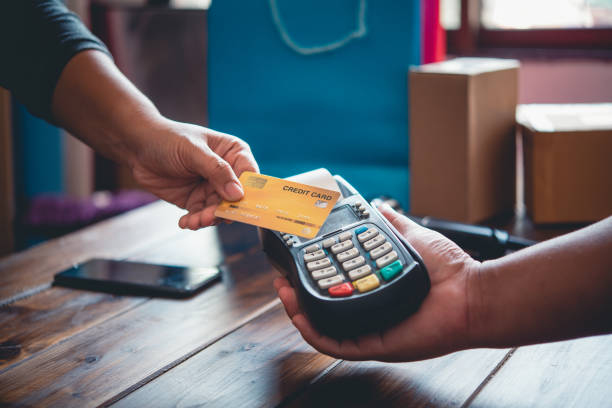
Close up of hand using credit card to pay by sending the credit card to the staff at the credit card swipe machine. Online payment
Picture this: You’re at a networking event, and while everyone else is fumbling with paper business cards that’ll inevitably end up in the washing machine, you simply tap your phone against theirs. Boom—your contact information, portfolio, social media profiles, and even a personalized video message instantly appear on their device. No app downloads required. No typing errors. Just pure, frictionless networking magic.
Welcome to the world of NFC business cards, where technology meets professional networking in the most elegant way possible. If you’ve been wondering whether it’s time to ditch those traditional paper cards gathering dust in your desk drawer, you’re in the right place. Let’s dive into how Near Field Communication (NFC) technology can revolutionize the way you share your professional information and why it might be the smartest investment you make for your business this year.
What Exactly Is NFC Technology?
Near Field Communication, or NFC, is a wireless technology that allows two devices to communicate when they’re placed within a few centimeters of each other. You’ve probably been using it without even realizing it—every time you tap your credit card or smartphone to make a contactless payment, that’s NFC in action.
The beauty of NFC lies in its simplicity. Unlike Bluetooth, which requires pairing, or QR codes, which need scanning through a camera app, NFC creates an instant connection with just a tap. It operates on radio frequency identification (RFID) technology, specifically at 13.56 MHz, and can transfer data at speeds up to 424 kbit/s. For business cards, this means sharing your contact information happens in less than a second.
How Do NFC Business Cards Actually Work?
An NFC business card contains a tiny chip and antenna embedded within the card itself. This chip stores your digital information—everything from your name and phone number to your LinkedIn profile, website, portfolio, or even a video introduction. The chip is passive, meaning it doesn’t require a battery and will last for years without any maintenance.
When someone taps their NFC-enabled smartphone against your card, the phone’s NFC reader activates the chip. The chip then transmits your stored information directly to their device. Most modern smartphones—including iPhones (iPhone 7 and later) and Android devices (most models from 2015 onward)—come with built-in NFC capabilities, making this technology accessible to the vast majority of people you’ll meet.
What’s particularly clever is that you can program your NFC card to trigger different actions. You might set it up to automatically save your contact details, open your website, download your digital portfolio, or even connect to your Wi-Fi network.
Why Should You Consider NFC Business Cards for Your Business?
Traditional paper business cards have served us well for centuries, but they come with significant limitations. They get lost, damaged, thrown away, or worse—they sit in someone’s wallet until they’re completely outdated. Research suggests that 88% of traditional business cards are thrown away within a week of receiving them. That’s a lot of wasted networking opportunities.
NFC business cards solve this problem by creating an instant digital connection. Your information goes directly into their phone, where it’s searchable, organized, and always accessible. Plus, you can update your information remotely without ever printing new cards. Changed jobs? New phone number? Updated portfolio? Simply log into your NFC card’s management platform and update your profile. Everyone who has tapped your card will see the latest information.
The environmental benefits are substantial too. The average businessperson goes through hundreds or even thousands of paper cards throughout their career. By switching to a reusable NFC card, you’re eliminating paper waste, reducing printing costs, and demonstrating your commitment to sustainability—something that increasingly matters to clients and partners.
What Information Can You Include on Your NFC Business Card?
This is where NFC business cards truly shine—their versatility. Unlike traditional cards limited by physical space, your NFC card can link to virtually unlimited information. At the basic level, you’ll want to include your standard contact details: name, job title, company, phone number, email address, and physical address.
But why stop there? You can add links to all your social media profiles—LinkedIn, Instagram, Twitter, Facebook, TikTok, or whatever platforms are relevant to your industry. Include your company website, online portfolio, booking calendar, or e-commerce store. You can embed promotional videos, product catalogs, testimonials, or case studies that showcase your work.
Some professionals get creative with their NFC cards. Real estate agents link to virtual property tours. Restaurants include their full menu and reservation system. Freelancers showcase their portfolio with images and videos. Musicians share their latest tracks. The possibilities are limited only by your imagination and the needs of your business.
How Much Do NFC Business Cards Cost?
The investment in NFC business cards varies depending on the features and quality you choose. Basic NFC cards start around $10 to $20 per card, which might seem expensive compared to traditional paper cards that cost pennies each. However, consider this: a single NFC card can last for years and replace thousands of paper cards.
Mid-range options, typically priced between $25 and $50, often include customizable designs, metal or premium materials, and access to better management platforms where you can track analytics like how many people have tapped your card and when. Premium cards can cost $75 to $150 or more, featuring luxury materials like carbon fiber, wood, or metal, along with advanced features and lifetime customer support.
Many companies also offer bulk discounts if you’re ordering cards for your entire team. Some providers operate on a subscription model, charging an annual fee for the card plus access to their digital platform, while others charge a one-time fee.
Where Can You Get NFC Business Cards?
The NFC business card market has exploded in recent years, giving you plenty of options. Companies like Popl, Mobilo, Linq, Dot, and V1CE are among the most popular providers, each offering different features, designs, and price points.
Popl focuses on affordability and ease of use, making them great for individuals or small businesses just starting with NFC technology. Mobilo targets enterprise customers with robust team management features and analytics. V1CE offers premium, sustainable cards made from recycled materials. Linq provides extensive customization options and integrations with CRM systems.
You can also find NFC business cards on platforms like Amazon, Etsy, and AliExpress, though quality and features may vary significantly. If you’re tech-savvy, you can even create your own by purchasing blank NFC tags and programming them yourself using smartphone apps like NFC Tools or Trigger.
How Do You Set Up and Program Your NFC Business Card?
Setting up an NFC business card is remarkably straightforward—most companies have streamlined the process to take just a few minutes. When you receive your card, it will typically come with instructions and a unique activation code or QR code.
First, you’ll create an account on the provider’s platform or app. Then, you’ll enter all the information you want to share: contact details, social media links, websites, photos, videos, and any other content. Most platforms offer templates and customization options to help you design a professional-looking digital profile.
Next, you’ll link your physical card to your digital profile using the activation code. Some providers allow you to test your card immediately by tapping it against your own phone to ensure everything works correctly. The entire setup process usually takes five to fifteen minutes, depending on how much content you’re adding.
The best part? You can update your profile anytime through the platform without needing physical access to the card. Changed your email address while traveling? No problem—update it from your phone, and anyone who taps your card afterward will get the new information.
What Are the Best Practices for Using NFC Business Cards?
To maximize the effectiveness of your NFC business card, start by explaining what it is when you hand it to someone. A simple “This is an NFC card—just tap it against your phone and all my contact info will pop up” works perfectly. Most people are curious about new technology and will be impressed by your forward-thinking approach.
Keep your digital profile clean, professional, and up-to-date. While you can include lots of information, avoid overwhelming people with too many links or unnecessary content. Focus on what’s most relevant to your business and the impression you want to make. Include a professional photo, a brief bio, and clear calls-to-action.
Take advantage of analytics if your provider offers them. Track when and where people are tapping your card to understand which networking events or strategies are most effective. This data can inform your marketing decisions and help you calculate your ROI.
Always carry your NFC card, and consider having a backup method for sharing information. While NFC technology is widespread, you might occasionally encounter someone with an older phone or a device with NFC disabled. Having a QR code on the back of your card or a traditional paper card as backup ensures you’re never caught unprepared.
Can NFC Business Cards Integrate with Your Existing Business Tools?
Modern NFC business card platforms understand that your networking doesn’t exist in isolation—it’s part of your broader business ecosystem. That’s why many providers offer integrations with popular tools and platforms you’re already using.
CRM integration is one of the most valuable features. Platforms like Mobilo and Linq can sync directly with Salesforce, HubSpot, Zoho, or other customer relationship management systems. When someone taps your card, their information can automatically flow into your CRM, creating a new contact or lead without any manual data entry.
Email marketing integrations allow you to add new contacts directly to your Mailchimp, Constant Contact, or other email lists (with proper permission, of course). Calendar integrations can let people book meetings with you through Calendly or Google Calendar right from your digital profile.
Some providers also integrate with Google Workspace, Microsoft Office 365, Slack, and analytics platforms like Google Analytics. These integrations streamline your workflow, save time, and ensure that every networking interaction is captured and leveraged for business growth.
What Security and Privacy Considerations Should You Know?
As with any technology that handles personal information, security and privacy are important considerations with NFC business cards. The good news is that NFC technology itself is quite secure. The short range required for communication (typically less than 4 centimeters) makes it difficult for someone to intercept data without your knowledge.
However, you should be mindful of what information you’re sharing. Only include details you’re comfortable making public, and avoid putting sensitive information like your home address or personal identification numbers on your NFC profile. Remember that anyone who taps your card can access this information.
Most reputable NFC business card providers use encrypted connections and secure servers to protect your data. Check their privacy policies to understand how they handle and store your information. Look for providers that are compliant with data protection regulations like GDPR in Europe or CCPA in California.
You also have control over your information. If you lose your card or want to deactivate it, most platforms allow you to disable it remotely, preventing anyone from accessing your information through that specific card. This is a significant security advantage over traditional paper cards, which can’t be “turned off” once they’re in someone else’s hands.
How Are Businesses Across Industries Using NFC Cards?
The versatility of NFC business cards means they’re being adopted across virtually every industry, each finding unique ways to leverage the technology. In real estate, agents use NFC cards to share property listings, virtual tours, mortgage calculators, and client testimonials instantly at open houses or showings.
Healthcare professionals, including doctors, dentists, and therapists, use NFC cards to share their credentials, office information, and appointment booking systems while maintaining a professional, hygienic alternative to paper cards. Restaurants and hospitality businesses embed menus, reservation systems, loyalty programs, and special offers into their NFC cards.
Creative professionals—photographers, designers, videographers, artists—showcase their portfolios through rich media galleries that would be impossible on a traditional business card. Sales professionals use them to share product catalogs, demo videos, pricing information, and customer reviews, turning every networking encounter into a potential sales opportunity.
Even industries you might not expect have embraced NFC cards. Construction companies share project galleries and safety certifications. Fitness trainers link to workout videos and nutrition guides. Financial advisors provide educational content and consultation scheduling. The technology adapts to whatever your business needs.
What Does the Future Hold for NFC Business Cards?
NFC technology continues to evolve, and business cards are evolving with it. We’re seeing emerging features like augmented reality integration, where tapping a card can launch AR experiences showcasing products or services in 3D. Voice messages and video introductions are becoming more common, adding a personal touch to digital networking.
Wearable NFC devices are gaining traction—think NFC rings, bracelets, or keychains that serve the same function as cards but are even more convenient to carry. Some companies are experimenting with NFC-enabled name tags for conferences or digital business card apps that use NFC chips built into smartphones themselves, eliminating the need for physical cards entirely.
Artificial intelligence integration is on the horizon too. Imagine NFC cards that use AI to customize the information they share based on context—showing different details to potential clients versus potential collaborators, or adapting content based on the time of day or location.
As 5G networks expand and Internet of Things (IoT) devices proliferate, the possibilities for NFC technology will only grow. Business cards might eventually connect not just to smartphones but to smart displays, conference room systems, or even autonomous vehicles, creating seamless networking experiences we can barely imagine today.
Frequently Asked Questions
Do both people need special apps to use NFC business cards?
No, the person receiving your information doesn’t need any special app. Modern smartphones (iPhone 7 and newer, most Android phones from 2015 onward) have built-in NFC readers. They simply tap your card against their phone, and their device automatically recognizes it and displays your information. However, you might need to download your provider’s app to set up and manage your own card.
Can I use NFC business cards if my phone doesn’t have NFC?
While you won’t be able to tap-to-share, most NFC business cards include a backup QR code that anyone can scan with their camera app. Some providers also offer web-based management platforms, so you can set up and update your card from any device with internet access, even if it doesn’t have NFC capabilities.
How long do NFC business cards last?
NFC chips are incredibly durable and can last for decades without any degradation. The physical card itself will determine the overall lifespan—plastic cards typically last 2-5 years with regular use, while metal or premium material cards can last much longer. The chip requires no battery and no maintenance, making it extremely reliable.
Can I have multiple NFC cards with different information?
Absolutely! Many professionals use different cards for different contexts. You might have one card optimized for potential clients, another for industry colleagues, and another for personal networking. Most providers allow you to manage multiple cards under one account, each with its own customized digital profile.
What happens if I lose my NFC business card?
If you lose your card, you can typically deactivate it through your provider’s platform, preventing anyone from accessing your information. Then you can order a replacement card and link it to your existing profile. Your digital information remains safe in the cloud, so you won’t lose any data or need to rebuild your profile from scratch.
Are NFC business cards worth the investment for small businesses or freelancers?
For most professionals, the answer is yes. Consider that you’re replacing potentially hundreds of paper cards per year, eliminating printing costs, and never needing to reprint when information changes. The professional impression, environmental benefits, and networking efficiency often justify the upfront cost. Start with one card for yourself to test the waters before committing to cards for your entire team.