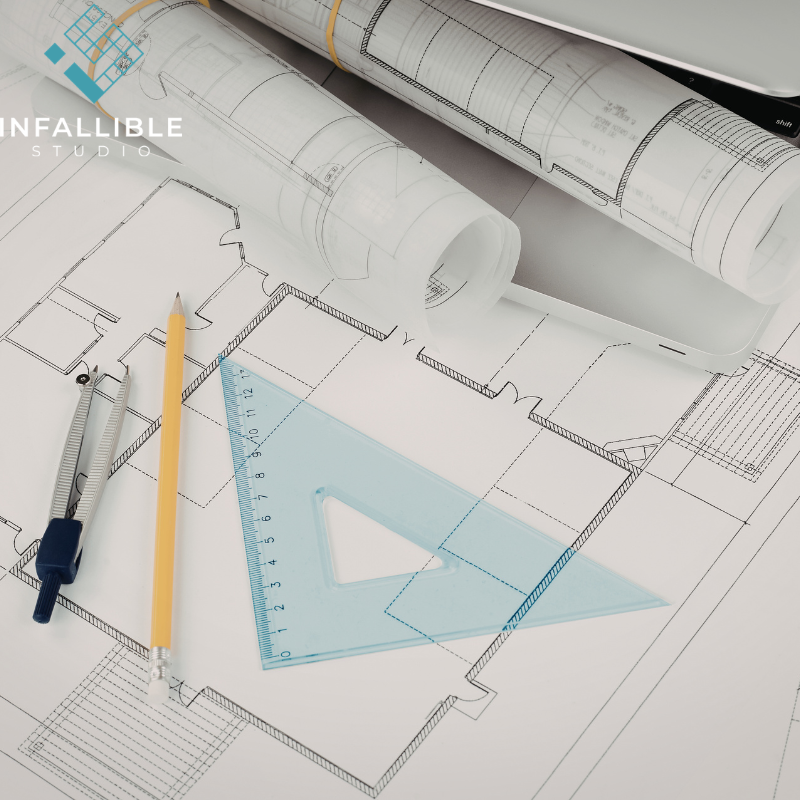
For centuries, architects relied on hand-drawn blueprints, where every line demanded patience and precision. The shift from manual drafting to digital workflows transformed this process entirely, making revisions faster and errors far less costly. In today’s construction industry,
precision and efficiency are non-negotiable — projects are more complex, timelines tighter, and standards more demanding than ever before.
This is where Computer-Aided Design, commonly known as CAD, has emerged as the backbone of modern architectural drafting services. By combining technical accuracy with digital flexibility, CAD has revolutionized the way buildings are designed, documented, and delivered from concept to completion.
What is CAD in Architectural Drafting?
Computer-Aided Design (CAD) refers to the use of specialized digital software to create, modify, and optimize architectural drawings and models. Unlike traditional hand drafting, CAD allows professionals to produce highly precise technical drawings with greater speed and flexibility. It encompasses both 2D drafting — used for floor plans, elevations, and sections — and 3D modeling, which enables architects to visualize structures realistically before construction begins.
Common CAD Software Used in Architecture
Several powerful tools dominate the industry today. AutoCAD remains the industry standard for 2D drafting and detailed technical documentation. Revit takes things further with Building Information Modeling (BIM) capabilities, enabling intelligent 3D design. SketchUp is widely favored for conceptual modeling and quick visualizations, while ArchiCAD offers a comprehensive BIM environment particularly popular among independent architects and smaller firms.
Evolution from Manual Drafting to CAD
Traditional Drafting Methods
Before digital tools existed, architectural drafting was an entirely hands-on process. Draftsmen worked on large drawing boards using T-squares, set squares, compasses, and scaled rulers to produce technical drawings with painstaking care. Every measurement had to be manually calculated, and every line drawn with steady precision. The limitations were significant — any revision, no matter how minor, often required entire sections to be redrawn from scratch. Storage was another challenge, as large physical blueprints were difficult to organize, transport, and preserve over time.
Digital Transformation in Architecture
CAD technology addressed these limitations decisively. Revisions that once consumed days can now be completed within minutes, dramatically accelerating project timelines. Cloud-based collaboration allows architects, engineers, and contractors across different locations to work on the same drawings simultaneously. Additionally, automated precision tools significantly reduce human error, ensuring measurements and specifications remain consistently accurate throughout every stage of the design and construction process.
Key Roles of CAD in Modern Architectural Drafting Services
1. Enhanced Accuracy and Precision
CAD eliminates the guesswork associated with manual drafting. Automated measurement tools ensure every dimension is exact, while built-in calculation features drastically reduce human error. Layer management allows draftsmen to organize electrical, structural, and plumbing elements separately, keeping drawings clean, readable, and professionally structured.
2. Improved Productivity and Speed
Pre-built templates and reusable design blocks allow architects to avoid repetitive work, significantly accelerating the drafting process. Modifications can be made instantly without redrawing entire sheets, enabling faster project turnarounds and allowing firms to handle higher workloads without compromising quality.
3. Better Visualization and 3D Modeling
CAD enables detailed 3D elevations, section views, and realistic rendered previews that bring designs to life before construction begins. This gives clients a clear, tangible understanding of the final structure, improving communication and reducing design misunderstandings during presentations.
4. Seamless Collaboration
Digital files can be shared instantly across teams regardless of location. CAD integrates smoothly with BIM workflows, enabling real-time coordination between architects, structural engineers, and contractors, ensuring everyone works from the same updated information throughout the project lifecycle.
5. Cost Efficiency
By reducing drafting time and minimizing costly construction errors through precise documentation, CAD delivers measurable financial savings across every phase of a project.
Challenges of Using CAD in Architectural Drafting
While CAD has undeniably transformed architectural drafting, its adoption does not come without challenges. One of the most immediate barriers is software licensing cost. Premium platforms like AutoCAD and Revit require significant annual subscriptions, making them financially demanding for smaller firms and independent practitioners.
Equally important is the need for a skilled workforce. CAD software has a steep learning curve, and firms must invest in ongoing training to ensure their teams remain proficient as tools evolve. This adds both time and expense to operational overhead.
Version compatibility is another persistent frustration. Files created in newer software versions often encounter errors or formatting issues when opened in older ones, disrupting collaboration between firms using different systems.
Finally, data security concerns have grown alongside the shift to cloud-based workflows. Sensitive project files and client information are increasingly vulnerable to cyber threats, demanding robust digital security measures that many smaller practices may struggle to maintain effectively.
The Final Note
Computer-Aided Design has become the foundation of modern architectural drafting services, reshaping how ideas move from concept to construction. By replacing manual drafting with intelligent digital workflows, CAD delivers unmatched precision, faster revisions, improved visualization, and seamless collaboration across multidisciplinary teams. In an industry where accuracy, efficiency, and coordination directly impact project success, these advantages are not optional — they are essential.
Although challenges such as software costs, training requirements, compatibility issues, and data security concerns remain, the long-term benefits of CAD far outweigh its limitations. Firms that strategically invest in the right tools and skilled professionals gain a significant competitive advantage through higher productivity, reduced errors, and better client communication.
As architectural projects continue to grow in complexity, CAD will remain at the core of drafting services, driving innovation, improving project outcomes, and setting new standards for quality and performance in the built environment.