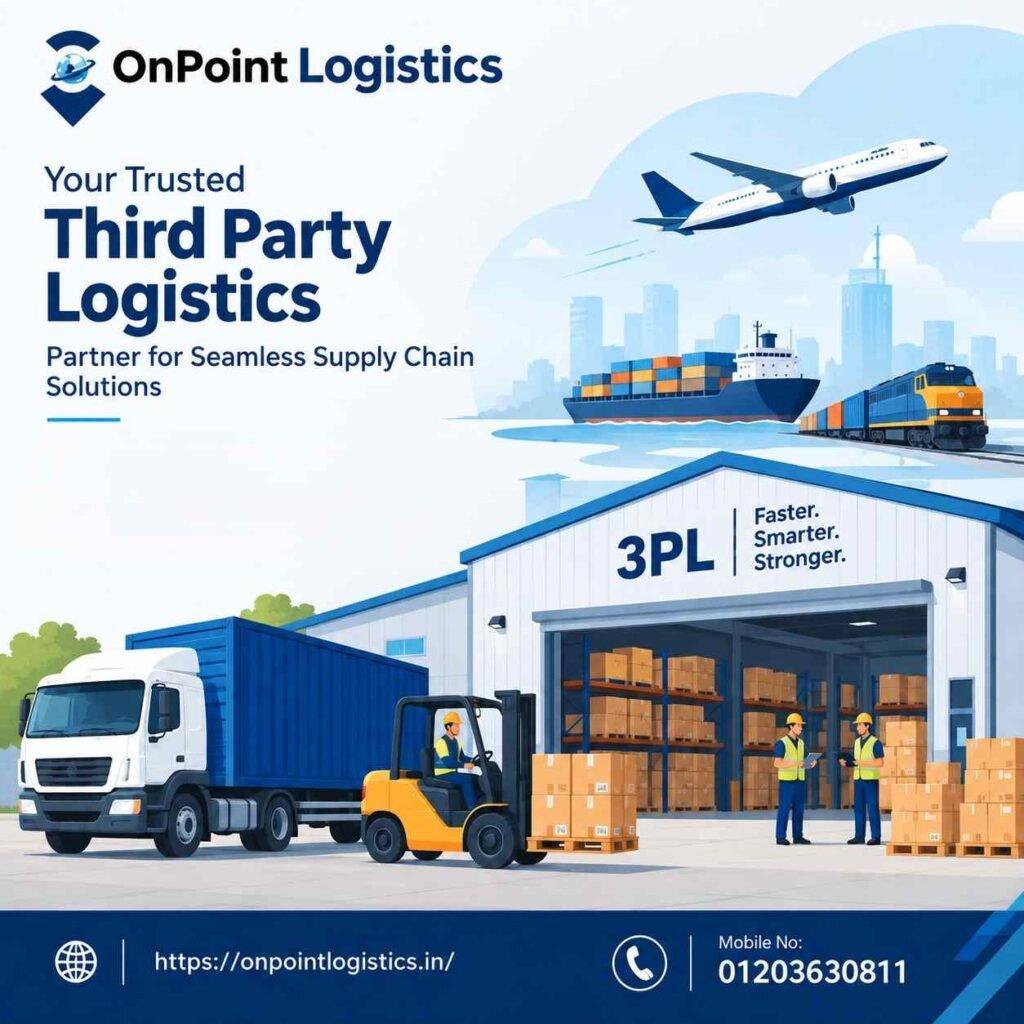
There is a point in the growth of almost every logistics operation when internal control starts becoming expensive. Not because the team is doing a poor job, but because the network has become too complicated for the original setup. More warehouses appear, shipment volumes fluctuate, customers expect tighter delivery windows, and inventory starts moving between locations more frequently.
This is where a 3PL logistics company in India can become part of the solution. But outsourcing logistics should not begin with the question of which provider has the lowest rate. The better question is much more practical: which activities are consuming internal resources without giving the business a real operational advantage?
That distinction can completely change how a company approaches third-party logistics.
The Logistics Problem Usually Appears Before the Need for 3PL Is Obvious
A business rarely wakes up one morning and decides it needs a third-party logistics partner. The requirement usually develops quietly.
The warehouse team starts staying late because dispatches have increased. Procurement is asking for inventory updates that operations cannot provide quickly. Sales teams are following up on delayed orders. Vehicles are being arranged at short notice because planned capacity was not available. Meanwhile, management sees transportation costs increasing but cannot easily identify where the additional expense is coming from.
This is where most businesses struggle. They look at each problem separately.
One person blames transportation. Another point toward warehousing. Someone else says the issue is inventory planning. In reality, these problems can be connected.
For example, poor inventory visibility can lead to unnecessary stock transfers. Those transfers create additional transportation costs. More movement creates more warehouse handling. Additional handling increases the possibility of errors. The resulting delay then creates pressure for urgent deliveries.
A 3PL model becomes useful when a business wants these connected activities managed as one operational process rather than as separate tasks.
A 3PL Logistics Company in India Should Solve a Specific Operational Problem
The phrase “outsource logistics” sounds simple, but it can mean very different things.
A manufacturer might outsource warehousing while keeping transportation under its own control. An e-commerce business may outsource fulfilment and last-mile distribution. A distributor could hand over transportation and inventory handling but continue managing customer relationships internally.
There is no reason to outsource an activity merely because another company offers it.
Suppose a business has excellent control over its warehouse but struggles with transportation planning across several states. Moving the warehouse operation to a 3PL provider may create unnecessary disruption. The more logical starting point could be transportation management.
The reverse can also happen. A company may have dependable transport partners but lack warehouse space and inventory discipline in a new market. In that situation, inventory and fulfillment support could be more valuable.
A useful 3PL arrangement therefore starts with a problem statement.
What is going wrong? How often does it happen? What does it cost? What would improve if another party took responsibility?
Without these answers, outsourcing can easily become an expensive exercise in shifting responsibility.
Inventory Management Logistics Services Can Change the Economics of Outsourcing
Transportation gets most of the attention because freight charges appear clearly on invoices. Inventory costs are less visible, even though they can affect a business significantly.
Consider a distributor carrying hundreds of SKUs. If stock records are inaccurate, planners may order products that are already available or fail to replenish items that are actually running low. The result is either excess stock or avoidable shortages.
This is why inventory management logistics services should be assessed carefully when evaluating a logistics partner.
A useful operation needs more than a warehouse and storage racks. Goods have to be received correctly, identified, stored appropriately, picked against accurate orders, and reconciled with system records. Slow-moving inventory also needs attention because warehouse space has a cost even when the stock itself is not moving.
One practical observation from logistics operations is that inventory problems often remain hidden until someone needs a product urgently. That is when a supposedly “available” item turns out to be in the wrong location, under the wrong code, or physically unavailable.
A 3PL provider can help create greater process discipline, but the business still needs clear inventory policies and reliable data. Outsourcing does not remove the need for management.
Affordable 3PL Logistics Solutions Are About Total Cost, Not the Quotation
A low 3PL quotation can look attractive during vendor comparison. Six months later, the same contract can look very different once additional handling, storage, special labour, urgent transportation, returns, and other charges start appearing.
This is why affordable 3PL logistics solutions should be evaluated against total operating cost rather than the headline rate.
A logistics team should understand exactly how the provider charges for the activities it will perform. A warehouse rate alone tells you very little if order processing, loading, unloading, inventory counts, returns, or additional storage carry separate charges.
The same principle applies to transportation.
A lower freight rate may not produce savings if delivery failures, detention, poor vehicle utilisation, or repeated trips increase the overall cost.
A proper comparison should therefore look at the complete movement from inbound receipt to final delivery.
That approach also makes negotiations more meaningful. Instead of arguing over individual rates, both parties can discuss where costs are being generated and which process changes could reduce them.
End-to-End 3PL Logistics Services Work Only When the Handoffs Work
There is a common misconception that “end-to-end” automatically means better coordination.
It does not.
A provider can technically offer warehousing, transportation, fulfilment, reverse logistics, and reporting while each function still operates almost independently.
The real test is what happens between activities.
A customer order is received. Does the warehouse see it immediately? Is inventory reserved correctly? Is the shipment packed according to the delivery requirement? Is transportation planned early enough? Does the receiving location know when the goods are expected?
These handoffs determine whether end-to-end 3PL logistics services actually provide value.
This is also why logistics managers should examine exception handling. Normal shipments rarely expose weaknesses in a process. Delayed pickups, damaged goods, short shipments, rejected deliveries, and urgent orders do.
Ask a potential provider what happens when something goes wrong. Who gets notified? How quickly is the issue escalated? Who has authority to make the next decision?
The answers can reveal more about operational maturity than a long service presentation.
How a Third Party Logistics Service Provider Should Be Evaluated
Choosing a third party logistics service provider should involve more than comparing company profiles.
The provider needs to fit the physical characteristics of the supply chain. A business shipping pallets between industrial locations has different requirements from one handling thousands of small customer orders. A company with fragile products will have different handling priorities from one moving durable industrial goods.
Technology matters as well, particularly when inventory and shipment visibility are important. But logistics teams should avoid being impressed by software features that do not solve an actual operational problem.
The practical evaluation should focus on:
- Whether the provider understands your shipment and inventory profile
- How responsibilities and service levels will be measured
- How exceptions, returns, damages, and discrepancies are handled
- Whether the operating model can scale when volumes or locations change
- How easily the business can access useful operational data
Reference checks can also be revealing. Instead of asking whether an existing customer is “satisfied,” ask what happens when volumes suddenly increase or when a major delivery problem occurs.
That is where a logistics partner earns its value.
When 3PL Logistics Services in India Make Sense for a Growing Network
Outsourcing becomes more interesting when logistics infrastructure starts limiting business expansion.
Suppose a company wants to enter three new markets. Building warehouses, recruiting teams, arranging transport contracts, implementing systems, and establishing operating procedures in all three locations could take considerable time.
A 3PL arrangement can provide an alternative route into those markets.
The business can use an existing logistics network while it tests demand and establishes a stable customer base. If the market grows, the relationship can potentially scale with it.
But this does not mean 3PL is always the right answer.
If shipment volumes are highly irregular, requirements are constantly changing, or the business cannot clearly define its logistics processes, outsourcing may create confusion instead of reducing it.
The most successful arrangements usually have clearly defined responsibilities. The business decides what service it wants customers to receive. The logistics partner manages the agreed operational execution.
That separation is healthy.
What Logistics Teams Should Expect From 3PL in 2026
The role of 3PL is becoming less about simply providing physical infrastructure and more about providing operational visibility.
Logistics teams increasingly want to know not only where a shipment is, but why a delay occurred, which routes are repeatedly underperforming, where inventory is accumulating, and whether warehouse capacity is being used effectively.
Data, automation, warehouse systems, transportation platforms, and AI-supported planning can help answer these questions. But technology should not become a substitute for operational judgement.
If a dashboard shows that one warehouse is holding excess inventory, someone still needs to determine whether the cause is inaccurate forecasting, poor replenishment rules, a change in demand, or an unsuitable distribution strategy.
This means the future relationship between businesses and 3PL providers is likely to become more collaborative. Shared data can help both sides identify recurring inefficiencies rather than simply reacting to individual shipment failures.
For logistics professionals, that is an important shift. The provider is no longer just someone to call when a truck is required. It can become part of the process used to analyse and redesign the logistics network.
Conclusion
There is no prize for outsourcing the largest possible portion of a supply chain.
The objective is to create a network where each activity is managed by the party that can handle it effectively and where the business retains control over decisions that directly affect customers, inventory, and commercial strategy.
For some companies, that could mean outsourcing warehousing. For others, it could involve transportation, fulfilment, inventory handling, or several connected functions.
Before approaching 3PL logistics companies in India, map the current operation and identify where cost, time, visibility, or capacity is being lost.
Then build the outsourcing requirement around those gaps.
That approach produces a much clearer conversation with a logistics provider. Instead of asking, “What services do you offer?” the business can ask, “Here is how our operation works today. Here are the problems we need to solve. How would you manage them, and how would we measure the result?”
That is a far more useful starting point.
FAQs
- What does a 3PL logistics company in India provide?
Ans. A 3PL provider may manage warehousing, inventory handling, fulfilment, transportation, distribution, and reverse logistics. The actual scope depends on what the business chooses to outsource. - When should a business consider 3PL logistics services in India?
Ans. 3PL can be considered when internal logistics is consuming excessive management time, warehouse capacity is becoming restrictive, distribution is expanding, or transportation and inventory activities are becoming difficult to coordinate. - How can 3PL help with inventory management?
Ans. A 3PL operation can manage receiving, storage, picking, stock reconciliation, order fulfilment, and inventory reporting. The benefit depends heavily on process accuracy and the quality of inventory data. - Are affordable 3PL logistics solutions always the lowest-priced option?
Ans. No. The quoted rate may exclude handling, storage, returns, special labour, or other operating charges. Businesses should compare the total cost of the proposed logistics model. - What should I ask a third party logistics service provider before signing a contract?
Ans. Ask about service scope, pricing, performance measurement, inventory responsibility, technology integration, exception handling, returns, damages, escalation procedures, and how the provider will scale with changing volumes.