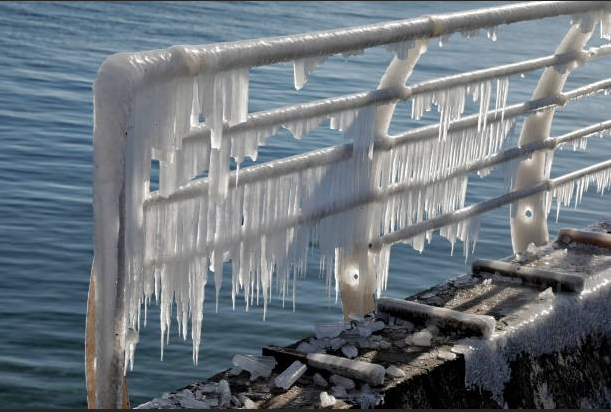
Cold-state winters create a demanding environment for exterior safety features. Railings remain exposed through snow, melting ice, refreezing moisture, and rapid temperature changes, often while continuing to support daily foot traffic. Although the surface may look unchanged, stress can develop around connections and supporting areas over time.
For building owners, contractors, and facility managers, understanding the seasonal demands placed on outdoor railing systems is an important part of planning inspections, maintenance, and timely repairs before winter-related concerns become more difficult to manage.
Key Takeaways
- Winter moisture can affect railing joints, anchors, coatings, and supports.
- Small signs such as rust, movement, and cracked sealant should not be ignored.
- Early inspections can help reduce the risk of more extensive repairs.
- The railing and its supporting surface should be evaluated together.
How Freezing Creates Mechanical and Structural Stress in Outdoor Railing Systems
Ice Expansion Inside Small Crevices
Water can enter fastener holes, cable junctions, hollow posts, failed sealant, and narrow gaps between railing posts and deck surfaces. These openings may be difficult to notice during a routine inspection, yet they can trap enough moisture to affect outdoor railing systems during periods of freezing weather.
When temperatures fall, trapped water expands as it turns to ice. Over multiple freeze-thaw cycles, this pressure may widen openings, lift mounting plates, separate sealant, or enlarge cracks around post bases. The resulting damage can create additional pathways for moisture during the next thaw.
Cable railings may face similar problems when water collects near terminals, tensioning hardware, or post penetrations. Gradual movement in these areas can reduce cable tension and place uneven stress on surrounding components.
Soil and Supporting Surfaces Begin to Shift
Some winter damage begins below the railing rather than within its individual parts. Frost heave occurs when moisture in the soil freezes and pushes nearby footings upward. As the ground thaws, those supports may settle unevenly.
This repeated movement can affect concrete foundations, deck framing, exterior stairs, and embedded railing posts. Even a small change at the base can create noticeable movement higher up, causing outdoor railing systems to lean, pull away from the structure, or place uneven force on mounting points.
A qualified fabrication contractor can determine whether the problem is limited to the railing or connected to a larger issue involving the footing, deck, or supporting frame.
Hardware Experiences Repeated Fatigue
Temperature changes cause metal components to contract in severe cold and expand as conditions warm. Although the movement is usually slight, repeated cycles can gradually affect screws, bolts, brackets, and other mechanical connections.
Hardware that is already loose, undersized, or improperly installed may deteriorate more quickly. Screws can strip their holes, anchor bolts may lose tension, and brackets may begin shifting against the mounting surface.
Proper structural welding helps create dependable joints that can better manage normal loads and seasonal movement. However, poor fit-up, uneven loading, or existing defects can make these connections more vulnerable during repeated temperature changes.
How Winter Conditions Degrade Railing Materials
Mechanical movement is only part of the concern. Continued exposure to moisture, ice, road salts, and extreme temperatures can also change the condition of the railing material and its protective finish.
Protective Coatings Begin to Fail
Powder coating, paint, and other protective finishes help prevent moisture and deicing chemicals from reaching the metal beneath them. However, scratches, chipped edges, failed seams, and poorly sealed fasteners can expose the underlying surface.
Once moisture reaches these damaged areas, repeated winter exposure can weaken the bond between the coating and the metal. Bubbling, peeling, cracking, or lifting may develop around edges and post bases, leaving outdoor railing systems increasingly vulnerable to corrosion.
Exposed steel can deteriorate more quickly when deicing salts are present around entrances, sidewalks, parking structures, loading areas, and exterior stairs. Rust stains, swollen finishes, and discoloration may indicate that deterioration is spreading beneath the visible coating.
Extreme Cold Can Reduce Material Toughness
Low temperatures can reduce the ability of some metals to absorb sudden force without cracking. Standard carbon steel does not automatically become unsafe in winter, but its performance may be affected when extreme cold combines with existing defects, reduced material thickness, or concentrated loading.
Heavy snow, ice accumulation, sudden impact, or excessive pressure can expose weak points that were less noticeable in warmer conditions. Material grade, component thickness, design details, and fabrication quality all influence how well outdoor railing systems perform during severe winter conditions.
When damaged parts must be replaced or adjusted at the property, field fabrication may be used to produce posts, brackets, base plates, or reinforcement pieces that match actual jobsite dimensions.
Why Professional Inspection Matters for Outdoor Railing Systems
Visible movement or surface rust may represent only part of the problem. A complete inspection should also review anchors, mounting surfaces, post interiors, weld areas, and surrounding concrete for concealed deterioration.
Professionals who work on metal structures, including those involved in trailer repair, often follow the same principle: identify the source of stress, inspect connected components, and correct the underlying structural issue.
Conclusion
Cold weather can gradually influence railing performance in ways that are not always visible after a single storm. The greatest concern is often the combined effect of moisture, temperature changes, material condition, and movement within the supporting structure.
Regular inspections give property owners an opportunity to notice loose hardware, damaged coatings, unstable posts, or deteriorating concrete before the problem becomes more difficult to correct. With timely maintenance and qualified repair support, outdoor railing systems can remain dependable, secure, and better prepared for the demands of repeated winter exposure.
FAQs
How often should outdoor railings be inspected in cold states?
Inspect them before winter, after severe storms, and again when freezing conditions end. High-traffic or commercial locations may require more frequent checks.
What is the first sign of winter-related railing damage?
Slight movement, rust staining, peeling coatings, cracked sealant, and gaps around post bases are common early warning signs.
Can a loose railing post be tightened without further repair?
Sometimes, but tightening hardware may not solve the problem if the anchor hole, concrete base, or supporting frame has already deteriorated.
Are aluminum railings affected by freeze-thaw cycles?
Yes. Aluminum does not rust like carbon steel, but loose fasteners, damaged coatings, galvanic corrosion, and shifting supports can still affect performance.
Do deicing salts damage metal railings?
They can accelerate corrosion when they reach exposed steel, damaged coatings, weld areas, fasteners, or base plates.
When should a railing be professionally inspected?
Professional inspection is advisable when the railing leans, moves under light pressure, has cracked welds, shows severe corrosion, or separates from its mounting surface.