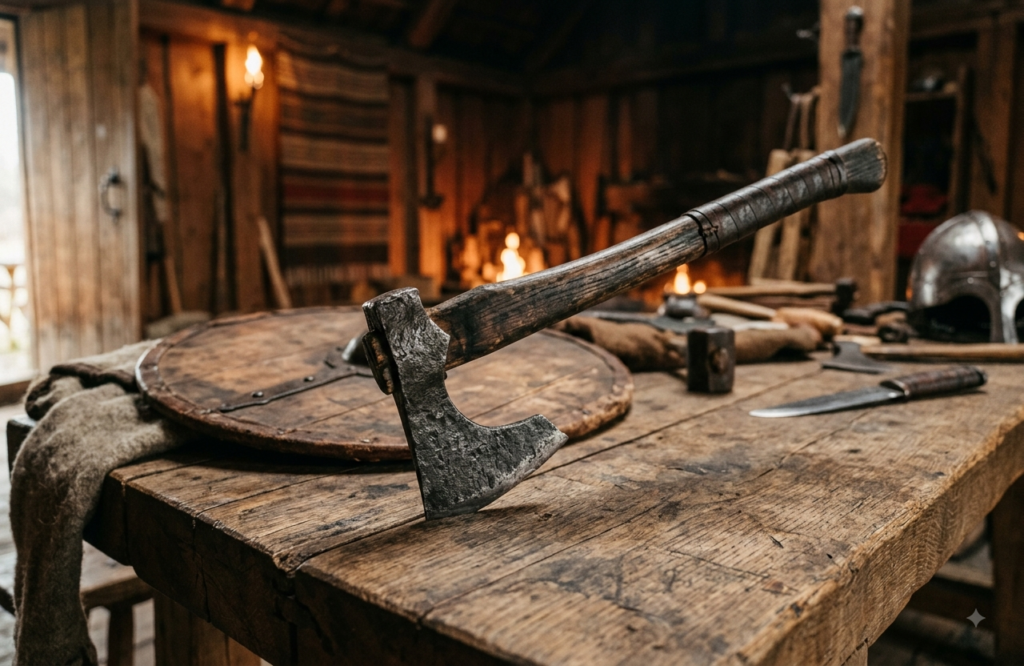
A Viking axe is one of the most recognizable tools and weapons associated with the Viking Age. Known for its practical design, strong construction, and historical significance, the axe played an important role in the daily lives of Norse communities. Vikings used axes for woodworking, building, farming, and other practical tasks, while certain designs were also adapted for combat. Today, Viking axes continue to attract historians, collectors, reenactors, and enthusiasts interested in Norse culture.
Understanding the design and purpose of a Viking axe provides valuable insight into the skills, technology, and lifestyle of people who lived during the Viking Age.
What Was a Viking Axe Used For
The Viking axe was not limited to warfare. In many Norse communities, an axe was an essential household tool. Wood was needed for homes, boats, fences, furniture, and firewood, making a reliable axe extremely useful.
Some axes were designed primarily for practical work, while others were made specifically for fighting. Their different shapes and sizes reflected their intended purposes. This versatility made the axe an important part of Viking life.
Common Types of Viking Axes
Several styles of axes are associated with the Viking Age. The smaller axe was generally easier to carry and could serve both household and defensive purposes. Its compact design made it practical for everyday activities.
The broad bladed axe, sometimes associated with the Danish axe tradition, featured a wider cutting edge. These axes are particularly recognizable because of their distinctive blade shape. Larger examples required greater skill to handle effectively.
Another famous style is the bearded axe. Its blade extended downward below the eye of the axe head, creating a noticeable hook-like appearance. This design reduced the amount of metal needed while providing a useful cutting edge. The lower section could also make the axe more versatile as a tool.
How Viking Axes Were Made
Traditional Viking axes were generally made from iron, with the cutting edge sometimes strengthened through the use of higher-quality steel. Blacksmiths used forging techniques to shape the metal and create durable tools.
The wooden handle was another important part of the design. Handles varied in length depending on the axe’s intended purpose. A shorter handle was convenient for general tasks, while larger axes could have longer handles.
The combination of a strong metal head and carefully shaped wooden handle produced a practical tool that could withstand demanding use.
Why Viking Axes Remain Popular Today
Modern interest in Viking history has made Viking axes popular among collectors, reenactors, historical enthusiasts, and people interested in Norse craftsmanship. Reproductions are often created using traditional-inspired forging techniques and historical designs.
A Viking axe can also serve as an educational object. Studying its shape, materials, and construction can help people understand how Viking Age technology developed around practical needs.
For collectors, historical accuracy is often an important consideration. Details such as blade shape, handle proportions, materials, and forging methods can help distinguish a historically inspired reproduction from a modern decorative design.
Viking Axe in Norse Culture
Beyond its practical function, the axe has become a strong symbol of Viking culture. Popular media frequently portrays Vikings carrying axes, although modern representations sometimes simplify or exaggerate historical details.
Archaeological discoveries provide a more balanced picture. Axes were valuable tools, and not every axe found from the Viking Age was necessarily intended as a weapon. Their widespread use reflects the importance of woodworking and metalworking in Norse society.
Conclusion
The Viking axe represents much more than a historical weapon. It was a versatile tool that supported everyday life, craftsmanship, construction, and, in some cases, warfare. Different designs demonstrate how Viking blacksmiths adapted tools to specific needs while maintaining practical and durable construction.
Today, Viking axes remain fascinating because they connect modern audiences with Norse craftsmanship and history. Whether studied as archaeological artifacts or appreciated as historically inspired reproductions, these axes offer a useful glimpse into the technology and daily life of the Viking Age.