Security is not just about locking the office door after everyone has gone home. For businesses in Singapore, it also means knowing who can enter restricted areas, preventing unauthorised access to sensitive spaces, and managing daily movement without slowing down employees, visitors or operations. A properly planned access control system gives your organisation greater control over its premises while supporting a smoother, more professional working environment.
From corporate offices and commercial buildings to warehouses, educational facilities and industrial premises, every property has different security requirements. The right solution should fit your building layout, access policies and operational needs instead of forcing your team to work around unsuitable technology. With professional planning and installation, businesses can establish a more reliable approach to physical security that grows alongside their operations.
Why Businesses in Singapore Need a Reliable Access Control System
Traditional keys may appear simple to manage, but they can become a headache when employees leave, contractors change, or multiple departments require different levels of access. Lost keys, duplicated copies and manual handovers can create security gaps that are difficult to track, particularly when several teams share the same premises.
An electronic access control system offers a more structured way to manage entry permissions. Depending on the selected solution, authorised users can gain access through access cards, PIN codes, biometric identification or compatible mobile credentials, while administrators can manage permissions according to their responsibilities and access schedules.
Control Who Enters Your Workplace
Not every employee needs access to every room. Your finance department may handle confidential documents, your IT team may maintain servers, and your warehouse may store valuable inventory or equipment. Giving every staff member unrestricted access increases unnecessary exposure when a more targeted approach is available.
A well-designed system allows businesses to establish access zones according to operational requirements. By assigning suitable permissions to individual users or groups, management can control entry to selected doors and restricted areas without relying entirely on manual supervision.
Improve Accountability and Access Visibility
Knowing who has permission to enter a particular area is important, but having a reliable record of access activity can be equally valuable. Depending on the system configuration, access logs can help authorised administrators review entry events, investigate unusual activity and understand how access permissions are being used.
This visibility can support internal security procedures and simplify administrative work. However, access logs should be managed responsibly, with suitable privacy controls, retention policies and access to records restricted to authorised personnel.
What Are Security Door Access Control Systems?
Security door access control systems combine electronic credentials, door hardware, control equipment and management software to regulate entry into designated spaces. Unlike a conventional lock that relies mainly on a physical key, an electronic solution checks whether a presented credential has permission to unlock the relevant door.
The exact configuration depends on the building and its security objectives. A basic office installation may require card readers and electronic locking hardware, while a larger commercial facility may need multiple access points, centralised administration, network connectivity and integration with other security technologies.
Access Cards and RFID Readers
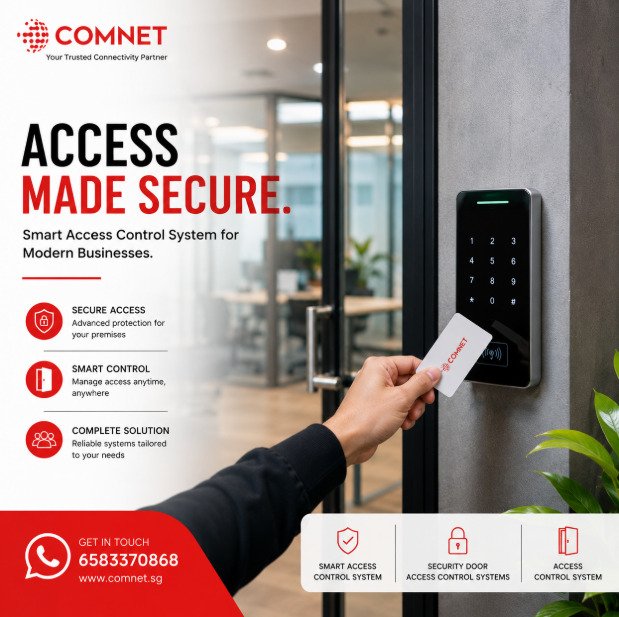
Card-based access remains a practical option for workplaces that need straightforward entry management across several doors. Employees present an authorised card or compatible credential to a reader, and the system checks the relevant permissions before allowing access.
This arrangement can be convenient for offices with regular staff movements and shared facilities. If an employee leaves the company or a card goes missing, administrators can deactivate the affected credential instead of having to replace every physical lock, provided the system is configured to support this functionality.
Biometric and Mobile Access Solutions
Some organisations may benefit from biometric authentication, such as fingerprint or facial recognition, while others may prefer compatible mobile credentials. The appropriate choice depends on security requirements, user convenience, privacy considerations, device compatibility and the operating environment.
Biometric technology is not automatically the best option for every business. Organisations should assess the handling of personal data, alternative access arrangements and applicable requirements before implementation, particularly where sensitive information or high-security areas are involved.
Access Control System Installation Requires Proper Planning
Choosing suitable equipment is only one part of the project. Successful access control system installation also requires careful consideration of door construction, locking mechanisms, cable routes, power availability, network infrastructure and the way people move through the premises.
A system that looks suitable on paper may create operational problems if the door hardware is incompatible, the reader is poorly positioned, or access permissions do not reflect actual workplace procedures. Professional planning helps identify these issues before installation begins, reducing avoidable rework and supporting a more dependable final setup.
Step 1 — Assess the Site and Security Requirements
The first step is to identify which entrances need protection and what each area requires. A site assessment should consider the number of doors, user groups, visitor arrangements, existing locks, infrastructure limitations and any areas requiring tighter access restrictions.
For example, a logistics facility may need controlled access to loading areas and inventory storage, while a corporate office may prioritise server rooms, meeting spaces and confidential departments. Understanding these differences helps determine the right solution rather than paying for features the business does not need.
Step 2 — Select Compatible Hardware and Software
Once the requirements are clear, the next consideration is selecting compatible readers, controllers, electronic locks, power supplies and management software. The system should support the required number of doors and users while allowing practical administration and future expansion where necessary.
Door type also matters. Glass doors, metal doors, fire-rated doors and existing automatic entrances can require different hardware and installation methods. Compatibility should be confirmed before procurement, and any changes to fire-rated doors or emergency exit arrangements must be assessed against applicable safety requirements.
Step 3 — Install, Configure and Test the System
Installation involves mounting the appropriate devices, completing the required cabling, configuring the control equipment and setting up authorised users and access schedules. The work should be coordinated with building management and other contractors where necessary to minimise disruption to daily operations.
Testing should cover authorised entry, rejected credentials, locking behaviour, access schedules and the intended emergency release arrangements. The installation team should also verify that doors operate correctly and that the security configuration does not obstruct required escape routes or compromise fire safety.
Step 4 — Provide Handover and Ongoing Support
A professional handover should explain how to add or remove users, deactivate lost credentials, update access permissions and review relevant system records. Clear documentation and basic administrator training help the business manage routine changes without unnecessary confusion.
Ongoing maintenance is also worth considering, especially for premises with frequent staff changes or multiple controlled entrances. Periodic checks can help identify worn hardware, reader faults, connectivity issues and outdated permissions before they become more disruptive operational problems.
Choosing the Right Access Control Solution for Your Business
The best access control system is not necessarily the one with the longest feature list. It is the one that addresses your actual security risks, works with your premises and remains manageable for your team over time.
Before requesting a quotation, consider the following requirements.
Number of Doors and Access Zones
Start by identifying the entrances that need controlled access, including staff entrances, meeting rooms, server rooms, storage areas and other restricted spaces. A clear access-point list helps the installer determine the appropriate equipment, cabling requirements and system capacity.
Integration With Existing Security Infrastructure
Some organisations may want their access control solution to work alongside CCTV, alarm systems, visitor management platforms or existing network infrastructure. Integration can make security operations more coordinated, although compatibility depends on the selected products, available interfaces and system configuration.
Where integration is required, confirm the intended functions before installation. For example, determine whether administrators need centralised event monitoring, a shared management interface or a process for reviewing access events alongside relevant CCTV footage.
Scalability and Maintenance Requirements
A business may start with a few controlled doors before expanding into additional departments or premises. Selecting a suitable architecture from the beginning can make future expansion more manageable, provided the hardware, software licensing and infrastructure support the planned growth.
Maintenance arrangements should also be discussed early. Understand what support is available, how faults are reported and whether preventive servicing can be arranged to suit your operating schedule.
Why Choose COMNET for Access Control System Installation in Singapore?
When investing in physical security, businesses need more than equipment delivered to the premises. They need a solution that takes building conditions, network requirements, installation coordination and long-term operational needs into account.
COMNET provides ICT infrastructure and electronic low-voltage integration services, including access control solutions, site surveys, system integration, installation and maintenance support. Its approach to infrastructure planning can help organisations consider physical security as part of the wider technology environment rather than treating every system as an isolated component.
For businesses planning a new installation or upgrading an existing setup, the priority should be a solution designed around the site’s actual requirements. This includes identifying the correct access points, selecting compatible equipment, establishing suitable user permissions and confirming how the system will be maintained after handover.
Explore COMNET’s physical access control systems in Singapore to understand the available solutions and discuss the requirements of your premises.
Frequently Asked Questions About Access Control Systems
How much does access control system installation cost in Singapore?
The cost depends on the number of controlled doors, the type of readers and locks, cabling requirements, software features, integration needs and installation complexity. A site assessment is the most practical way to establish a suitable configuration and obtain a project-specific quotation.
Can an access control system be installed in an existing office?
Yes, in many cases. The installer must assess the existing door hardware, wiring routes, power supply, network infrastructure and building restrictions before confirming the installation approach. Some premises may require additional cabling or modifications to support the selected equipment.
Can access control systems work with CCTV?
They can, provided the selected systems and software support the required integration. Depending on the configuration, authorised personnel may be able to correlate access events with relevant video footage to support incident reviews and security monitoring.
Is professional installation necessary?
Professional installation is advisable for commercial premises where reliable operation, door compatibility, controlled permissions and emergency egress are important. A properly assessed and tested installation helps reduce configuration errors and supports safer, more consistent daily operation.
Secure Your Premises With COMNET’s Access Control Solutions
Your business deserves a security setup that does more than keep doors locked. It should give your team better control over entry permissions, support accountability and help protect the people, equipment and information that keep your operations running. Choosing the right access control system installation partner is an important step towards achieving those goals.
Whether you are fitting out a new office, upgrading existing security door access control systems, or planning a more integrated physical security infrastructure, COMNET can help you explore a solution suited to your premises and operational requirements. Visit COMNET’s Physical Access Control Systems page today to discuss your project and request a consultation. Take the next step towards smarter access management, stronger workplace security and a system designed to support your business as it grows.