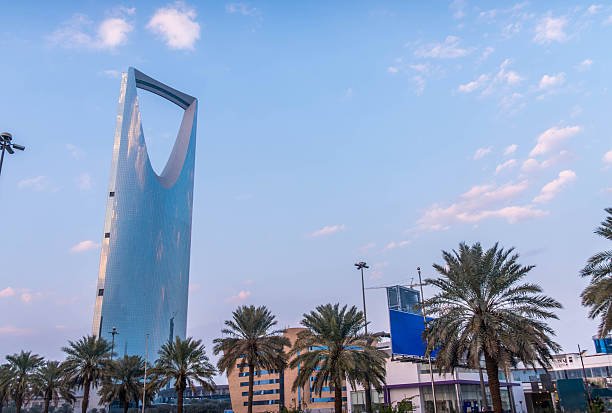
Saudi Arabia’s capital market is entering a more open and competitive phase in 2026, making disciplined investment decisions increasingly important for investors, family offices, institutions, and businesses. The introduction of amended foreign investment rules on 1 February 2026 has expanded direct access to the Main Market of the Saudi Exchange, while removing the previous Qualified Foreign Investor framework. These changes are increasing the importance of portfolio management services Riyadh for investors seeking to balance domestic opportunities, international capital flows, sector exposure, liquidity, and risk within a rapidly evolving market.
The regulatory shift is occurring alongside a sizeable expansion of the Saudi capital market. According to Saudi Exchange data, market capitalization reached SAR 9.86 trillion at the end of May 2026, equivalent to approximately USD 2.63 trillion, while average daily traded value reached SAR 5.73 billion. The exchange ranked 13th globally by market capitalization at that point.
For Saudi investors, these developments change the portfolio optimization equation. Investment decisions can no longer depend primarily on historical returns or individual stock selection. Investors increasingly need to consider diversification, liquidity, valuation, sector concentration, foreign ownership restrictions, macroeconomic developments, Vision 2030 investment priorities, and changing investor participation.
Understanding the New Tadawul Regulatory Environment
The most significant regulatory development in 2026 is the opening of the Saudi Main Market to all categories of foreign investors.
Previously, access for many non resident investors depended on specific eligibility structures, including the Qualified Foreign Investor framework and swap arrangements. The amended rules removed these structures and established a more unified framework for non resident foreign investment.
This represents a major change in the structure of Saudi capital markets.
Foreign investors can now participate directly in listed Saudi equities without needing to qualify under the former QFI framework. However, existing foreign ownership limits continue to apply, meaning market access has expanded without removing every ownership restriction.
The practical impact extends beyond foreign investors. Saudi investors are also operating in a market where international participation can influence liquidity, valuations, sector demand, trading patterns, and market sentiment.
This makes portfolio construction more dynamic.
Why the New Rules Matter for Portfolio Optimization
Portfolio optimization involves allocating capital across investments according to expected return, risk tolerance, liquidity requirements, investment objectives, and time horizon.
In a changing market, optimization must also incorporate regulatory developments.
The opening of Tadawul to broader international participation creates several important implications.
Greater Investor Diversity
A wider international investor base can introduce different investment preferences and valuation perspectives.
International institutional investors may evaluate Saudi listed companies according to factors such as:
- Earnings quality
- Free cash flow
- Corporate governance
- Dividend sustainability
- Environmental, social, and governance factors
- Global sector comparisons
- Valuation multiples
- Currency considerations
- Liquidity
As international participation increases, Saudi companies may increasingly be evaluated against global peers rather than only domestic benchmarks.
More Attention to Liquidity
Liquidity is becoming an increasingly important component of portfolio construction.
Saudi Exchange reported average daily traded value of SAR 5.73 billion in May 2026.
For large institutional portfolios, liquidity determines how efficiently positions can be entered or exited.
A portfolio containing highly concentrated positions in less liquid securities may generate attractive returns under favorable conditions but create significant execution risk during periods of market stress.
Smarter optimization therefore considers not only expected returns but also the ability to convert investments into cash efficiently.
Market Size Creates New Opportunities
The scale of Tadawul provides investors with a broad universe of companies and sectors.
At the end of May 2026, Saudi Exchange reported market capitalization of SAR 9.86 trillion.
This scale makes the Saudi market increasingly relevant to international asset allocators.
The market also provides exposure to sectors connected with the Kingdom’s economic transformation.
Key areas include:
- Banking and financial services
- Energy
- Petrochemicals
- Telecommunications
- Healthcare
- Utilities
- Mining
- Construction
- Real estate
- Tourism
- Transportation
- Technology
- Consumer services
- Entertainment
This broad sector composition allows investors to construct portfolios around different economic themes rather than depending on one industry.
For example, an investor seeking exposure to domestic consumption may prioritize retail, healthcare, telecommunications, and consumer businesses. An investor focused on infrastructure development may consider construction, utilities, industrial companies, and related service providers.
Vision 2030 Is Influencing Portfolio Construction
Saudi Arabia’s Vision 2030 transformation continues to influence investment opportunities across the economy.
Major developments in tourism, infrastructure, logistics, technology, entertainment, healthcare, manufacturing, and renewable energy are creating new investment themes.
For portfolio managers, the key issue is distinguishing between companies that have genuine earnings potential from these developments and companies that are simply associated with popular investment narratives.
This distinction is critical.
A portfolio should not be constructed solely around the expectation that a sector will grow. Investors should examine whether individual companies possess the financial strength, competitive position, governance standards, cash flow generation, and valuation characteristics necessary to benefit from that growth.
This is where professional portfolio management services Riyadh can become particularly relevant for investors who need structured analysis rather than simple market exposure.
Foreign Capital Can Change Valuation Dynamics
The removal of the QFI structure has the potential to broaden international participation in Saudi equities. The new framework allows broader foreign investor access to the Saudi capital market, subject to applicable requirements and ownership limits.
More international participation can influence how companies are valued.
Global investors often compare Saudi companies with businesses operating in other emerging markets, developed markets, and regional economies.
This can increase attention toward companies with:
- Strong recurring revenues
- Sustainable margins
- Transparent reporting
- High return on equity
- Strong balance sheets
- Consistent dividends
- Attractive growth prospects
- Effective corporate governance
As investor scrutiny increases, portfolio optimization becomes more analytical.
Diversification Becomes More Important
A larger market does not automatically create a diversified portfolio.
An investor may own 15 different Saudi stocks but still have substantial exposure to the same economic factor.
For example, several companies may depend on similar interest rate conditions, government spending cycles, commodity prices, consumer demand, or infrastructure investment.
True diversification requires analysis of underlying risk drivers.
Investors should therefore consider diversification across:
- Sectors
- Company sizes
- Growth and value characteristics
- Dividend and reinvestment strategies
- Domestic and international assets
- Equity and fixed income
- Public and private investments
- Geographic markets
The objective is not to own as many securities as possible. The objective is to create a portfolio where individual risks do not unnecessarily dominate overall performance.
Risk Management Moves to the Center
The changing Tadawul environment also increases the importance of risk management.
Market capitalization, liquidity, foreign participation, macroeconomic conditions, and investor sentiment can change simultaneously.
Professional portfolio optimization therefore requires continuous monitoring.
Important risk indicators include:
Concentration Risk
Investors should identify whether too much capital is allocated to one company, sector, theme, or economic factor.
Liquidity Risk
A security may appear attractive based on valuation but become difficult to sell during periods of market pressure.
Market Risk
Equity markets can experience significant movements because of economic conditions, interest rates, geopolitical developments, commodity prices, and investor sentiment.
Regulatory Risk
Changes in ownership requirements, market rules, disclosure standards, and investment regulations can affect portfolio decisions.
Valuation Risk
A high quality company may still represent a poor investment if its market price already reflects excessive growth expectations.
The Importance of Data Driven Investment Decisions
Modern portfolio optimization is increasingly based on quantitative analysis.
Investors can evaluate:
- Historical volatility
- Correlation between securities
- Sharpe ratios
- Beta
- Maximum drawdown
- Earnings growth
- Dividend yield
- Price to earnings ratios
- Price to book ratios
- Free cash flow
- Debt levels
- Return on equity
- Liquidity ratios
- Portfolio concentration
The purpose of these measurements is not to predict the market perfectly.
Instead, they help investors understand the relationship between potential return and risk.
For example, two companies could have similar expected returns but significantly different volatility profiles. A portfolio manager may therefore allocate more capital to the company with stronger risk adjusted characteristics.
Why Riyadh Investors Need a More Structured Approach
Riyadh is becoming an increasingly important center for financial activity in Saudi Arabia.
The city’s growing concentration of financial institutions, investment firms, family offices, corporations, and government linked investment activity makes sophisticated portfolio analysis increasingly relevant.
Investors managing substantial capital may have objectives extending beyond short term market performance.
They may need to balance:
- Capital preservation
- Long term wealth creation
- Income generation
- Intergenerational wealth transfer
- Business liquidity
- Regulatory considerations
- Investment diversification
These objectives require a framework that connects individual investments to broader financial goals.
Consequently, portfolio management services Riyadh can support investors by bringing together investment research, risk assessment, asset allocation, performance monitoring, and portfolio review within a structured process.
Family Offices Face a Different Portfolio Challenge
Family offices often manage multiple asset classes simultaneously.
Their portfolios may include listed Saudi equities, international equities, fixed income, real estate, private equity, venture capital, operating businesses, and alternative investments.
The opening of Tadawul to wider international participation adds another dimension to this environment.
A family office may need to determine how much capital should remain invested in Saudi equities compared with international markets.
It may also need to consider whether domestic holdings create excessive exposure to the Saudi economy.
For example, a family whose operating businesses already depend heavily on Saudi construction, real estate, or consumer demand may not necessarily benefit from concentrating its investment portfolio in the same economic themes.
Portfolio optimization should therefore examine the family’s total economic exposure rather than only the securities held in investment accounts.
Institutional Investors Are Watching Liquidity and Scale
Institutional investors operate under different requirements from individual investors.
Pension funds, asset managers, insurance companies, endowments, and other institutions often need to manage large pools of capital.
For these investors, portfolio construction involves several layers.
First, the investment universe must be screened.
Second, individual securities must be assessed.
Third, portfolio weights must be calculated.
Fourth, liquidity and trading capacity must be considered.
Finally, portfolios must be monitored against investment mandates and risk limits.
The Saudi market’s SAR 9.86 trillion market capitalization in May 2026 demonstrates the scale available to institutional investors.
However, market size alone does not eliminate portfolio risk.
Corporate Governance Becomes a Stronger Selection Factor
As international participation expands, corporate governance may become increasingly important in investment decisions.
Investors want confidence that management teams are acting in the interests of shareholders and that financial information is reliable and transparent.
Portfolio analysis can therefore examine:
- Board structure
- Shareholder rights
- Financial reporting quality
- Related party transactions
- Executive remuneration
- Disclosure practices
- Risk management
- Sustainability policies
- Internal controls
Strong governance can support investor confidence, while weak governance can increase perceived risk.
ESG Factors Can Influence Long Term Portfolio Decisions
Environmental, social, and governance considerations are also becoming increasingly relevant to global investors.
Saudi companies operating in energy, mining, infrastructure, manufacturing, transportation, and other industries may face greater scrutiny regarding environmental impact, resource efficiency, employee practices, governance, and sustainability.
For Saudi investors, ESG analysis should not simply be treated as a compliance exercise.
It can provide insight into long term operational risks and opportunities.
A company with strong resource efficiency, transparent governance, and effective risk management may be better positioned to adapt to changing investor expectations.
Portfolio Rebalancing Becomes Essential
Portfolio optimization is not a one time exercise.
Market conditions change.
Company valuations change.
Investor objectives change.
Regulations change.
As a result, portfolios need periodic review.
For example, a portfolio may initially allocate 20% to a particular sector because valuations appear attractive. If that sector subsequently rises sharply while other sectors remain relatively stable, the original allocation may no longer represent the intended risk profile.
Rebalancing can restore the target allocation.
A disciplined rebalancing process can help investors avoid allowing successful investments to become excessively dominant within the portfolio.
Technology Is Changing Portfolio Monitoring
Technology is making portfolio analysis faster and more sophisticated.
Investment teams can now monitor large numbers of securities using automated screening systems, quantitative models, portfolio dashboards, and real time market information.
Technology can help identify:
- Unusual volatility
- Concentration increases
- Correlation changes
- Valuation shifts
- Liquidity deterioration
- Earnings revisions
- Sector rotation
- Portfolio drift
However, technology does not replace investment judgment.
Quantitative models depend on assumptions and historical data. Unexpected economic events can cause relationships between assets to change quickly.
Human oversight therefore remains important.
What Smarter Portfolio Optimization Looks Like in 2026
The new Tadawul environment suggests that investors should move away from simple stock picking toward integrated portfolio management.
A smarter framework can include several stages.
1. Define Investment Objectives
Investors should establish their return expectations, risk tolerance, liquidity requirements, and investment horizon.
2. Build the Investment Universe
Potential securities should be screened according to financial quality, valuation, liquidity, sector outlook, governance, and growth prospects.
3. Measure Portfolio Risk
Portfolio managers should calculate concentration, volatility, correlation, drawdown exposure, and sensitivity to major economic variables.
4. Allocate Capital Strategically
Capital should be distributed according to expected risk adjusted returns rather than market popularity alone.
5. Monitor Regulatory Developments
Changes in Tadawul and CMA rules should be incorporated into portfolio decisions.
6. Review Performance
Performance should be evaluated against appropriate benchmarks and investment objectives.
7. Rebalance Regularly
Portfolio allocations should be adjusted when market conditions or investment objectives materially change.
The New Rules Could Increase Competition for Quality Assets
Greater market access can increase competition for attractive Saudi listed companies.
When more investors can participate, companies with strong fundamentals may attract broader attention.
This does not mean every stock will benefit equally.
Companies with weak financial performance, limited liquidity, or poor valuations may remain unattractive despite increased market participation.
The distinction between market access and investment quality is therefore critical.
Investors need to identify businesses that can generate sustainable shareholder value rather than simply following increased foreign interest.
What Saudi Investors Should Monitor Through 2026
The regulatory changes introduced in 2026 should be viewed within a broader market transformation.
Investors should monitor:
- Foreign investor participation
- Changes in trading liquidity
- Sector valuation differences
- New listings and IPO activity
- Corporate earnings
- Dividend policies
- Interest rate expectations
- Oil market developments
- Vision 2030 investment activity
- Corporate governance developments
- Foreign ownership utilization
- Market volatility
The interaction between these factors can have a significant influence on portfolio performance.
Strategic Role of Professional Portfolio Management
For investors managing complex portfolios, professional oversight can improve the consistency of investment decisions.
A structured portfolio management approach can connect market research with capital allocation and risk management.
The role of portfolio management services Riyadh is particularly relevant when investors need to coordinate multiple asset classes, investment objectives, risk limits, and market opportunities.
Professional portfolio management can involve asset allocation, security selection, investment research, performance analysis, risk monitoring, and periodic portfolio rebalancing.
The objective is not simply to maximize returns.
It is to seek an appropriate balance between return potential and the level of risk an investor is willing and able to accept.
Tadawul’s Growing Global Relevance
Saudi Arabia’s capital market is increasingly positioned as a major emerging market destination.
The Saudi Exchange reported a market capitalization of USD 2.63 trillion in May 2026 and ranked the market 13th globally by market capitalization.
These figures illustrate why changes in Tadawul regulation matter beyond Saudi Arabia.
International investors are gaining easier access to one of the largest equity markets in the region, while Saudi investors are participating in a market with increasing international integration.
This creates both opportunities and challenges.
Greater capital market integration can improve liquidity and investor participation, but it can also introduce new sources of volatility and competition.
The Strategic Direction for Saudi Portfolios
The 2026 regulatory environment points toward a more sophisticated Saudi investment ecosystem.
Portfolio strategies that worked when market participation was more concentrated may need to evolve as the investor base expands.
The most effective portfolios are likely to be those that combine:
- Fundamental research
- Quantitative analysis
- Risk management
- Diversification
- Liquidity analysis
- Regulatory awareness
- Long term asset allocation
- Continuous monitoring
The central lesson for Saudi investors is that greater market access does not automatically create better investment outcomes.
Better outcomes depend on how capital is allocated.
As Tadawul becomes more accessible to global investors and the Saudi market continues to expand, portfolio optimization is becoming a strategic discipline rather than simply an investment technique. The combination of SAR 9.86 trillion in market capitalization, SAR 5.73 billion in average daily traded value, and a significantly broader international investor base demonstrates the scale of the transformation underway in 2026.
For investors in Riyadh and across the Kingdom, the priority is increasingly shifting from finding individual opportunities to understanding how every investment contributes to the overall portfolio. This is where disciplined asset allocation, diversification, risk analysis, valuation research, and continuous monitoring become essential.
The evolving Tadawul framework therefore represents more than a regulatory adjustment. It signals a deeper transition toward a Saudi capital market where investment decisions are increasingly shaped by global participation, sophisticated risk management, quantitative analysis, and long term portfolio strategy. For investors seeking structured oversight in this environment, portfolio management services Riyadh can provide an important framework for aligning investment decisions with changing market conditions and long term financial objectives.