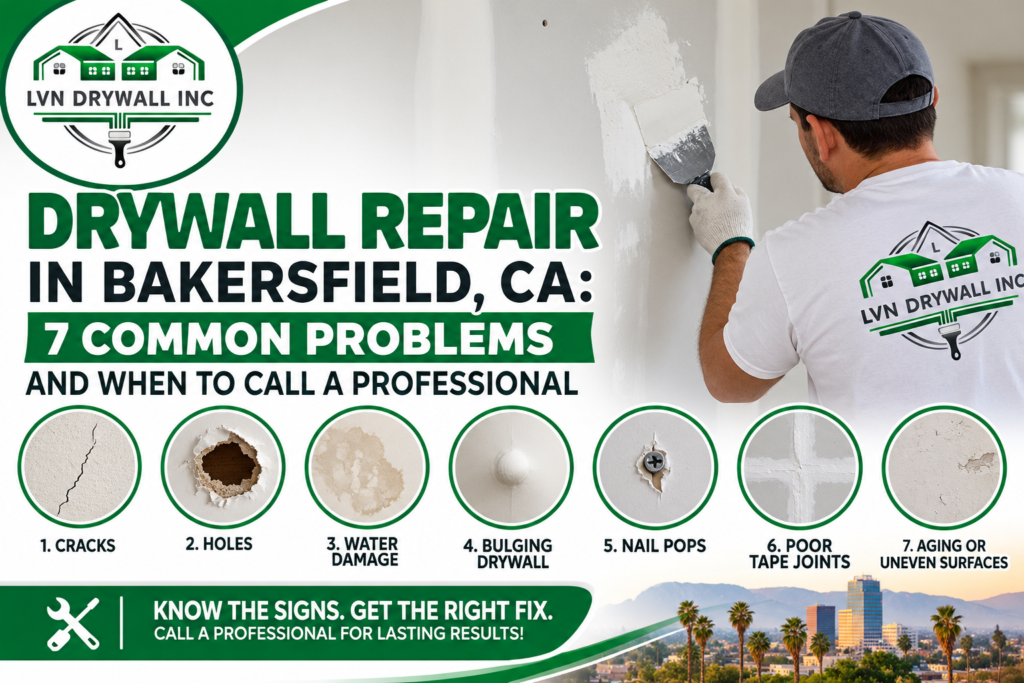
Damaged drywall can make an otherwise clean and attractive room look neglected. Small holes, spreading cracks, and peeling or uneven surfaces may seem like minor issues, but they can become more noticeable over time. Whether you are dealing with everyday wear and tear or damage caused by moisture, professional Drywall Repair in Bakersfield, CA can help restore your walls and ceilings and keep your home looking its best.
The challenge is knowing which problems you can fix yourself and which ones need professional attention. Here are seven common drywall problems, what may cause them, and when it makes sense to call an experienced drywall contractor.
-
Cracks Along Walls and Ceilings
Small cracks are among the most common drywall issues homeowners encounter. They may appear around door frames, above windows, along ceiling joints, or where two sections of drywall meet.
Some cracks develop as a house settles or building materials expand and contract with temperature changes. Others can result from poorly finished joints or movement around framing.
A thin, stable crack may only need filling, taping, and repainting. However, cracks that continue to return, grow wider, or appear alongside sticking doors and uneven surfaces deserve closer attention. These signs may indicate movement beyond the drywall itself.
A professional can assess the damaged area, prepare the surface, and apply the appropriate repair materials. Proper taping and finishing are important because simply covering a crack with compound may not prevent it from reappearing.
-
Holes From Furniture, Door Handles, or Accidents
Holes can happen easily. A door handle may strike a wall, furniture can leave an impact mark during a move, or an accidental bump can break through the drywall surface.
The right repair method depends on the size and depth of the damage. Small nail holes and shallow dents are generally straightforward to fill. Larger holes may require a drywall patch, additional support, joint compound, sanding, and careful finishing.
One common mistake is applying too much filler and leaving a raised, uneven spot. Another is failing to prepare the damaged edges before patching. Even if the hole is covered, poor workmanship can remain visible after painting.
For a seamless result, the repaired area should blend into the surrounding wall. This often requires feathering the compound outward, sanding it smoothly, and matching the existing texture before applying paint.
-
Water-Damaged Drywall
Water damage requires more attention than a simple scratch or hole. Leaking plumbing, roof problems, overflowing fixtures, and moisture entering from outside can all affect drywall.
Common warning signs include brown or yellow stains, bubbling paint, soft spots, swelling, and surfaces that begin to crumble. A persistent musty smell may also indicate a moisture problem.
Before repairing water-damaged drywall, identify and address the source of the moisture. Covering a stain with paint or applying fresh joint compound will not solve an active leak. Wet materials may need to be removed, and the affected area should be properly dried and assessed before repairs begin.
If you notice extensive damage, persistent moisture, or possible mold growth, consider getting the area professionally evaluated. Prompt attention can help prevent the problem from spreading and reduce the likelihood of repeated repairs.
-
Loose Tape and Visible Drywall Seams
Drywall panels are joined with tape and joint compound to create a continuous surface. When these materials deteriorate or were not installed correctly, seams can become visible.
You may notice raised lines, peeling tape, small cracks, or areas where the compound separates from the wall. These problems are especially noticeable under direct lighting, which can highlight even slight surface irregularities.
Adding another layer of paint rarely fixes a raised seam. The damaged material usually needs to be removed or secured, followed by fresh joint compound, appropriate taping where necessary, and careful sanding.
The goal is to create a smooth transition between panels rather than leave a visible ridge. Professional finishing can be particularly valuable in living rooms, hallways, and other spaces where natural light makes imperfections stand out.
-
Dents, Scratches, and Everyday Surface Damage
Walls take a lot of wear, particularly in busy households. Moving furniture, children playing, pets, and regular daily activity can leave dents, scuffs, and scratches across drywall surfaces.
Not every mark requires a major repair. Some superficial scuffs can be cleaned, while shallow dents may only need a small amount of patching compound. Deeper gouges and damaged paper surfaces require more preparation to create a durable finish.
Before repairing the wall, determine whether the damage is limited to the surface or has broken into the drywall core. Applying compound directly over loose paper or crumbling material can produce a weak repair.
For multiple damaged areas, a contractor can assess whether individual patches will work or whether a larger section needs attention. The right approach helps avoid a wall covered in visible repair spots.
-
Damaged Drywall Corners
Outside corners are exposed to frequent bumps from people, furniture, boxes, and cleaning equipment. Over time, the corner bead beneath the finished surface may dent, crack, or loosen.
Corner damage can be harder to repair than a flat section of wall because the edge must remain straight and well-defined. Simply spreading compound over a dent may leave the corner rounded or uneven.
Depending on the extent of the damage, repairs may involve reshaping the area, securing or replacing the corner bead, applying compound, and sanding the surface carefully.
If the corner is badly crushed or repeatedly cracking, professional repair can help restore its shape and strength. A clean, straight corner makes a noticeable difference in the finished appearance of a room.
- Ceiling Damage and Popcorn Ceiling Problems
Ceiling repairs can be challenging because overhead surfaces are harder to reach and imperfections are often visible from across the room. Cracks, peeling texture, small holes, and water stains can all make a ceiling look worn.
Popcorn ceilings can present additional difficulties. Matching an existing texture is not always simple, and scraping or disturbing older textured material may require special precautions. Some older ceiling finishes may contain asbestos, so testing and appropriate professional guidance may be necessary before disturbing them.
If your ceiling has water stains, sagging sections, or soft areas, investigate the cause before attempting cosmetic repairs. Sagging or extensive damage should be assessed promptly rather than covered up.
The repair process may involve removing loose material, addressing the underlying issue, patching the drywall, and blending the finish with the surrounding surface.
When Should You Hire a Drywall Contractor?
A small nail hole or minor surface scratch may be manageable as a DIY project. However, professional help is worth considering when damage covers a large area, keeps returning, affects a ceiling, or involves moisture.
You may also want a contractor when the repaired surface needs to match a textured wall, when several rooms need attention, or when you are preparing a property for sale or renovation.
If you are researching the warning signs that indicate a repair is needed, this related guide on signs you need professional drywall repair in Bakersfield offers another useful starting point.
Before hiring a contractor, ask what the repair includes. Clarify whether the work covers patching, taping, sanding, texture matching, and preparation for painting. Understanding the scope upfront makes it easier to compare estimates and know what to expect.
Restore Your Walls With the Right Repair
Drywall problems can range from small cosmetic imperfections to damage that points to a more serious issue. Addressing them early can help keep your walls and ceilings in good condition and prevent minor defects from becoming more disruptive repairs.
The best solution depends on the type of damage, its size, and what caused it in the first place. When a repair needs careful finishing or the problem keeps coming back, working with an experienced professional can save time and help deliver a cleaner result.
For help with drywall damage, patching, and finishing, explore the drywall services offered by LVN Drywall Inc. to learn more about available services and discuss your project.