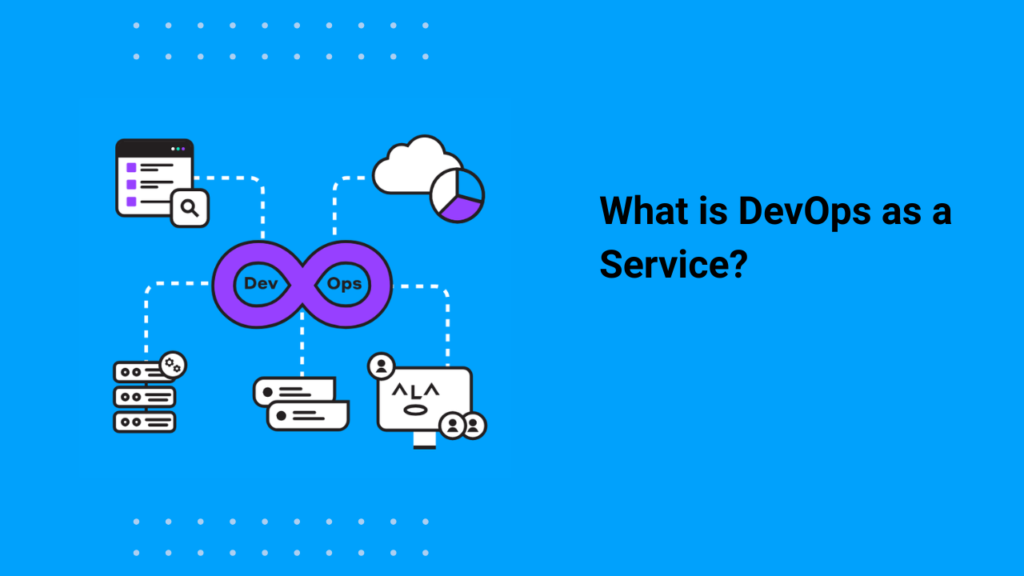
DevOps can improve how development and operations teams build, test, deploy, and maintain software. But setting up the right tools, processes, monitoring, and infrastructure can take a lot of time, especially for a small technical team. DevOps as a Service providers give businesses access to DevOps expertise and infrastructure support without requiring them to build a large DevOps team internally.
A provider may help with cloud infrastructure, CI/CD pipelines, container management, monitoring, security, automation, and deployment workflows. The exact services depend on the provider and the plan.
There are several companies in this space, and they don’t all work the same way. Some focus on cloud platforms, while others provide broader DevOps consulting and managed services. Here’s a look at DevOps as a Service providers worth considering.
What is DevOps as a Service Providers?
DevOps as a Service is a managed approach to DevOps where an external provider handles some or all of the technical work involved in building and maintaining a DevOps environment. Instead of hiring specialists for every part of the workflow, a company can work with an external team for areas such as:
- Cloud infrastructure management
- CI/CD pipeline setup
- Infrastructure automation
- Container management
- Kubernetes administration
- Application monitoring
- Security management
- Deployment automation
- Infrastructure as code
- Incident response
The scope varies considerably between providers. Some handle infrastructure and operations, while others work closely with internal developers on the entire software delivery process.
What should you look for in a DevOps as a Service provider?
Choosing a provider based on a long service list can lead to problems later. Focus on the work your team actually needs help with.
Cloud experience
Check which cloud platforms the provider works with. If your infrastructure already runs on AWS, Azure, or Google Cloud, experience with that platform should be one of your basic requirements.
CI/CD support
Ask how the provider handles continuous integration and continuous delivery. Find out whether they can build pipelines around your existing source control, testing process, deployment method, and application architecture.
Kubernetes and containers
If your applications use Docker or Kubernetes, check the provider’s experience with container environments. Ask who handles cluster updates, monitoring, security, resource management, and troubleshooting.
Monitoring
Monitoring helps teams identify problems before they become larger incidents. Look for support for application monitoring, infrastructure monitoring, logs, alerts, and performance tracking. Also ask who receives alerts when something goes wrong.
Security
DevOps work often touches application code, infrastructure, deployment pipelines, and cloud accounts. Check how the provider handles access permissions, secrets, security updates, network controls, vulnerability management, and audit requirements.
Support model
Find out when support is available and how incidents are handled. A business running a customer-facing application may need 24/7 support, while a small internal application may only need assistance during business hours.
How much does DevOps as a Service cost?
There isn’t one standard price for DevOps as a Service. The cost depends on the size of your infrastructure, number of applications, cloud platform, level of automation, support hours, and amount of ongoing management.
Some providers work on monthly managed-service agreements. Others use project-based pricing for migration, automation, or infrastructure setup.
Before comparing quotes, define the work involved. A provider managing 3 production applications will have a very different workload from one supporting a single development environment. Clear requirements make pricing comparisons more useful.
When should a business use DevOps as a Service?
External DevOps support can make sense when your development team is growing faster than your operations capabilities. It may also help when:
- Your deployments are mostly manual.
- Infrastructure takes too much developer time.
- Your team lacks Kubernetes or cloud experience.
- You need help building CI/CD pipelines.
- Monitoring and incident response need improvement.
- You’re moving applications to the cloud.
- You need ongoing infrastructure management.
- Hiring a full DevOps team isn’t practical yet.
The arrangement doesn’t have to cover every part of your infrastructure. Some businesses outsource specific tasks while keeping application development and architecture decisions in-house.
What are the benefits of using a DevOps service provider?
The main benefit is access to technical experience without having to build every capability internally. An external team can help set up deployment pipelines, manage cloud infrastructure, handle routine operations, and establish monitoring practices. It can also give internal developers more time to work on the application itself.
There are tradeoffs, though. Your team will depend on an outside organization for some technical work, so documentation, access control, communication, and clear responsibilities matter. Before signing a contract, decide who owns the infrastructure, source code, credentials, documentation, and deployment process.
How to choose the right provider
Start by listing your current infrastructure and the problems your team is trying to solve. Then separate the requirements into 3 groups: work you want the provider to manage, work your internal team will keep, and work that may change later.
Ask potential providers about their experience with your cloud platform, application type, deployment process, and security requirements.
It’s also useful to ask what happens when you want to leave the service. Make sure your team can access its code, infrastructure configuration, documentation, and data without unnecessary restrictions. A good DevOps service arrangement should make responsibilities clear from the beginning.
Final thoughts
DevOps as a Service can be useful for companies that need cloud and development operations support without building a large internal team.
AWS, Azure, Google Cloud, IBM, Rackspace Technology, Accenture, and Tek Yantra each approach the market differently. Some are better suited to enterprise environments, while others may be a better fit for smaller development teams or web applications.
Compare the provider’s technical experience, support model, security practices, pricing, and scope of responsibility before making a decision. The best choice is the provider that fits your existing infrastructure and the specific DevOps work your team needs help with.