Modern farming requires careful planning, timely crop treatment, and efficient use of farm resources. Farmers need to manage large fields while dealing with changing weather, labor shortages, rising costs, and the need to protect crops from pests and diseases. Traditional spraying methods can take a lot of time and may not always provide the right level of coverage. This is where drone spraying services can offer a practical solution.
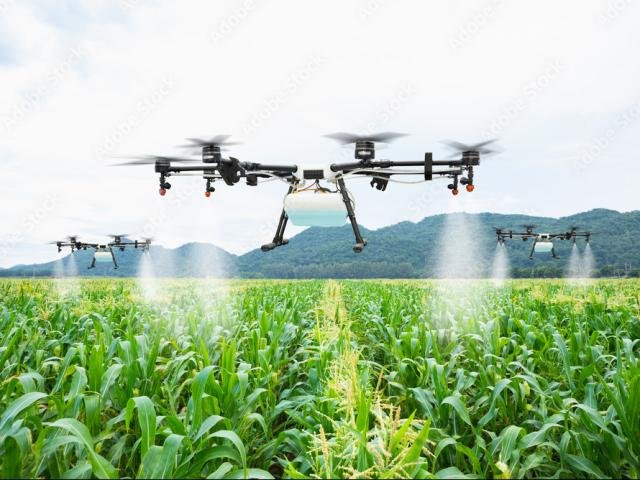
Agricultural drones allow farmers to apply fertilizers, pesticides, herbicides, fungicides, and other crop treatments from the air. They can reach areas that are difficult for tractors and other ground equipment to access. With accurate flight controls and modern spraying systems, drones can help farmers manage crops more efficiently while reducing unnecessary field traffic.
What Are Drone Spraying Services?
Drone spraying services use agricultural drones equipped with tanks, pumps, nozzles, and navigation systems to apply liquids across farmland. Instead of purchasing and operating spraying equipment themselves, farmers can hire trained professionals to perform the work.
The service provider usually reviews the field, identifies the required treatment, plans the flight path, fills the drone with the appropriate product, and completes the application according to the planned coverage area.
Depending on the farm and crop requirements, drone spraying can be used for:
- Pesticide application
- Herbicide spraying
- Fungicide treatment
- Liquid fertilizer application
- Crop growth products
- Targeted treatment of problem areas
- Field applications in difficult terrain
This makes drone technology useful for farms of different sizes and production types.
Better Control Over Crop Treatment
One of the main benefits of drone spraying is better control over where and how a treatment is applied. A drone can follow a planned flight path and spray specific sections of a field.
Traditional equipment may apply products across an entire area even when only certain sections require treatment. Drone technology can support more targeted applications when field data is available.
For example, if a farmer notices pest activity in one part of a field, the affected area may be treated without sending heavy equipment across the entire crop. This approach can help reduce unnecessary product use and allow farmers to respond more quickly to crop problems.
Less Damage to Growing Crops
Large tractors and other ground machinery can create problems when crops are already tall or fields are difficult to navigate. Equipment moving through planted areas can damage plants and create unwanted tracks.
Drones fly above the crop, so they do not need to drive directly through planted rows. This can be particularly useful during later stages of crop growth when plants are more difficult to pass through without causing damage.
By reducing ground traffic, farmers can protect more of their growing crop while still completing important spraying work.
Faster Field Operations
Time is extremely important in agriculture. A pest outbreak, fungal problem, or weed issue can spread quickly if treatment is delayed.
Hiring drone spraying services can help farmers complete applications without spending long periods preparing and operating large ground machines. Professional drone operators can plan routes and cover the required areas efficiently.
This can be especially useful when farmers need to treat several fields within a limited time. Quick application allows farmers to respond to crop conditions while the treatment is still useful.
Useful During Wet Field Conditions
Heavy rain can make farmland too soft for tractors and other heavy machinery. Attempting to move large equipment through wet soil can create deep tracks and contribute to soil compaction.
Agricultural drones provide an alternative because they do not travel over the field on wheels. When weather and application conditions are suitable, drones can reach areas that may be difficult for ground equipment.
Farmers should still consider wind, rain, temperature, and product instructions before any spraying operation. Good timing is important for both crop protection and safe application.
Reaching Difficult Areas
Not every farm has flat, open fields. Some agricultural land includes slopes, uneven ground, narrow areas, orchards, or sections that are difficult to reach with conventional equipment.
Drones can fly over these areas without requiring a tractor to climb steep or uneven terrain. This can make aerial spraying a useful option for farms with challenging field conditions.
For example, vineyards, orchards, and fields located on slopes may benefit from drone applications when traditional equipment cannot easily reach every section.

Supporting Precision Agriculture
Precision agriculture focuses on using information and technology to make better decisions about crops, soil, water, fertilizers, and pest control. Drone spraying fits well into this approach.
Farmers can combine drone imagery, field maps, GPS data, and crop observations to identify areas that need attention. A drone can then be used to apply treatment according to the planned requirements.
This creates a more organized crop management process. Instead of treating every part of a field in exactly the same way, farmers can make decisions based on actual field conditions.
Reducing Labor Pressure
Finding enough agricultural workers during busy seasons can be difficult. Spraying large fields also requires people who understand equipment operation, product handling, field conditions, and application procedures.
Professional drone operators can handle much of this work for farmers. They bring the required equipment and technical knowledge to the field, reducing the amount of work the farm team needs to perform.
This does not remove the need for skilled agricultural workers. Instead, it allows farm employees to spend more time on other important activities such as crop monitoring, irrigation, harvesting preparation, equipment maintenance, and general farm management.
Improving Access to Problem Areas
Crop problems are not always spread evenly across a field. Some areas may have more weeds, insects, disease, or nutrient deficiencies than others.
Drone spraying allows farmers and service providers to focus attention on specific locations when field information supports targeted treatment.
For example, a farmer may identify a section with increased weed growth. Rather than treating the whole farm immediately, the operator can plan a flight over the affected area. This targeted approach may help improve resource management.
Better Use of Water and Spray Products
Water is an important resource in agriculture. Spraying systems that use excessive water can increase costs and make field operations more difficult.
Many agricultural drones are designed to apply liquid products in controlled amounts. The exact application rate depends on the drone, nozzle system, product, crop, and local requirements.
Using the correct settings is essential. Farmers should never assume that a lower spray volume is automatically better. The application must follow the product label and professional recommendations.
When properly planned, drone spraying can help farmers manage spray volume and avoid unnecessary applications.
Helping Farmers Make Timely Decisions
Modern farm management depends heavily on timing. Farmers need to know when crops require treatment and how quickly they can respond.
Drone technology can support this process by making field applications more flexible. When a problem is identified, a professional service provider may be able to plan a treatment without waiting for heavy machinery to become available.
This can be valuable during busy agricultural periods when several farms may require spraying at the same time.
Important Factors Before Hiring a Drone Spraying Service
Although agricultural drones provide many benefits, farmers should choose a service provider carefully. The operator should understand agricultural spraying practices and local regulations.
Before hiring a company, farmers should consider:
- Operator experience
- Drone capacity
- Spray equipment and nozzle options
- Flight planning technology
- Application accuracy
- Safety procedures
- Product handling practices
- Insurance and licensing requirements
- Maintenance of the drone
- Weather monitoring
- Field mapping capabilities
It is also important to provide accurate information about the crop, field size, treatment requirements, and location. Good communication helps the operator prepare the correct spraying plan.
Safety and Local Regulations Matter
Drone spraying involves agricultural chemicals, so safety should always be a priority. Operators must follow applicable aviation rules, agricultural chemical regulations, product labels, and environmental requirements.
Farmers should work with qualified service providers who understand these requirements. Spraying should only take place under suitable weather conditions and with proper precautions to reduce risks to workers, nearby properties, water sources, animals, and surrounding vegetation.
Responsible drone operation is an important part of modern farm management.
The Future of Drone-Based Farm Management
Agricultural drone technology continues to develop. Newer systems can offer better navigation, improved battery performance, more accurate spraying equipment, and stronger connections with farm mapping tools.
In the future, drones may become even more closely connected with crop monitoring and farm management software. Farmers could use field data to identify problems, create treatment plans, and track applications more efficiently.
However, technology alone does not replace agricultural knowledge. The best results come from combining drone technology with good crop management, field inspections, accurate data, and professional decision-making.
Conclusion
Drone spraying services are becoming a useful part of modern agriculture because they can help farmers manage crop treatments with greater flexibility and control. Drones can reach difficult areas, reduce ground traffic, support targeted applications, save valuable time, and reduce pressure on farm labor.
They can also work alongside precision agriculture tools to help farmers make better decisions about where and when treatments are needed. While drones are not the right solution for every farm or every application, they provide a practical option for many agricultural operations.
As farming becomes more technology-driven, drone spraying can play an important role in making field operations more organized, responsive, and efficient. When used correctly and responsibly, this technology can help farmers protect crops while making better use of their time, equipment, and resources.