The Essentials Hoodie: Why Everyone’s Wearing
The Essentials Hoodie: Why Everyone’s Wearing It and How to Get It Right
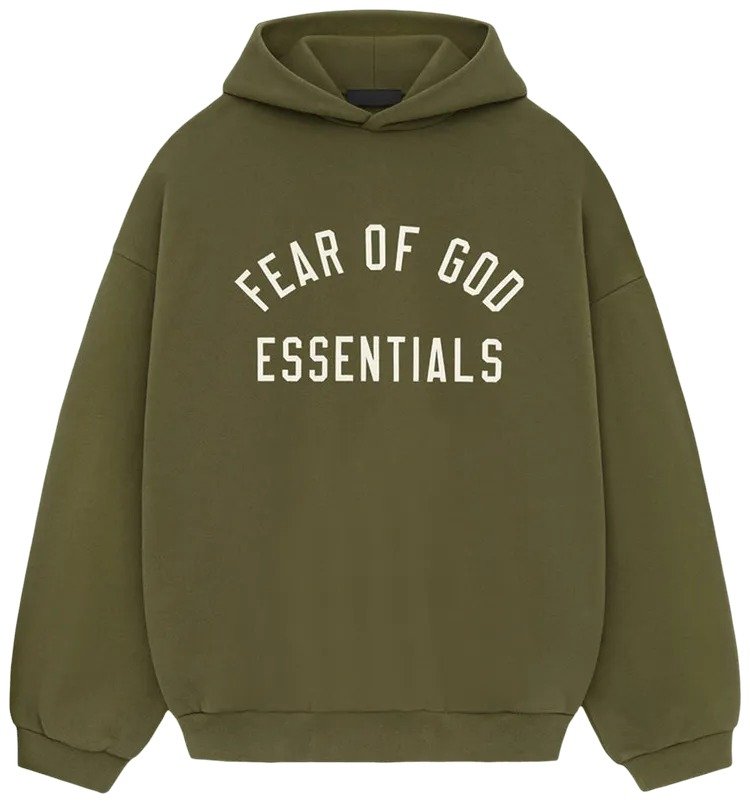
Walk into any high school hallway, college campus, or weekend coffee shop in America right now, and you’ll see it. That clean, boxy silhouette. The subtle chest wordmark. The neutral earth tones that somehow match everything.
The Essentials Hoodie isn’t just another piece of streetwear. It’s become a genuine cultural moment—a status symbol for Gen Alpha, a parenting compromise for millennials, and a wardrobe staple for anyone who values comfort without sacrificing style.
But here’s what most articles won’t tell you: buying the right Essential hoodie requires more thought than you might expect. The sizing runs wildly different from standard American brands. The resale market is flooded with fakes. And caring for these heavyweight pieces properly determines whether they last two years or ten.
This guide covers everything you actually need to know. No fluff. Just real information that helps you make a smart purchase.
What Makes Essentials Hoodies Different?
The Fear of God Connection
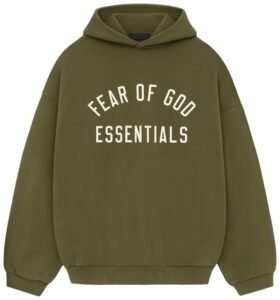
Essentials is the diffusion line of Fear of God, the luxury streetwear label founded by Jerry Lorenzo in Los Angeles. The main Fear of God line carries four-figure price tags. Essentials brought the same design language—heavy fleece, drop shoulders, muted palettes—to accessible pricing.
Lorenzo launched Essentials in 2018. It didn’t explode overnight. The brand built momentum through consistent releases, smart retail partnerships with places like Pacsun and SSENSE, and organic social media buzz that money can’t buy.
Here’s what Lorenzo told Ssense about the brand’s identity: “This is not a Christian clothing brand. It’s not, ‘Hey, this is about Jesus!’ Although as my brand has grown beyond my expectation, I naturally only want to give glory to him for my success”.
That authenticity matters to the audience. Nothing about Essentials feels manufactured or focus-grouped.
The Fabric That Built the Hype
Essentials hoodies use heavyweight fleece—typically 380 GSM or higher. That number matters more than most shoppers realize.
Standard hoodies from typical mall brands sit around 250-300 GSM. That’s lightweight. It drapes close to the body, clings where you don’t want it to, and loses shape after a season of washing.
The 380 GSM construction in Essentials pieces creates a different physical experience entirely. The weight pulls the fabric downward rather than letting it conform to your body. That’s what creates the signature boxy silhouette—the garment holds its structure instead of collapsing into whatever shape gravity and sweat dictate.
The material composition is 80% cotton, 20% polyester. This blend matters. Pure cotton shrinks unpredictably and loses shape. Pure polyester feels synthetic and traps odor. The blend gives you cotton’s breathability and softness with polyester’s structural memory.
The Logo Application
Most Essentials hoodies feature a soft-touch rubberized logo on the chest or back. This isn’t a cheap screen print.
The application process uses heat and pressure to bond a rubberized appliqué to the fleece surface. When done correctly, the bond is strong under normal conditions. The problem? That same heat that creates the bond during production also weakens it during washing and drying.
Understanding this matters because logo peeling isn’t a defect on genuine pieces—it’s thermal damage from incorrect care. More on that later.
Essentials Hoodie Sizing: The Critical Information
They Run Very Big
This is the single most important thing to understand: Essentials hoodies run at least one to two full sizes larger than standard US sizing.
A size Medium in Essentials Tracksuit fits like a size Large in most American brands. Sometimes larger.
Most first-time buyers who order their normal size end up swimming in fabric with no visible silhouette at all. The hoodie overwhelms their frame completely.
How to Size Correctly
The reliable method is matching your chest measurement in inches to the lower end of the size range in the brand’s size chart. That single number gives you more accurate sizing information than any general rule about “going down one or two sizes.”
For reference: if you typically wear a Medium in brands like Nike or Adidas, you’ll likely want a Small in Essentials. If you wear a Large, start with a Medium.
Slim builds often need to go down two full sizes to achieve the intended boxy silhouette without drowning in fabric.
Match Your Top and Bottom
Here’s a tip most guides miss: order the same size for your Essentials hoodie and sweatpants.
The complete sweat suit functions as a proportional system. The wide chest of the hoodie balances against the relaxed thigh of the sweatpants at equivalent size labels. Buying different sizes for each piece based on different body measurements creates a top-heavy or bottom-heavy visual imbalance that fights the coordinated set aesthetic.
Buyers who wear different sizes consistently find the outfit reads as two separate garments rather than a cohesive look.
Authenticity: How to Spot a Fake
The Essentials resale market is filled with counterfeits. Some are obvious. Others require close inspection.
Price Reality Check
Authentic Essentials hoodies typically retail between $110 and $200 depending on the specific piece and season. Resale prices can range from $100 to $400+ for rare colorways and limited releases.
If you find an Essentials hoodie for $50, it’s not a deal. It’s a scam.
The Flocking Test
The rubberized logo application on authentic Essentials pieces uses a technique called flocking—electrostatically applied fibers that create a dense, velvet-like pile structure.
Here’s how to test it:
Run your fingertip along the edge of the logo. On an authentic piece, you’ll feel a clean, sharp boundary where the fiber pile terminates. Counterfeits show a gradual, uneven transition where coverage thins out before the edge.
Press your thumb firmly into the logo center for three seconds, then release. Authentic flocking recovers to its upright orientation within one to two seconds. Cheap alternatives show slow, incomplete recovery—some fibers remain flattened.
Stroke the graphic slowly in one direction, then the opposite. Authentic pile darkens when stroked against fiber orientation and lightens when stroked with it. Flat prints show no tonal shift.
The Light Test
Examine the graphic under a single light source at a low angle. Authentic pile creates a visible shadow line at the graphic perimeter due to the physical height difference between the pile and the fabric surface. Flat prints cast no shadow regardless of lighting angle.
Caring for Your Essentials Hoodie
The Golden Rules
Never use a tumble dryer. This is non-negotiable. A standard residential dryer runs between 125 and 135 degrees Fahrenheit on a normal cycle. High heat cycles reach 150 degrees or above. Those temperatures exceed the thermal threshold of the adhesive bond on rubberized appliqué in a single session.
One high-heat dryer cycle does more damage to the logo than twenty cold water machine washes.
Always turn the hoodie inside out before washing. The inside-out position places the fabric backing against the drum friction rather than the logo surface. Friction damage drops significantly with this single adjustment.
Use cold water only. Warm water at 86 degrees begins affecting the adhesive bond over repeated cycles. Hot water at 104 degrees or above accelerates delamination significantly with each wash.
The Right Detergent
Harsh detergents contain enzymes and optical brighteners that attack rubber and silicone surfaces over repeated wash cycles. These ingredients degrade the adhesive chemistry that bonds the logo to the fleece.
Use a gentle or delicate liquid detergent. Woolite or similar gentle formulas work without the aggressive enzyme content. Use the minimum recommended amount.
Avoid detergent pods entirely. Pods concentrate detergent chemistry in one location during the early wash cycle, hitting the logo surface before dilution spreads the chemistry through the drum.
Drying Protocol
Remove the garment from the washing machine immediately after the cycle completes. Place it directly on a drying rack or flat surface.
Air drying preserves the fleece construction, prevents shrinkage, and maintains the logo integrity. The cotton fibers set into whatever position they occupy during drying. Laying the hoodie flat and smoothing it into its original shape before drying maintains proper proportions.
Styling Your Essentials Hoodie
The complete Essentials sweat suit works best when styling choices complement rather than compete with the wide-chest, relaxed-thigh proportions.
Footwear: Clean white leather sneakers, simple low-profile athletic shoes, and understated boots all read correctly. Chunky oversized sneakers fight the structured taper of the Essentials silhouette.
Layering: A structured overcoat or puffer vest in a complementary neutral colorway adds seasonal weight without creating proportional conflict. Avoid narrow-lapel blazers or slim-cut jackets that create visual tension against the wide chest.
Color coordination: The neutral Essentials palette—oatmeal, cement, black, taupe—coordinates naturally with most wardrobe additions. You rarely need to think hard about matching.
Top 10 FAQs About Essentials Hoodies
1. Do Essentials hoodies run true to size?
No—they run at least one to two full sizes larger than standard US sizing, so size down for the intended fit.
2. How much does an Essentials hoodie cost?
Authentic Essentials hoodies typically retail between $110 and $200, with resale prices reaching $400+ for rare colorways.
3. How can I tell if an Essentials hoodie is fake?
Check the logo texture—authentic flocking has a velvet-like pile that recovers when pressed and shows directional color shift; flat prints indicate counterfeits.
4. What is the GSM of Essentials hoodies?
Most Essentials hoodies use 380 GSM core fleece, significantly heavier than standard hoodies.
5. Can I put my Essentials hoodie in the dryer?
Never—tumble drying causes logo peeling and fabric shrinkage; always air dry flat.
6. How do I wash an Essentials hoodie without ruining the logo?
Turn it inside out, wash in cold water on a gentle cycle with mild detergent, and air dry immediately after.
7. Who founded Fear of God Essentials?
Jerry Lorenzo founded Fear of God in 2011 and launched the Essentials diffusion line in 2018.
8. Are Essentials hoodies worth the money?
Yes, if you value heavyweight construction, timeless design, and cultural relevance—the 380 GSM fleece and neutral palette justify the premium over fast-fashion alternatives.
9. What sizes do Essentials hoodies come in?
Essentials offers sizes from XS through 3XL depending on the specific piece and season.
10. Where can I buy authentic Essentials hoodies?
Purchase directly from essentialshoodieoutlet.us or authorized retailers like SSENSE, Nordstrom, and Pacsun to avoid counterfeits.
The Bottom Line
The Essentials Hoodie earned its status. The heavyweight construction, the clean design language, and the cultural positioning all contribute to a product that genuinely delivers on its promise.
But buying one requires knowledge. Size down. Check authenticity carefully. Follow the care instructions without shortcuts.
Do those three things, and you’ll have a hoodie that lasts for years—not just a season. And that’s what separates a smart purchase from an expensive mistake.