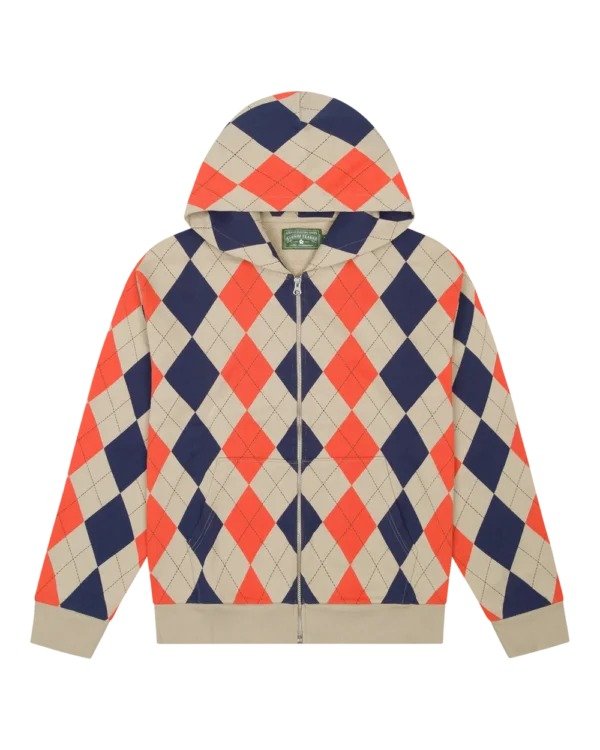
Denim Tears: The Complete Guide to the Brand
Denim Tears: The Complete Guide to the Brand That Turned Cotton Into a Statement
Introduction:
Walk down any major street in New York, Los Angeles, or Atlanta, and you’ll likely spot it—a cotton wreath emblazoned across a hoodie, a pair of jeans, or a trucker jacket. That symbol, simple yet profound, belongs to Denim Tears, a brand that has fundamentally changed how we think about streetwear, history, and the stories we choose to wear.
Founded in 2019 by Tremaine Emory, Denim Tears Clothing isn’t just another clothing label competing for shelf space. It’s a narrative project, an art platform, and a cultural archive rolled into one . Every collection tells a story about the African diaspora—stories that have been overlooked, buried, or deliberately erased from mainstream narratives.
What makes this brand truly remarkable is how it has achieved both critical acclaim and commercial success without compromising its message. In an industry often driven by hype cycles and fleeting trends, Denim Tears has built something enduring: a brand with substance, integrity, and a point of view that refuses to be diluted .
The Origin Story: How a Trip to a Plantation Changed Fashion
Tremaine Emory’s Vision
To understand Denim Tears, you need to understand the man behind it. Tremaine Emory was born in Atlanta, Georgia, in 1981 and raised in Jamaica, Queens, New York . His path to fashion wasn’t conventional. Before launching Denim Tears, Emory built a reputation as a cultural catalyst through No Vacancy Inn, a creative collective he co-founded with Ade “Acyde” Odunlami and Brock Korsan . He worked with Kanye West, Off-White, Stüssy, and Marc Jacobs, and in 2022, he became Supreme’s first-ever Black creative director .
But it was a visit to the Whitney Plantation in Louisiana that crystallized the idea for Denim Tears. Walking through a place where enslaved people had lived, worked, and died, Emory began connecting dots that most people overlook. Cotton. Denim. Slavery. The threads that bind American fashion to one of history’s greatest atrocities .
Why Cotton and Why Denim
Emory’s choice of materials is anything but arbitrary. Denim, after all, is made from cotton. And cotton was the crop that built American wealth on the backs of enslaved people . By using denim as his canvas, Emory creates garments that already carry history before a single graphic is applied. The fabric itself is the argument .
The cotton wreath, which has become Denim Tears’ signature motif, functions as both a memorial and a reclamation. Wreaths typically symbolize mourning and remembrance. By placing one on denim—the very fabric woven from the crop that enslaved millions—Emory transforms a symbol of pain into one of pride and survival .
The Signature Symbol: Understanding the Cotton Wreath
The cotton wreath isn’t just a logo. It’s a thesis statement. When you see that circular arrangement of cotton bolls across a hoodie or jacket, you’re looking at a symbol that carries multiple meanings simultaneously.
For Emory, the wreath honors his own family history—relatives who were enslaved laborers, cotton pickers, and even cotton-field owners . It acknowledges the brutal reality of the cotton industry while simultaneously celebrating how far Black Americans have come . The wreath appears in various forms across Denim Tears collections: as a simple print, as appliqué, rendered in Swarovski crystals, and even as oxidized studs .
What makes the motif so powerful is its versatility. It can be subtle or bold, worn as a quiet statement or displayed as a massive graphic across an entire garment. The “Big Cotton Wreath” collection from 2025 took this to its logical extreme, enlarging the motif to dramatic proportions that made the political and historical message impossible to ignore .
The Levi’s Collaboration: Where History Meets Heritage
If there’s one collaboration that perfectly encapsulates what Denim Tears Tracksuit is about, it’s the ongoing partnership with Levi’s. The first capsule launched in 2020, marking 400 years since the first enslaved Africans arrived in Point Comfort, Virginia . This timing was deliberate, not coincidental.
The Levi’s x Denim Tears collections have explored different facets of Black American history with each season. Season one introduced the cotton wreath motif alongside garments like the “Plantation Hat”—a piece whose very name forces acknowledgment of what denim represents . Season two shifted focus to the Gullah Geechee people and their forced labor in indigo dye production. Season three honored Black biker culture, celebrating its spirit of defiance, freedom, and resistance to conformity .
What makes this collaboration particularly meaningful is that Levi’s itself is inextricably linked to American history, both its triumphs and its atrocities. By partnering with the brand most associated with denim, Denim Tears creates a dialogue between past and present, between the heritage brand and the communities it once indirectly profited from.
Beyond Denim: Collaborations That Tell Stories
Dior: Luxury Meets Activism
In December 2022, Denim Tears partnered with Dior Men’s artistic director Kim Jones for a capsule collection unveiled at Cairo’s Grand Egyptian Museum . Titled “Dior Tears,” the collection drew inspiration from Black Ivy League students of the 1950s and ’60s, paying tribute to figures like James Baldwin and Miles Davis .
This collaboration was significant because it placed Denim Tears’ historical argument within the context of European luxury fashion—and did so on African soil. The pairing of Emory’s streetwear sensibility with Jones’s refined tailoring created something entirely new, proving that activism and luxury don’t have to be mutually exclusive .
Converse: Pan-African Colors on a Classic Silhouette
The Denim Tears x Converse Chuck 70 project drew from Marcus Garvey’s Pan-African flag and artist David Hammons’ “African-American Flag” . Released during the racial justice protests following George Floyd’s murder, the collaboration became visually associated with the movement, its red, black, and green colorway appearing at protests and marches across the country .
Other Notable Partnerships
Denim Tears has also collaborated with Stüssy, Ugg, ASICS, Dr. Martens, and Corteiz, among others . Each partnership is chosen carefully—Emory has said he only works with brands he believes can support his activism . An adidas collaboration is expected for Winter 2026, featuring the Superstar and Stan Smith silhouettes .
Denim Tears in the Cultural Canon
The Met and SCAD
Perhaps the strongest validation of Denim Tears’ cultural significance is its inclusion in the permanent collection of The Metropolitan Museum of Art’s Costume Institute . For a brand founded in 2019 to achieve this recognition so quickly is virtually unheard of. The Met’s acquisition of garments like the Tyson Beckford Sweater—which replaces the American flag with David Hammons’ Pan-African flag on a Ralph Lauren-style knit—signals that fashion historians recognize Denim Tears as more than a commercial enterprise .
The SCAD Museum of Art in Savannah, Georgia, hosted “From the Black Pool of Genius,” an exhibition dedicated to Denim Tears . These institutional recognitions matter because they ensure that the stories Emory tells will be preserved and studied for generations.
Commercial Success Without Compromise
Denim Tears has achieved something rare: it generates “tens of millions” in annual revenue while maintaining artistic integrity . The brand has doubled sales every year since its founding, operates with no outside investors, and maintains just one retail partner (Dover Street Market) plus its own flagship stores .
On the resale market, demand remains strong. Sales of Denim Tears items on StockX grew 290 percent in 2024, and products sold for 31 percent above retail on average in the first half of 2025 . This combination of cultural relevance and commercial viability proves that consumers increasingly want to support brands that stand for something.
Wearing Denim Tears: What You Need to Know
Sizing and Fit
Denim Tears garments generally fit true to size with a relaxed, streetwear-oriented cut . Hoodies and sweatpants run slightly oversized by design—if you prefer a fitted look, consider sizing down. Denim pieces fit like the base brand they’re built on, so Levi’s collaborations follow Levi’s sizing .
The hoodies are constructed from heavyweight cotton fleece, giving them structure and warmth rather than a soft, lightweight drape . This heavier construction helps the garments maintain their shape over time. For those who want maximum room in the body and shoulders, true to size works well. Those seeking a more exaggerated, oversized silhouette should size up .
Where to Buy
Denim Tear operates its own flagship stores: African Diaspora Goods at 176 Spring Street in New York and a location in Atlanta’s Lenox Square . The brand also sells through Dover Street Market via a concession model . A Tokyo flagship is planned for 2026, with additional stores eventually coming to cities like Chicago, Houston, Philadelphia, Portland, and Los Angeles .
Given the brand’s popularity, items often sell out quickly. The resale market (StockX, GOAT, etc.) provides an alternative, though expect to pay above retail for sought-after pieces.
Frequently Asked Questions
What does the Denim Tears cotton wreath mean?
The cotton wreath references the history of slavery and the African American experience tied to the cotton industry, turning a symbol of pain into one of remembrance and cultural pride .
Is Denim Tears true to size?
Yes, Denim Tears fits true to size with a relaxed cut; hoodies and sweatpants run slightly oversized by design, so size down for a fitted look .
Who founded Denim Tears?
Denim Tears was founded in 2019 by Tremaine Emory, who previously worked with Kanye West, Off-White, and served as Supreme’s first Black creative director .
Why is Denim Tears so popular?
Denim Tears combines streetwear quality with powerful cultural storytelling, and its collaborations with Levi’s, Dior, and Converse plus recognition from The Met have made it culturally significant and highly sought after .
What year was Denim Tears founded?
Denim Tears was founded in 2019 .
Where is Denim Tears based?
Denim Tears operates flagship stores in New York (176 Spring Street) and Atlanta (Lenox Square) .
Does Denim Tears collaborate with other brands?
Yes, Denim Tears has collaborated with Levi’s, Dior, Converse, Stüssy, Ugg, ASICS, Dr. Martens, and Corteiz, with an adidas collaboration expected in late 2026 .
Is Denim Tears in the Met Museum?
Yes, Denim Tears garments are part of The Metropolitan Museum of Art’s Costume Institute permanent collection .
What is the Denim Tears x Levi’s collaboration about?
The Levi’s x Denim Tears collections explore Black American history through denim, with themes including the cotton industry, Gullah Geechee culture, and Black biker communities .
What sizes does Denim Tears offer?
Denim Tears typically offers sizes ranging from Small to XXL, with measurements varying slightly by release .
Conclusion:
Denim Tears represents something increasingly rare in contemporary fashion: a brand that refuses to separate commercial success from cultural responsibility. Tremaine Emory has built a label that asks consumers to think about what they’re wearing, where it came from, and what it represents. The cotton wreath isn’t just a logo—it’s an invitation to engage with history.
In a world where so much of what we consume is designed to be forgotten, Denim Tears creates objects meant to be remembered. Whether you’re drawn to the brand for its aesthetic, its message, or both, wearing Denim Tears means participating in a conversation about race, history, and memory that America desperately needs to have.
The brand’s trajectory—from a single idea born at a plantation to permanent collections at The Met—demonstrates that authenticity and integrity still matter. Denim Tears doesn’t chase trends. It tells truths. And in doing so, it has become one of the most important fashion labels of its generation.