Thanksgiving packaging
A Thanksgiving gift takes a rougher journey than most packaging imagines. It gets sorted through courier belts, stacked in vans alongside unrelated parcels, carried across parking lots, and occasionally re-delivered after a missed drop. Thanksgiving packaging built for gifting survives that trip with rigid structure, locked closures, and internal cushioning, so the box opened on Thursday looks as deliberate as the box packed on Tuesday.
Sending Baked Goods by Courier On Thanksgiving Packaging
Cookies, breads, and spiced loaves travel by parcel every November. Thanksgiving packaging sent this way needs board grade chosen for sorting machinery rather than shelf looks, plus inserts cut with cavities that hold each cookie upright and apart. Cookies standing on edge in fitted slots arrive whole; cookies lying loose in a roomy box arrive as crumbs. A snug inner carton riding inside a shipping mailer gives the gift two layers of protection and a clean presentation layer at arrival.
Hostess Gifts Carried by Hand
The classic hand-carried gift, a candle, a jar of preserves, a bottle, travels differently. It rides on a passenger seat and gets handed over at the door. A gable box with its built-in handle suits that moment: the gift arrives enclosed, the presentation happens at the threshold, and the host receives something that looks carried with intention rather than grabbed on the way.
Corporate Thanks before the Long Weekend
Many companies send client gifts before the holiday, when delivery networks are already filling with parcels. Timing matters as much as presentation here, because a gift that lands after the long weekend has missed its meaning. Restrained branding on a dignified box reads better than a loud logo, and rigid gift formats signal the value of the relationship without saying a word.
Cushioning, Sealing, and Shape Retention
Three mechanical questions decide whether a gift arrives intact. Does the box hold its shape under stacking? Do the contents stay where they were packed? Does the closure hold without a wrap of tape? Inserts answer the second, board grade answers the first, and a lock or tuck design answers the third.
What shipping-ready seasonal packaging includes:
- Board grade rated for parcel handling, not just shelf display
- Inserts cut to the actual product footprint
- Closures that hold shut without tape, which lifts print finishes on removal
- A matte exterior finish that shrugs off scuffing better than gloss
Custom Tuck Boxes for Autumn Launches
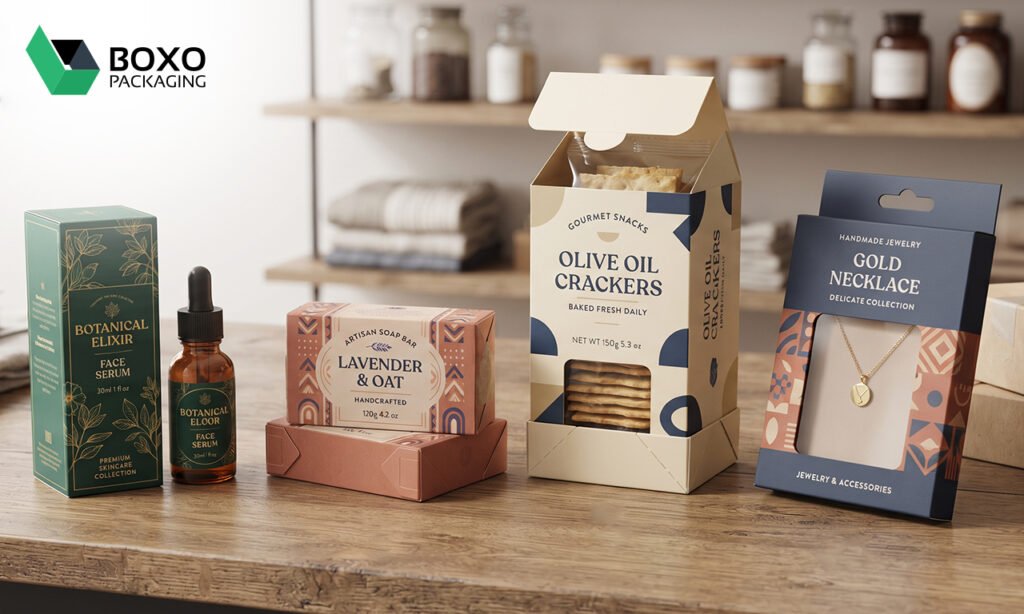
A limited seasonal product has a selling window measured in weeks, and its box does the announcing. Custom tuck boxes frame a fall launch with autumn artwork, an interior cut to the exact product, and a flap closure customers can open without destroying, so the item reads as special the moment someone spots it on a shelf.
Short Runs for Limited Editions
Seasonal items rarely justify huge inventories. Digital printing changes the math: no plates are made, so a few hundred cartons cost close to the same per unit as several thousand. Custom tuck boxes ordered this way let a small brand launch a pumpkin-spiced or maple line without committing to stock that lingers into January. Boxo Packaging can turn digital proofs around quickly enough to protect a launch date, which matters when the window is six weeks long.
Standing Out on October Shelves
By mid-October, retail shelves lean heavily on orange and pumpkin motifs. A launch that wants attention sometimes earns it through contrast: deep green on cream, unusual botanical prints, a serif typeface where the category uses scripts. Display boxes with header cards lift the product to shelf-edge height, and a sleeve over the tuck carton creates a two-layer reveal for buyers who pick things up.
One Product, One Insert, One Impression
Launches often present a single hero product, and the interior should stage it. A centered insert with a shaped cavity holds a candle, soap, or balm exactly where the eye lands the moment the flap opens. The presentation costs one small piece of board and returns the impression of a product worth presenting.
What Happens After the Flap Opens
The tuck flap’s quiet advantage is that it recloses. Seasonal products get inspected before purchase, and a box that pushes shut again returns to the shelf in sellable condition. After the sale, the same closure keeps the product covered at home between uses, which extends the box’s working life well past the checkout.
Decisions that shape a launch order:
- An artwork palette that contrasts the category’s usual seasonal look
- A run size matched to the selling window, with a small margin for reorders
- An insert design centered on the hero item
- Production timing anchored to retail reset dates in early autumn
The gift box and the launch box meet the same season from different directions. One protects something being given; the other presents something being sold. Both work because their mechanics were chosen for the journey each box actually takes.