Chemical industries require reliable piping components to control the movement of liquids safely and efficiently. From chemical processing plants to water treatment facilities, every component must be selected according to the fluid type, operating temperature, pressure, and process requirements. A CPVC Ball Valve is a practical choice for many industrial applications because it offers corrosion resistance, simple operation, and low maintenance when used under suitable operating conditions.
Petron Thermoplast offers industrial plastic piping solutions for businesses looking for dependable flow control products. Custom CPVC ball valve solutions can help meet specific installation requirements, including different sizes, connection types, and piping configurations. Choosing the right valve can improve process efficiency, simplify maintenance, and support long-term performance.
What Is a CPVC Ball Valve?
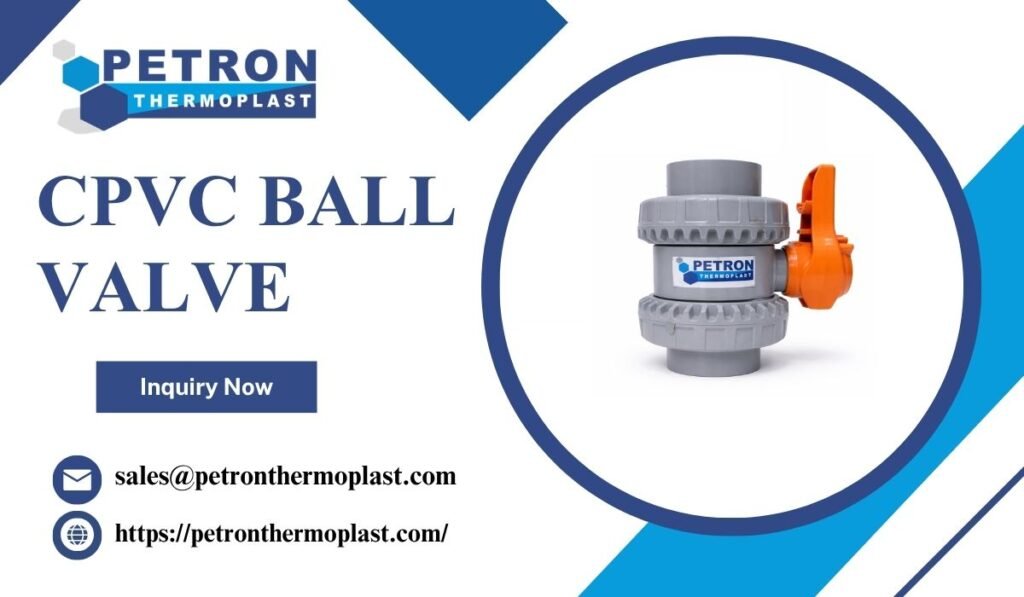
A CPVC Ball Valve is a flow control device manufactured from chlorinated polyvinyl chloride (CPVC). It contains a rotating ball with a central opening. When the handle turns the ball by 90 degrees, the opening either aligns with the pipeline to allow flow or turns across the flow path to shut off the liquid.
CPVC is widely used in industrial piping because it offers good resistance to many chemicals and performs well in hot-water applications. However, its suitability depends on the specific chemical concentration, operating temperature, pressure, and valve design.
CPVC ball valves are available in different sizes and configurations to support industrial pipelines, chemical transfer lines, utility systems, and process equipment.
Why Chemical Industries Use CPVC Ball Valves?
Chemical processing environments can expose piping components to corrosive liquids, temperature changes, and demanding operating conditions. Selecting an appropriate valve is essential for maintaining dependable flow control.
- Corrosion Resistance
Metal valves can be vulnerable to corrosion when exposed to incompatible chemicals. CPVC offers resistance to many acids, alkalis, salts, and other industrial fluids. This makes it a suitable option for selected chemical handling applications.
Before installation, users should confirm chemical compatibility using the fluid’s exact composition, concentration, and operating temperature.
- Efficient Flow Control
The quarter-turn operating mechanism allows the valve to open or close quickly. Operators can control the flow of compatible liquids without using complicated operating arrangements.
For applications requiring frequent operation, the handle design provides a convenient way to isolate sections of a pipeline.
- Lightweight Construction
CPVC valves are generally lighter than comparable metal valves. Their manageable weight can simplify transportation, handling, and installation, particularly in industrial plants containing extensive plastic piping networks.
- Low Maintenance Requirements
A properly selected and installed CPVC ball valve can provide dependable service with routine inspection. Its corrosion-resistant construction can help reduce maintenance associated with rust and certain forms of chemical attack.
Actual service life depends on installation quality, fluid compatibility, operating conditions, and maintenance practices.
- Cost-Effective Piping Solutions
For suitable applications, CPVC ball valves can offer an economical alternative to certain metal valves. Their lightweight construction and relatively simple operation may also help reduce installation effort.
The final selection should consider the complete system cost, including pressure requirements, fittings, replacement parts, and operating conditions.
Custom CPVC Ball Valve Solutions by Petron Thermoplast
Every chemical plant has different piping requirements. Standard valve configurations may not always match the available space, connection arrangement, or process specifications. Customization helps industrial buyers select a valve that fits their installation needs.
Petron Thermoplast supports industrial buyers looking for plastic piping components and flow control solutions. When enquiring about a custom CPVC ball valve, buyers should provide the required specifications to identify a suitable configuration.
Available Customization Considerations
- Valve size: Select the nominal size according to the pipeline and required flow capacity.
- Connection type: Choose compatible socket, threaded, or other available end connections according to the valve model.
- Pressure rating: Confirm the valve’s rated pressure at the intended operating temperature.
- Operating temperature: Ensure the valve material and sealing components are suitable for the process temperature.
- Seal material: Select compatible sealing materials according to the chemical being handled.
- Handle and operation: Confirm the required handle arrangement and accessibility for maintenance.
- Installation requirements: Consider available space, pipeline alignment, and the need for isolation points.
Applications of CPVC Ball Valves in Chemical Industries
CPVC ball valves can serve several industrial purposes when the fluid and operating conditions are compatible with the material.
- Chemical Processing Plants
Chemical plants use valves to isolate equipment, manage liquid transfer, and control process lines. CPVC ball valves may be suitable for selected chemical services after compatibility and pressure checks.
- Acid and Alkali Handling Systems
Some CPVC grades are compatible with certain acids and alkaline solutions. The suitability of a valve must be verified against the exact chemical, concentration, temperature, and exposure conditions before installation.
- Water Treatment Facilities
Water treatment plants use valves in chemical dosing lines, utility pipelines, and other liquid handling systems. CPVC may be appropriate where the operating conditions fall within the product’s approved limits.
- Industrial Wastewater Treatment
Industrial wastewater can contain different chemicals, dissolved substances, and contaminants. CPVC ball valves may be considered for compatible liquid streams, provided the fluid composition and operating conditions have been evaluated.
- Pharmaceutical and Process Industries
Certain process utility lines require reliable isolation and easy operation. CPVC valves may be considered for compatible non-critical services, subject to the applicable hygiene, regulatory, and process requirements.
- Industrial Water Distribution
CPVC ball valves can also be used in selected industrial water systems where their temperature and pressure ratings meet the system requirements.
How to Choose the Right CPVC Ball Valve?
Selecting the right valve helps reduce installation problems and supports dependable operation. Industrial buyers should review the following factors before making a purchase.
Identify the chemical. Provide the chemical name, concentration, and any relevant mixture details. Generic descriptions such as acid or solvent are not enough to establish compatibility.
Check operating temperature. CPVC performance and allowable pressure can change with temperature. Confirm the manufacturer’s pressure-temperature limits.
Determine system pressure. Select a valve rated for the actual operating conditions, including any relevant pressure fluctuations or surges.
Match the connections. Ensure the valve ends match the pipeline material, size, and connection standard. Follow the manufacturer’s joining and installation instructions.
Review sealing materials. The ball seat and seals must be compatible with the process fluid and temperature.
Consider maintenance access. Install the valve where operators can reach the handle and inspect the connections safely.
Confirm applicable standards. Check project requirements for dimensions, testing, materials, and approvals before ordering.
Installation and Maintenance Recommendations
Correct installation is important for safe and reliable valve performance. Follow these general recommendations:
- Inspect the valve for visible damage before installation.
- Confirm the flow system is compatible with the valve’s material and pressure rating.
- Use the correct joining method and compatible installation materials.
- Avoid excessive tightening of threaded connections, which can damage plastic components.
- Support the pipeline properly to prevent unnecessary stress on the valve.
- Operate the handle without applying excessive force.
- Inspect the valve body, joints, and seals periodically for signs of leakage or wear.
- Isolate and depressurize the line before carrying out maintenance.
Why Choose Petron Thermoplast?
Petron Thermoplast serves industrial buyers looking for plastic piping products and engineered solutions for industrial applications. When sourcing CPVC ball valves, buyers can discuss their requirements to identify a suitable product configuration.
Reasons to consider Petron Thermoplast include:
- Industrial plastic piping product solutions.
- Support for enquiries involving different valve sizes and configurations.
- Assistance with product selection based on application requirements.
- Options to discuss bulk purchasing requirements.
- Support for domestic and international business enquiries.
- A product-focused approach to chemical processing and industrial piping needs.
Bulk Supply and Export Enquiries
Chemical plants, engineering contractors, maintenance teams, and industrial distributors may require CPVC ball valves for new installations or replacement projects. For bulk enquiries, providing complete technical details helps streamline product selection and quotation.
When contacting Petron Thermoplast, include the required valve size, quantity, connection type, chemical name, concentration, operating temperature, pressure, and delivery destination. If the project has a technical datasheet or piping specification, share it for review. Confirm the final product specification, packaging, delivery schedule, and export documentation requirements before placing the purchase order.
Conclusion
Custom CPVC ball valve solutions can support chemical industries that need lightweight, corrosion-resistant flow control components for compatible liquid handling applications. Their quarter-turn operation, practical installation, and low maintenance requirements make them worth considering for selected chemical processing, water treatment, and industrial utility systems.
The key to dependable performance is choosing a valve that matches the fluid, pressure, temperature, connection type, and sealing requirements. Petron Thermoplast can be contacted to discuss CPVC ball valve requirements, product configurations, and bulk industrial enquiries.
For your next piping project, evaluate the operating conditions carefully and request the relevant technical specifications before selecting a valve.