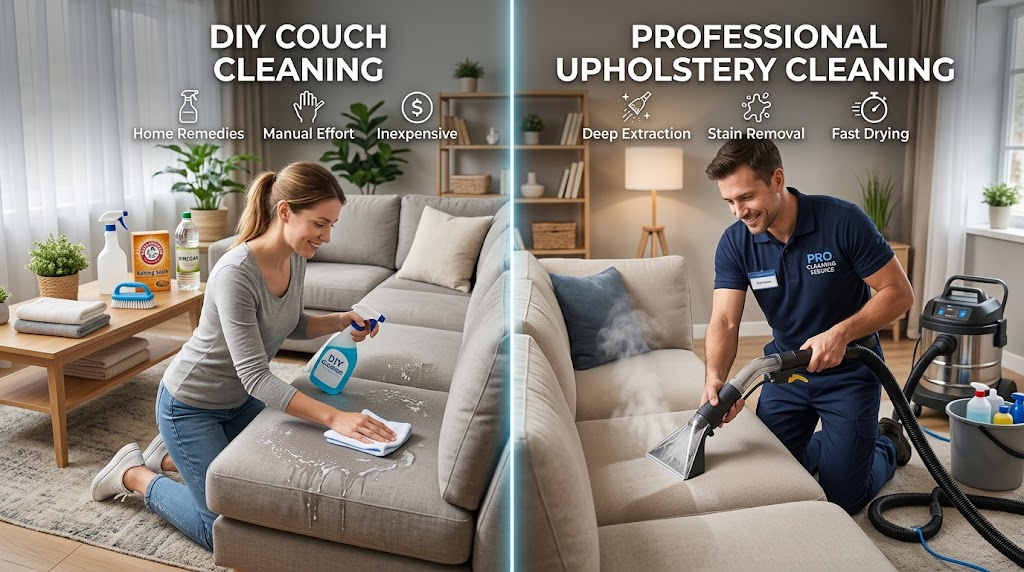
A couch is one of the most frequently used pieces of furniture in any home. From relaxing after a long day to entertaining guests and spending time with family, it handles plenty of everyday activity. Over time, dust, body oils, food crumbs, pet hair, and accidental spills can build up in the fabric, making even a well-maintained sofa look dull and feel less inviting. Regular cleaning helps keep your furniture looking attractive, but choosing the right cleaning method can make a significant difference.
When your couch starts looking dirty, you generally have two options: clean it yourself or hire professionals. Searching for reliable Couch Cleaners San Diego can help you explore professional services when household cleaning methods are no longer enough. However, DIY couch cleaning can also be effective for routine maintenance and minor spills. The best choice depends on your couch’s fabric, the type of dirt or stain, your available time, and how thoroughly the upholstery needs to be cleaned.
Understanding the advantages and limitations of both approaches can help you make an informed decision, protect your furniture, and avoid unnecessary expenses.
What Is DIY Couch Cleaning?
DIY couch cleaning involves maintaining and cleaning your upholstery using household tools, cleaning products, and techniques. Depending on the condition of your sofa, this might include vacuuming, spot cleaning, removing pet hair, or using a fabric-safe upholstery cleaner.
Many homeowners prefer this approach because it is convenient and allows them to address small messes as soon as they occur.
Common DIY Couch Cleaning Methods
Several simple techniques can help maintain your sofa between professional cleanings.
- Vacuuming: Use an upholstery attachment to remove dust, crumbs, pet hair, and loose debris from the seats, backrests, and crevices.
- Spot cleaning: Blot fresh spills with a clean cloth and use a suitable upholstery cleaner according to the manufacturer’s instructions.
- Baking soda for odors: When appropriate for the fabric, a light application of baking soda may help absorb some surface odors before vacuuming. Always test a hidden area first and avoid methods that leave residue.
- Brushing fabric: A soft upholstery brush can help loosen surface debris and restore the appearance of certain fabric types.
- Cleaning removable covers: Wash removable cushion covers only if the care label specifically permits it.
These methods are useful for everyday maintenance, but they do not guarantee the removal of deeply embedded dirt, persistent odors, or stubborn stains.
What Is Professional Upholstery Cleaning?
Professional upholstery cleaning uses specialized equipment, appropriate cleaning solutions, and techniques selected for the furniture’s material and condition. Instead of relying entirely on general household products, trained technicians assess the upholstery and determine how to clean it safely.
Depending on the fabric and cleaning requirements, a professional may use hot water extraction, low-moisture cleaning, specialized upholstery tools, or other suitable methods.
The objective is to remove accumulated soil and improve the condition of the upholstery without unnecessarily soaking, discoloring, or damaging the material.
How Professional Cleaning Works
Although the process varies, professional upholstery cleaning often involves several steps:
- Fabric assessment: The technician checks the upholstery material, care instructions, existing stains, and any areas that may require special attention.
- Dry soil removal: Vacuuming removes loose dirt and debris before wet cleaning begins.
- Targeted stain treatment: Suitable products are applied to problem areas when necessary.
- Deep cleaning: An appropriate cleaning method removes soil from the upholstery.
- Moisture removal: Equipment extracts excess moisture when the selected method involves water.
- Drying guidance: The technician explains how to encourage proper airflow and when the furniture can safely be used again.
This systematic approach can be particularly helpful when the couch has widespread soiling, persistent odors, or stains that household methods have not resolved.
DIY Couch Cleaning vs. Professional Upholstery Cleaning: Key Differences
Both methods have a place in furniture care, but they serve different purposes. Comparing their main characteristics makes it easier to decide which approach suits your needs.
1. Cleaning Effectiveness
DIY cleaning works well for surface dust, loose debris, and minor spills. Regular vacuuming, for example, prevents crumbs and dirt from accumulating in cushion seams. Prompt attention to a fresh spill may also reduce the likelihood of a permanent stain.
However, household tools may not remove all the soil trapped deeper within upholstery fibers. Repeatedly treating a stain with unsuitable products can even make it more difficult to remove.
Professional cleaning can provide a more thorough treatment when dirt, oils, and residues have accumulated over time. Specialized equipment can help extract loosened soil and, with suitable methods, remove more embedded contamination.
Best option: DIY cleaning for routine upkeep and small messes; professional cleaning for heavily soiled furniture and more challenging cleaning needs.
2. Cost and Budget
One of the biggest advantages of DIY cleaning is its relatively low upfront cost. If you already own a vacuum cleaner and microfiber cloths, you may only need an appropriate upholstery product.
Professional cleaning requires payment for labor, equipment, and cleaning materials. The price can vary according to the sofa’s size, fabric, condition, location, and the services required.
Although DIY cleaning may seem less expensive, mistakes can lead to additional costs. For example, using a harsh product that discolors fabric or excessive water that damages the upholstery may require professional treatment or, in severe cases, furniture repair.
Best option: DIY cleaning is economical for routine maintenance, while professional service may offer better value when the couch needs extensive or specialized care.
3. Time and Convenience
Cleaning a couch yourself gives you control over the schedule. You can vacuum cushions during your regular household cleaning routine and treat small spills immediately.
Deep cleaning an entire sofa, however, can take considerable time. You may need to move cushions, clean several sections, remove residue, and allow the upholstery to dry completely.
Hiring professionals reduces the amount of work you need to perform. The technicians bring their equipment and handle the cleaning process, although you will still need to prepare the area and allow the couch to dry as instructed.
Best option: DIY cleaning is convenient for small tasks, while professional cleaning can save time when the entire sofa requires attention.
4. Risk of Fabric Damage
Not every couch can be cleaned in the same way. Cotton, polyester, microfiber, linen, velvet, and leather each have different care requirements. Even fabrics that appear similar may react differently to moisture or cleaning products.
Using too much water can cause problems such as watermarks, prolonged drying, or damage to certain materials. Strong chemicals may cause discoloration, while vigorous scrubbing can distort fibers or spread a stain.
Professional cleaners assess the upholstery before choosing a method. Their experience can help reduce the risk of damage, although no cleaning method can guarantee that every existing stain or problem will be resolved.
Best option: DIY cleaning is appropriate when you understand the fabric’s care requirements. For delicate, expensive, or unfamiliar materials, professional advice is generally the safer choice.
5. Stain and Odor Removal
Fresh spills are often easier to manage than stains that have been sitting for days or weeks. For a small spill, gently blotting the area with a clean cloth can help absorb liquid before it penetrates deeper into the upholstery.
Persistent stains from coffee, grease, cosmetics, and pet accidents may require specialized treatment. Pet urine can also penetrate cushion padding, where lingering residue may continue to produce odors even after the surface appears clean.
Professional cleaners can assess the affected area and select an appropriate treatment. However, results depend on the stain’s age, the fabric, previous cleaning attempts, and whether the contamination has reached the cushion filling.
Best option: Handle minor, fresh spills promptly. Consider professional treatment for persistent stains, recurring odors, or contamination that extends beyond the fabric surface.
When DIY Couch Cleaning Makes the Most Sense
You do not need to hire a professional every time your sofa needs attention. In many cases, simple maintenance is enough to keep upholstery presentable between deep cleans.
DIY cleaning is particularly useful when:
- Your couch has accumulated ordinary dust and crumbs.
- You want to remove pet hair before guests arrive.
- A small, fresh spill needs immediate attention.
- You are maintaining furniture that has recently been professionally cleaned.
- The manufacturer’s care instructions clearly explain how to clean the fabric safely.
For best results, vacuum the couch regularly, including underneath removable cushions. Address spills quickly, and avoid applying several different cleaning products to the same area.
Always check the manufacturer’s cleaning instructions before using liquids or commercial products. Upholstery care labels may use codes such as W, S, WS, or X to indicate permitted cleaning methods. Follow the instructions provided for your particular furniture, and seek professional advice if the code or material is unclear.
When Should You Hire Professional Upholstery Cleaners?
Some cleaning situations require more than a vacuum and a bottle of upholstery cleaner. Professional assistance becomes especially useful when the condition of the couch makes DIY treatment difficult or risky.
Deep-Set Dirt and Heavy Use
Family sofas, frequently used living room furniture, and couches in homes with pets can collect body oils and soil gradually. Even when the fabric does not look particularly dirty, the seating areas may develop discoloration or a flattened appearance.
A suitable professional cleaning method can address accumulated soil more thoroughly than routine surface cleaning alone.
Stubborn or Reappearing Stains
If a stain returns after the fabric dries, residue may remain in the upholstery or underlying cushion. Repeatedly scrubbing the same area may worsen the problem.
A professional can assess whether further treatment is appropriate and explain the realistic chances of improvement.
Persistent Pet Odors
Pet accidents can be challenging because liquid may penetrate the cushion filling or reach areas that are difficult to access. Surface sprays often mask odors temporarily rather than removing their source.
Professional treatment may help address the affected area, although severe contamination can sometimes require additional measures, including treatment of the cushion insert.
Delicate or Specialty Fabrics
Velvet, silk blends, vintage upholstery, and other sensitive materials may require specialized care. When cleaning instructions are restrictive or uncertain, avoid experimenting with household remedies.
A qualified technician can evaluate the material and recommend a suitable approach before cleaning begins.
Common DIY Couch Cleaning Mistakes to Avoid
Even well-intentioned cleaning can cause problems when the wrong technique is used. Avoiding a few common mistakes can protect your furniture and improve your results.
Using Too Much Water
Excessive moisture can penetrate cushion filling and make drying difficult. Depending on the materials, prolonged dampness may contribute to musty odors or other moisture-related problems.
Use only the amount of moisture permitted by the fabric’s care instructions. If wet cleaning is appropriate, allow sufficient airflow and do not use the couch until it is adequately dry.
Scrubbing Stains Aggressively
Scrubbing may push a spill deeper into the fibers, spread the affected area, or damage the fabric’s texture.
Instead, blot gently with a clean, absorbent cloth, working from the outside of the spill toward the center. Follow with a suitable treatment if the care instructions permit it.
Mixing Cleaning Products
Combining household chemicals can create hazardous reactions. Never mix bleach with ammonia, vinegar, or other cleaning products. Even combinations that do not produce dangerous fumes may damage upholstery or leave unwanted residue.
Use one suitable product at a time, following its label instructions.
Skipping the Patch Test
A cleaner that works on one fabric may cause discoloration on another. Test the product on a small, inconspicuous area and allow the spot to dry before evaluating the result.
A patch test helps identify some risks, but it does not guarantee that the entire couch will respond identically.
Ignoring Drying Time
A couch that feels dry on the surface may still contain moisture deeper inside. Avoid covering damp cushions or using the furniture before it is sufficiently dry.
Follow the cleaner’s instructions, improve ventilation where possible, and use fans if appropriate for the material and cleaning method.
How Often Should You Clean Your Couch?
There is no single schedule that works for every household. Cleaning frequency depends on how often the couch is used, whether you have pets or children, and how quickly dust and spills accumulate.
A practical maintenance routine might include:
- Weekly: Vacuum the seating surfaces and remove loose debris from crevices.
- As needed: Blot spills promptly and address pet hair or visible dirt.
- Periodically: Inspect cushions, armrests, and frequently used areas for discoloration or persistent odors.
- When necessary: Arrange professional upholstery cleaning based on the manufacturer’s guidance, household use, and the couch’s condition.
Homes with heavy furniture use or pets may need more frequent attention than households where the couch is used occasionally. Rather than relying entirely on a fixed calendar, look for signs that the upholstery needs more thorough cleaning.
Is Professional Upholstery Cleaning Worth the Investment?
Professional cleaning can be worthwhile when it addresses problems that ordinary maintenance cannot resolve. Removing accumulated soil and certain types of residue can improve the appearance and freshness of upholstery while helping you maintain your existing furniture.
Keeping a couch clean may also reduce the need for aggressive spot treatments, which can gradually damage fabric when performed incorrectly. However, professional cleaning cannot reverse every type of wear. Faded colors, torn fibers, permanent stains, and structural damage may require different solutions.
To get the best value, ask potential providers about their cleaning methods, experience with your fabric type, drying expectations, and approach to difficult stains. A trustworthy provider should explain what the service can realistically achieve rather than promising perfect results.
Remember that professional cleaning is not a substitute for regular maintenance. Vacuuming, prompt spill treatment, and following the furniture manufacturer’s care instructions remain important even after a thorough cleaning.
Conclusion
Choosing between DIY couch cleaning and professional upholstery cleaning comes down to the condition of your furniture and the results you want to achieve. DIY methods are excellent for routine maintenance, removing loose dirt, and dealing with minor spills. Professional cleaning is often the better choice for embedded soil, persistent odors, difficult stains, and delicate fabrics that require specialized attention. Combining both approaches helps you maintain a cleaner, more comfortable living space without exposing your furniture to unnecessary risks.
If your couch needs more than routine upkeep, Coastal Carpet Care can be an option to explore for professional upholstery cleaning in San Diego. Before scheduling a service, discuss your fabric type, cleaning concerns, and expectations so you can choose an appropriate treatment. With regular care and the right cleaning approach, you can help your couch stay fresh, comfortable, and attractive for years to come.