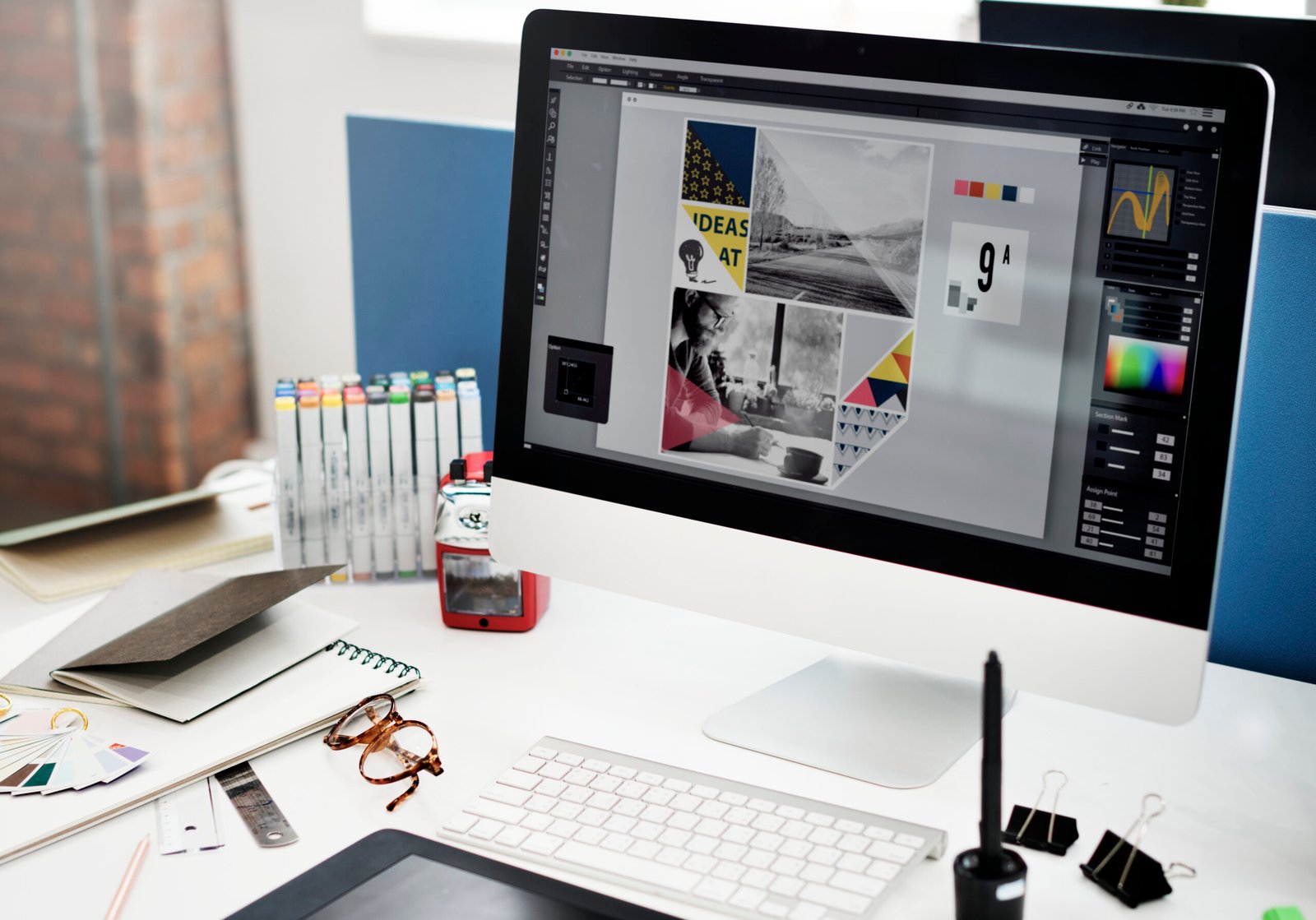
Marketing Strategy Planning Strategy Concept
Introduction
A business communicates with customers long before any conversation begins.
The logo, website graphics, promotional materials, packaging, and social media posts all play a role in shaping the impression people have of the brand.When these elements look inconsistent or poorly organized, it can make it harder for customers to understand what the business stands for.
Professional graphic design services help Australian businesses create a recognizable visual identity and communicate their messages clearly.
Whether you’re an independent startup or an established organization, thoughtful design can enhance the memorability of marketing materials, support brand recognition, and help present products and services in a professional manner.
Why Businesses Need a Consistent Visual Identity
A visual identity is the set of design elements that differentiate one business from another.
It involves more than just the logo—it includes colours, typography, imagery, layouts, and graphic styles, all of which influence how the brand is perceived.
Consistency helps customers connect different interactions with the same organization.
If a business uses one design style on its website, a different one on its advertisements, and another approach in its brochures, the brand may appear disjointed or unclear.
Australian businesses can achieve consistency by developing practical brand guidelines.
These guidelines may include approved logo versions, colour codes, font choices, image styles, and spacing rules.
For instance, a professional consulting firm might use a restrained colour palette, structured layouts, and clear typography to convey confidence.
A children’s retail brand may opt for brighter colours, playful illustrations, and more expressive graphics.
Neither approach is inherently better.
The best visual identity reflects the business’s audience, personality, and position in the market.
Logo Design That Works in the Real World
A logo is often one of the most recognizable parts of a business’s identity.
It should be distinctive, suitable for the brand, and work well in various applications.
A successful logo needs to be versatile.
It may appear on a website header, a social media profile, a printed brochure, staff clothing, vehicle signage, or product packaging.
Designers should consider factors like scalability, readability, and contrast, as well as how the logo performs against different background colours.
A useful logo package may include:
A primary logo for general use.
A simplified or compact version for smaller spaces.
A monochrome version for single colour applications.
Light and dark variations.
High quality files suitable for both print and digital use.
Businesses should not choose a logo solely because it follows a current trend.
Trends change, but a strong brand identity should remain relevant as the organization grows.
It is also crucial to establish appropriate usage rights and check for any potential conflicts with existing brands before investing in a new identity.
Marketing Collateral That Makes Information Easier to Understand
Marketing collateral refers to the visual materials a business uses to explain its services, promote its products, and support customer communication.
These materials should be visually appealing, but their main purpose is to enhance the clarity and usability of the information they present.
Company Profiles and Capability Statements
A company profile introduces the business, outlines its services, and highlights relevant experience.
A capability statement is particularly useful for Australian businesses seeking commercial contracts or providing services to larger organizations.
Clear headings, concise descriptions, and relevant project visuals help readers quickly locate key information.
Brochures and Flyers
Brochures can effectively present multiple services in an organized format, while flyers are well suited for local promotions, events, and specific offers.
Designers should focus on the main message, ensure essential details are easy to read, and provide a clear next step for interested customers.
Business Stationery
Business cards, letterheads, proposal templates, and branded documents play a vital role in maintaining a professional appearance during everyday business communication.
Using consistent design elements across these materials reinforces brand recognition and makes communications feel cohesive.
An educational graphic should have a strong heading and a straightforward explanation, while a product promotion might need clear images, key product details and a clear call to action.
For Australian businesses, social content can also highlight relevant local campaigns, seasonal services and industry specific events.
A financial adviser might use clean, informative graphics to explain general financial ideas, while a landscaping company could display project transformations through carefully arranged photographs.
Businesses should avoid putting too much text in a design.
A single clear message is usually more effective than trying to include all benefits in one graphic.
Website Design Assets That Support Better User Experiences
Website graphics help visitors understand a business and navigate through its pages.
Choosing poor imagery or confusing visual elements can distract from important messages.
Website design assets may include icons, banners, service illustrations, product images, infographics and promotional graphics.
Each element should have a purpose.
Icons can help users identify categories, illustrations can explain a process, and photographs can give context for a service.
Designers should also think about mobile users.
Text that looks good on a desktop might be too small on a smartphone, while wide images might crop important details on narrow screens.
A practical website design process includes checking image sizes, colour contrast, text hierarchy and how graphics relate to the page content.
Images should be optimised for the right file sizes to avoid performance issues.
Meaningful images should also have suitable alternative text where needed to support accessibility.
Packaging Design That Helps Products Stand Out
Packaging is both a practical container and an opportunity to show a brand’s identity.
Its look can affect how customers view a product before they use it.
For Australian product businesses, packaging design may need to include brand elements, product names, instructions, ingredients or other important information.
A boutique food producer might use illustrations and typography that show craftsmanship, while a technology accessory brand might prefer a clean layout that highlights product features.
Good packaging design balances looks with usability.
Important information must remain readable, the layout must fit the packaging and artwork must be made according to the printer’s specifications.
Businesses should also consider material limitations, production costs and any relevant Australian labelling requirements.
If environmental claims are made, they must be accurate and properly supported.
Looking at a physical proof before mass production can help find issues with colour, legibility, alignment and sizing.
Advertising Creatives That Communicate a Clear Offer
Advertising graphics need to grab attention and clearly show the main offer quickly.
If the message is not clear, viewers may scroll past without taking action.
An effective advertising creative usually includes a clear headline, suitable visual content, brief supporting information and a proper call to action.
For example, a local Australian training provider promoting enrolments might highlight the course name, main benefit, relevant date and registration instructions.
A retailer launching a new product could show its main feature and direct customers to the product page.
Designers should create different versions when campaigns target different audiences or promote different benefits.
Testing alternative layouts, imagery and headlines can help businesses find which creative approaches are most successful.
Advertising materials should also follow platform rules and avoid false claims, confusing pricing or unsupported guarantees.
Infographics and Visual Explanations
Some information is easier to understand when presented visually rather than in long blocks of text.
Infographics can combine short explanations, diagrams, icons and data to explain a process or comparison.
They can be useful for service providers, educational organisations, professional firms and businesses dealing with technical subjects.
An Australian energy company, for example, might use a simple diagram to explain how a solar installation works.
A logistics provider could show the stages involved in processing and delivering an order.
The information should be arranged in a logical order, with visual elements guiding the reader from one point to the next.
Accuracy is as important as appearance.
Statistics should be credible, labels should be clear and the design should not exaggerate conclusions or remove important context.
Designing for Print Without Sacrificing Quality
Digital artwork and printed materials have different technical needs.
A graphic that appears great on a screen may not look as good when printed if the files are not prepared correctly.
Print design usually requires careful attention to resolution, color settings, bleed, margins, font usage, and the specific requirements of the printer.
Businesses creating brochures, business cards, posters, or packaging should check these specifications before finalizing their artwork.
Important text should stay within the safe margins, while background elements that go to the edge of the page might need extra bleed.
Color can look different on screens and during printing, so a proof might be needed for important projects.
Using the right production settings can help reduce reprints, lower costs, and avoid unnecessary delays.
How Professional Graphic Design Supports Marketing
Graphic design and marketing work together to share a business’s value.
Marketing identifies the audience, message, and desired action, while design helps present that message effectively.
A well designed campaign can improve clarity and strengthen brand recognition, but beautiful visuals alone won’t always lead to sales or customer engagement.
Businesses should therefore connect each design project to a clear objective.
A brand identity project might focus on recognition, a brochure could support sales conversations, and a social media campaign might aim to generate relevant inquiries.
When designers understand the purpose of a project, they can make better choices about layout, images, tone, and how information is structured.
Consistent visual elements also make future campaigns easier to create because businesses can reuse existing brand elements instead of starting from scratch each time.
Choosing the Right Graphic Design Provider
Selecting a design provider involves considering both creative skills and professional practices.
Businesses should review portfolios to understand how a designer approaches typography, composition, color, and visual communication.
It’s also useful to check if the designer has experience with the specific deliverables needed.
Before starting a project, confirm the following:
Project scope: What designs and file formats are included?
Creative direction: How will the designer understand the business and target audience?
Revision process: How many rounds of revisions are included?
Delivery schedule: When will concepts and final files be provided?
File ownership: What rights will the business receive for the completed work?
Third party assets: Are fonts, stock images, and other licensed materials handled properly?
Ongoing support: Can the designs be adapted for future campaigns if needed?
A clear agreement helps both parties understand expectations and reduces the chance of misunderstandings.
Conclusion
Professional graphic design helps Australian businesses communicate their identity, present information clearly, and offer a consistent experience across digital and printed materials.
From logo development and packaging to website graphics, advertising creatives, and company profiles, each design should support a meaningful communication goal.
By investing in a clear visual identity, using consistent brand guidelines, and selecting designs that suit their audiences, businesses can improve their professional appearance and make their marketing materials more effective.
The most valuable graphic design services combine creativity with practical thinking to create visual assets that remain useful as a business grows.