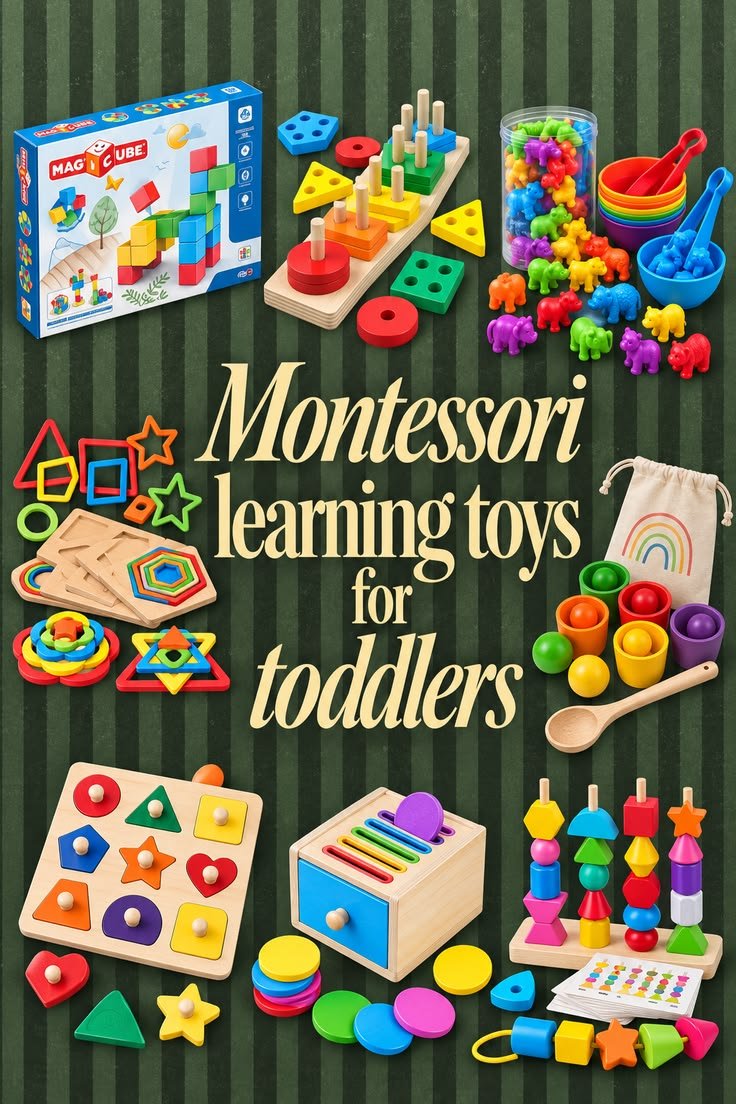
You want toys that help your child learn, but the market is crowded with loud, flashing plastic that holds attention for a day and then sits in a corner. Many Pakistani parents are now asking a better question: which toys actually help a child think, focus, and build skills? This guide explains what Montessori learning toys in Pakistan really are, which ones suit each age, how to choose them safely, and how to get the same benefits on a smaller budget.
Nexora Mart is your trusted destination for Online Shopping in Pakistan, offering quality toys, home appliances, energy-saving fans, and everyday products at competitive prices.
What Are Montessori Learning Toys?
Montessori learning toys are simple, purposeful materials based on the educational ideas of Dr. Maria Montessori, an Italian physician and teacher. Each toy is designed to teach one clear skill, such as sorting, stacking, pouring, matching, or fine hand control. They are usually made of wood, cloth, metal, or other natural materials, and they rarely use batteries, lights, or sounds.
The direct answer for parents is this: a good Montessori toy lets your child do the work. The toy does not entertain the child. The child explores it, makes mistakes, and fixes them without an adult stepping in. A shape sorter is a good example. The child tries a piece, sees it does not fit, and tries again. That small struggle builds patience and problem-solving.
Another important feature is the “control of error.” The toy itself shows the child whether the task is done correctly. A peg that fits only one hole, or a cylinder that sits only in its matching space, gives instant feedback without a parent saying “no, wrong.”
Why Parents in Pakistan Are Choosing Montessori-Style Toys
Interest in Montessori education has grown in Pakistani cities, with more preschools and home learners using this approach. Parents like it for practical reasons. These toys are often durable, they keep a child busy in a calm way, and they support skills that matter before school, such as concentration and hand coordination.
There is also a cultural fit. Many Pakistani homes already encourage children to help with daily tasks, like pouring water, folding clothes, or sorting rice and lentils. Montessori thinking values exactly these real-life activities. So the approach does not feel foreign. It simply gives a name and structure to things many families already do.
It is fair to say that no toy guarantees a smarter child. Children learn through play, conversation, rest, and a loving home. Montessori toys are a useful tool, not a magic fix, and they work best when a parent sits nearby and shows interest.
Best Montessori Toys by Age
Choosing by age matters more than choosing by brand or price. A toy that is too hard frustrates a child, and one that is too easy gets ignored.
Babies (0 to 12 months)
Babies learn through touch, sight, and movement. Good choices include a high-contrast card set, a soft grasping ring, a wooden rattle, and a simple object-permanence box where a ball drops into a hole and rolls out. Choose items that are easy to hold and safe to mouth. Keep the number of toys small so the baby is not overwhelmed.
Toddlers (1 to 3 years)
This is the stage where Montessori learning toys become most useful. Stacking rings, wooden puzzles with large knobs, shape sorters, nesting cups, and simple threading beads all fit well. Toddlers also love practical tools, like a small pitcher for pouring water or a child-sized broom. These build hand strength and confidence. Always supervise threading and any item with small parts.
Preschoolers (3 to 6 years)
Older children can handle matching games, counting boards, sandpaper letters, number rods, and basic building sets. Urdu and English alphabet materials are especially helpful for Pakistani families, since many children learn both languages together. Sandpaper letters let a child trace the shape of a letter with fingers while hearing its sound, which connects touch, sight, and speech.
How to Choose Safe and Good-Quality Toys
Safety comes first, especially because the market has many imported and unbranded products with unclear materials. Look at the paint and finish. A toy for a young child should have smooth edges, no splinters, and a finish that does not flake or peel. If a child chews it, the paint must be non-toxic. When a seller cannot tell you what the paint or wood is, treat that as a warning sign.
Check the size of parts. Anything that fits inside a small tube, roughly the width of a toilet paper roll, can be a choking hazard for children under three. Test the toy by pressing and pulling on pieces to see if they loosen. Weak glue and loose knobs are common problems in cheap sets.
Next, ask whether the toy teaches one clear skill. Many products are sold as “Montessori” simply because they are made of wood. A wooden toy with ten confusing functions is not truly Montessori in spirit. A genuine one is simple, has a clear goal, and fits the child’s current ability.
Explore Montessori learning toys in Pakistan at Nexora Mart to encourage creativity, hands-on learning, and child development.
Finally, think about weight and durability. Solid wood or thick, well-finished boards usually last longer than thin, brittle material. A good toy should survive being dropped, shared with a sibling, and passed down.
Where and How to Buy in Pakistan
You can find Montessori-style toys through local toy shops, school supply markets, online stores, and social media sellers in major cities like Lahore, Karachi, and Islamabad. Each option has trade-offs. Physical shops let you hold the toy and check its finish. Online buying gives more variety but makes quality harder to judge.
When ordering online, read the product description carefully and look for clear photos from several angles. Ask the seller about material, paint type, and the recommended age. Compare prices across a few sellers, because the same item can vary widely. Check the return or exchange policy before paying, particularly for cash-on-delivery orders, so you are not stuck with a poor product.
A common mistake is buying a large set all at once. Children use a few toys deeply rather than many toys briefly. Start with two or three items matched to your child’s age, watch how they play, and add more later.
Budget-Friendly and DIY Montessori Ideas
You do not need to spend heavily. Many of the best Montessori activities use items already in your home. A tray with two small bowls and some dry beans or chickpeas makes a spooning and transferring activity. Different sizes of lids and matching containers teach sorting and matching. Large buttons and a shoelace can become a threading game for an older toddler, with an adult close by.
Sorting objects by color, size, or shape is another simple option. Use spoons, socks, fruit, or colored cloth. Pouring water between two small jugs builds control and concentration, and a towel underneath keeps the mess manageable.
Presentation matters as much as the item. Place materials on a low shelf in a neat, uncluttered way so your child can choose and put things back. Rotating toys every week or two keeps interest fresh without buying anything new.
Common Mistakes Parents Make
The first mistake is expecting instant results. A child may ignore a toy for days and then suddenly love it. Let them approach it at their own pace. The second is correcting too quickly. If your toddler places a piece incorrectly, wait. The learning happens during the attempt, not when the adult fixes it.
Another mistake is treating the label as a quality guarantee. Because the word “Montessori” is used loosely in sales listings, judge the toy by how it works and how safely it is made. Finally, avoid comparing your child to others. Children reach skills at different times, and a toy should never become a source of pressure.
Frequently Asked Questions
Are Montessori toys worth the money in Pakistan?
They can be, if you choose well. A durable wooden toy that teaches a clear skill and lasts through several children is good value. Overpriced items with a “Montessori” label but poor finish are not. Start small and use home-made activities to fill the gaps.
At what age should I start Montessori learning toys?
You can begin in infancy with simple items like grasping rings and contrast cards. The range from about one to three years is where most structured toys, like stackers and puzzles, become useful. Always pick items that match what your child can do now.
Can Montessori toys replace school?
No. They support early skills like focus, coordination, and early language and number sense, but they do not replace teaching, social interaction, or formal education. Think of them as a helpful part of a wider routine.
How do I know if a toy is safe for my toddler?
Check for smooth edges, non-toxic paint, firm joins, and parts too large to be swallowed. Ask the seller about materials, and inspect the toy yourself before giving it to your child. Supervise play, especially with beads and small pieces.
Your Next Step
The best Montessori learning toys in Pakistan are simple, safe, and matched to your child’s age, and you can often make good ones at home. Focus on quality over quantity, let your child struggle a little, and stay close to share the moment. This week, pick one skill your child is working on, choose one toy or home activity for it, and observe how they play for ten quiet minutes. What you notice will guide every purchase after that.