LED screens have fundamentally changed how visual media is created. From Hollywood film sets to live concert stages, the led screen has become a cornerstone of modern production — enabling creators to build entire worlds without leaving the studio. At the forefront of this shift is heloled, a company helping photographers and broadcasters push the boundaries of what’s visually possible.
But understanding how to use LED technology effectively requires more than plugging in a display. Pixel pitch, refresh rates, colour accuracy — these technical details have a direct impact on the quality of your final image. This guide breaks down everything you need to know.
Understanding LED Screen Technology
Pixels, resolution, and pixel pitch
Pixel pitch refers to the distance between the centres of two adjacent pixels, measured in millimetres. A smaller pixel pitch means higher resolution and a sharper image — critical when cameras are positioned close to the screen. For studio photography and broadcast environments, a pixel pitch of P2.5 or lower is generally recommended.
Resolution determines how much detail a screen can display. Higher resolution screens support larger, more complex visuals without visible degradation — particularly important when used as virtual backgrounds.
Brightness, colour accuracy, and refresh rates
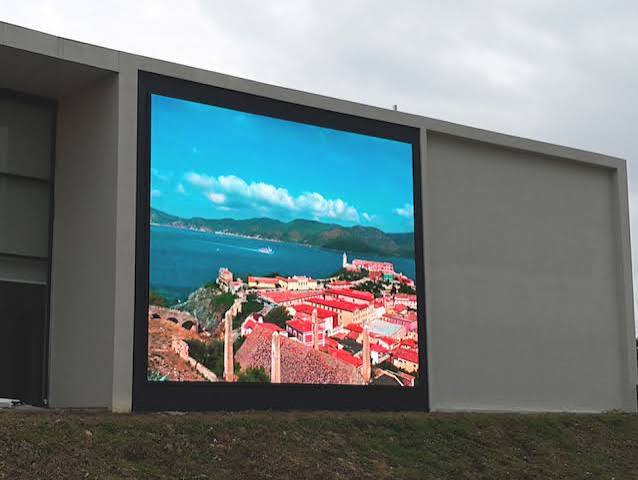
Brightness is measured in nits. Outdoor LED screens can reach 6,000 nits or more to compete with sunlight, while indoor screens typically operate between 800 and 1,500 nits. For photography and broadcast, colour accuracy matters just as much. Screens with a wide colour gamut and high colour rendering index (CRI) produce more lifelike images that hold up under camera scrutiny.
Refresh rates — measured in hertz (Hz) — determine how many times per second the display updates. A refresh rate below 3,840 Hz can cause flickering on camera. heloled’s broadcast-grade panels are engineered with high refresh rates specifically to eliminate this issue.
Types of LED screens
The main categories include indoor, outdoor, flexible, and transparent LED screens. Each serves a different purpose. Flexible LED panels can be curved or shaped to create immersive curved backdrops, while transparent displays allow light to pass through — useful for layered visual effects in live events.
LED Screens in Photography
Creating immersive environments and simulating locations
One of the most exciting developments in contemporary photography is the use of large LED walls as dynamic backdrops. Rather than shooting on location or relying on static printed backgrounds, photographers can now display photorealistic environments — a sun-drenched coastline, a neon-lit city street, a dense forest — and have the screen’s light interact naturally with the subject.
This approach, sometimes called “in-camera VFX”, dramatically reduces the need for post-production compositing. The ambient light emitted by the screen wraps around the subject, creating a level of realism that green screen simply cannot replicate.
Controlling light and reflections
LED walls serve a dual purpose: they’re both background and light source. This gives photographers precise control over the mood and tone of a shoot. A warm desert sunset on screen creates warm, golden light on the subject. A cool, overcast sky produces soft, diffused fill light.
That said, managing reflections from high-brightness screens requires careful attention. Matte-finish surfaces and anti-glare coatings on LED panels can help, as can adjusting camera angles and using polarising filters.
Challenges and solutions: moiré and colour balance
Photographing LED screens introduces two common technical challenges. The first is moiré — the interference pattern that appears when the camera’s sensor resolution interacts with the pixel grid of the screen. Shooting at a slight angle, adjusting the focal length, or using a low-pass filter can reduce or eliminate the effect.
The second challenge is colour balance. LED screens emit light at specific wavelengths that can clash with other light sources on set. The solution is to calibrate the screen’s colour temperature to match your ambient lighting, and to shoot tethered so you can monitor colour accuracy in real time.
LED Screens in Video Broadcasting
Virtual sets and extended reality (XR) stages
XR stages — large curved LED volumes that surround performers and cameras — have become a defining feature of high-end broadcast production. Used extensively in productions like The Mandalorian, these environments allow directors to shoot complex scenes entirely in studio, with the LED wall rendering real-time 3D environments that respond to camera movement.
The practical benefits are significant. XR stages reduce location costs, cut post-production time, and give directors creative flexibility that simply wasn’t possible a decade ago. heloled supplies LED solutions to broadcast facilities that demand consistent performance and colour accuracy across every panel in the volume.
Large-scale displays for live events and concerts
Beyond the studio, LED screens define the visual experience at live events. Stadium concerts, sporting events, and festivals rely on large-format LED displays to ensure audiences — whether seated ten metres or a hundred metres from the stage — can follow the action clearly.
For broadcasters covering these events, the challenge is ensuring the on-screen LED displays don’t flicker or create artefacts in the broadcast feed. This is where panel specifications matter enormously. High refresh rates and proper synchronisation with broadcast cameras are non-negotiable.
Integrating LED screens with camera tracking systems
Modern XR productions depend on camera tracking technology that feeds real-time position data to the rendering system. As the camera moves, the virtual environment on the LED wall shifts in perspective to match — creating a convincing parallax effect. This integration requires LED panels with near-zero latency and rock-solid colour consistency. Any variation between panels breaks the illusion.
Best Practices for Working with LED Screens
Choosing the right LED screen for your project
The key variables are pixel pitch, brightness, refresh rate, and form factor. For close-range photography, prioritise low pixel pitch and high colour accuracy. For large-scale broadcast or live events, brightness and refresh rate become the dominant factors.
Always request a test panel before committing to a full installation. View it through your camera at the intended shooting distance to check for moiré, colour cast, or brightness inconsistencies.
Calibration and maintenance
Even the best LED screen delivers poor results if it’s not properly calibrated. Regular calibration ensures colour uniformity across the entire panel array — essential when multiple screens are used side by side. heloled provides calibration tools and technical support as part of their installation service, helping production teams maintain consistent performance over time.
Collaborating with LED technicians
LED walls are complex systems. Working with experienced technicians — particularly for XR stage builds — saves time and prevents costly errors. Involve your LED supplier early in pre-production so they can advise on screen placement, brightness settings, and integration with your camera and tracking systems.
The Future of LED Screen Technology
Mini-LED and Micro-LED advancements
Mini-LED technology places thousands of smaller LEDs behind an LCD layer, enabling more precise local dimming and improved contrast. Micro-LED takes this further by using microscopic self-emissive LEDs that eliminate the LCD layer entirely — producing deeper blacks, higher brightness, and greater energy efficiency. As Micro-LED manufacturing costs decrease, this technology will become standard in high-end broadcast and photography applications.
AI-powered and interactive displays
AI is beginning to influence how LED screens respond to their environment. Displays can now automatically adjust brightness based on ambient light levels, and interactive screens can respond to movement or touch — opening new creative possibilities for live events and immersive installations.
The convergence of physical and virtual production
The boundary between physical and digital production continues to blur. As LED technology improves and real-time rendering engines become more powerful, the gap between shooting on location and shooting on an XR stage will narrow further. Productions that once required weeks of post-production work will be completable in a single shoot day.
LED Screens Are Redefining Visual Storytelling
From studio photography to global broadcast productions, LED screens have become essential creative infrastructure. They give photographers control over light and environment, allow broadcasters to build entire virtual worlds in real time, and provide live event producers with tools to create unforgettable visual experiences.
heloled’s commitment to advancing LED technology — through high-refresh panels, precision calibration, and broadcast-grade reliability — reflects just how central these displays have become to modern visual media. The creative possibilities are expanding rapidly, and for photographers and broadcasters willing to embrace them, the results speak for themselves.