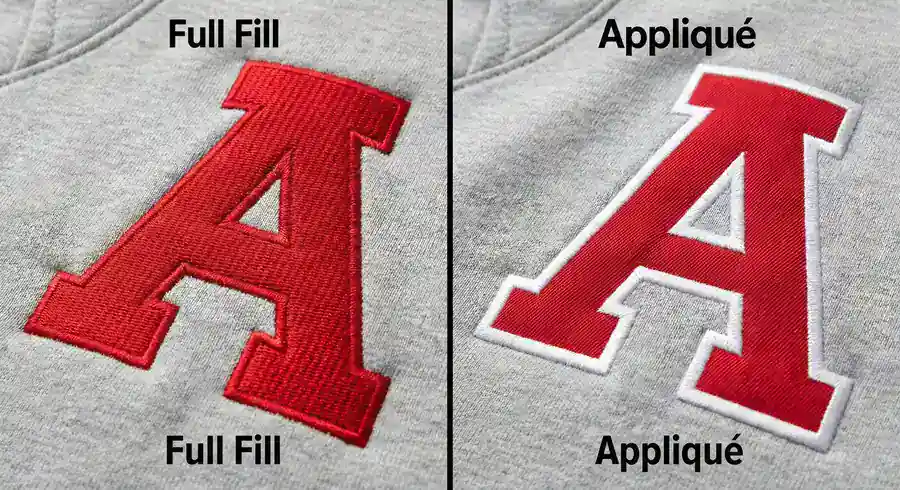
Do you love the look of classic sports jerseys? Think about the big numbers on basketball shirts or the bold letters on hockey uniforms. They look heavy, solid, and incredibly clean. That style is not made by sewing millions of tiny stitches directly into the shirt. Instead, it uses pre-cut pieces of fabric that are sewn down along the edges. This smart method saves a lot of time and keeps your garments light and flexible.
If you want to create these iconic sports team uniforms, you need to use a specialized process called applique & tackle twill digitizing to guide your equipment. A standard logo file will not work for this type of job. Your machine needs to know exactly when to stop so you can lay down your fabric pieces. It needs to map out a precise boundary line first, then follow up with a strong decorative border to lock everything down forever.
What is Applique and Tackle Twill?
Let us explain these terms in a very simple way. Applique means taking one piece of fabric and sewing it on top of another fabric to create a shape. It is a fantastic way to cover a large area without using a massive amount of thread.
Tackle twill is a specific type of applique. It uses a tough, heavy woven material called polyester twill. This fabric is highly durable and does not fray easily. It is the exact material you see on professional sports uniforms for baseball, football, and hockey teams.
The Big Benefits of This Style
- Lightweight Designs: A giant logo made entirely of thread feels like a heavy sheet of lead on your chest. Using fabric inserts keeps the shirt soft, light, and very comfortable to wear.
- Save Money on Thread: Since fabric fills up the inside spaces, your machine uses much less thread. This lowers your production costs significantly.
- Bright and Solid Colors: Fabric inserts give you perfectly smooth, bold colors that will never fade or let the background cloth show through.
How the Digitizing File Works Step-by-Step
A good digitizer programs a very specific sequence into your machine file. Your commercial machine will perform a careful dance to bind the materials together perfectly.
The Placement Stitch
First, the machine sews a quick, single outline directly onto your main garment. This line shows you exactly where to place your pre-cut twill fabric piece. It acts like a map template on your workstation.
The Tack-Down Stitch
Next, you place your fabric piece over the outline. The machine runs a second set of loose stitches over the top. This holds the new layer firmly in place so it cannot slide or wiggle when the fast sewing starts.
The Final Border Satin Stitch
Lastly, the machine covers the raw edges with a thick, beautiful border. This is usually a dense satin stitch or a classic zigzag pattern. It seals the edges completely so the fabric can never fray or pull loose in the wash.
Different Styles for Sports Jerseys
You can use different design layouts to make your team apparel look totally unique. Here are the three most common options used in the sports world today.
1. Single Layer Twill
This is the simplest style. It uses just one layer of fabric with a single-colored border around the outside. It looks clean, modern, and highly professional.
2. Multi-Layer Twill
This style stacks two or three layers of different colored fabric on top of each other. Each layer is slightly smaller than the one below it. This creates an awesome 3D border effect that makes team numbers look huge and powerful.
3. Reverse Applique
In this style, you place your contrast fabric underneath the main shirt. The machine sews the design, and then you carefully cut away the top layer of the shirt to reveal the hidden color underneath. It gives a very cool, vintage look to casual apparel.
Tips for Cutting Your Fabric Pieces
Getting a clean look depends a lot on how your twill pieces are sliced before they hit the embroidery hoop.
Laser Cutting Systems
Most big shops use a laser cutter. A laser melts the edges of the polyester twill fabric as it cuts. This heat seals the edges instantly, which makes it 100% impossible for the material to fray during production.
Using a Cricut or Silhouette
If you run a smaller home shop, you can use a digital craft cutter. You just need to apply a heat-activated adhesive backing to your twill sheet first. This stiffens the fabric so your blade can make perfectly sharp cuts without dragging.
Hand Cutting with Scissors
You can also cut your pieces by hand if you are patient. The digitizer can program a special “cut-in-place” file. The machine sews the placement line, holds the fabric down, pauses for you to trim the excess with sharp scissors, and then finishes the border.
How to Avoid Mistakes in Production
Working with multiple layers of fabric can be tricky if you do not plan ahead. Here is how expert embroiderers keep their work flawless.
Watch Out for Fabric Shifting
Always use a temporary embroidery spray adhesive or a heat-activated glue backing on your twill pieces. If the fabric shifts even one millimetre during the tack-down phase, your final satin border will miss the edge, leaving an ugly gap.
Pick the Right Stabilizer
Tackle twill is heavy. You must use a strong, non-stretch cutaway stabilizer in your hoop. If you use a cheap tearaway backing, the fabric will sag under the needle, causing your borders to look wavy and crooked.
Check Your Stitch Width
Make sure your final satin border is wide enough to cover the raw edges of the fabric completely. A professional digitizer always makes the border at least three to four millimetres wide to account for minor human errors during placement.
Why You Need Professional Digitizing Services
Building a file for applique is much harder than it looks. It requires perfect timing, exact measurements, and a deep understanding of fabric mechanics. Contracting your team orders to an expert group is a smart investment for your business growth.
Zero Wasted Garments
Team jerseys are very expensive to replace if you make a mistake. A professional file ensures your machine stops exactly when it is supposed to and sews with absolute precision, protecting your inventory from costly ruin.
Fast Turnaround for Big Orders
When a local school or league orders fifty uniforms, you cannot afford to waste hours fixing file errors on your machine. Using production-ready files lets you finish your jobs quickly so you can collect your profit and move to the next client.
Boost Your Sports Brand with Great Quality
Offering custom tackle twill apparel is the best way to attract high-paying clients like school sports teams, construction companies, and local clubs. It gives your business a premium edge that sets you far apart from basic printing shops. Do not let complicated multi-layer files slow your production down or lower your professional standards.
If you want to ensure your machine runs beautifully and your sports patches look incredibly crisp, you can trust Aplus Digitizing for professional applique & tackle twill digitizing to deliver elite, field-ready files for every single team order.