Few things interrupt a lovely ceremony like a long line outside a row of basic toilets. Couples planning a farm, vineyard, or backyard wedding often face this problem late in the process. Many now look at luxury bathroom trailers, which put flushing toilets, sinks, and finished interiors on wheels. They are not right for every venue or budget, though. This guide explains how they work, what to check, and how to decide.
What a Bathroom Trailer Actually Is
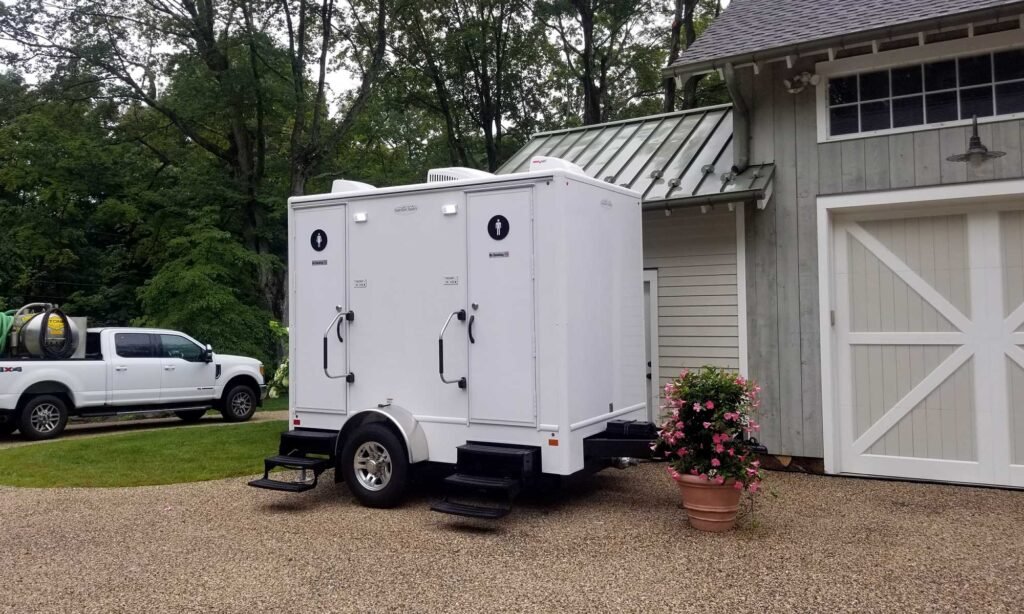
A bathroom trailer is a restroom building built on a trailer frame. It is towed to your venue, set up on level ground, and removed after the event. Inside, you will usually find several private stalls or suites, flushing toilets, sinks with running water, mirrors, and interior lighting.
Most units also have heating and air conditioning, which matters for a July afternoon in a field or a chilly October evening. Higher-end models add vanity counters, decorative flooring, background music, and attractive lighting. Some provide separate men’s and women’s sides. Others use identical private suites that anyone can use.
The water and power setup varies by provider and model. Some trailers connect to a nearby water source and a standard electrical outlet. Others carry their own freshwater and waste tanks and run on a generator. Ask early which type you are booking, because it affects where the trailer can sit.
Why Outdoor Weddings Put Extra Pressure on Restrooms
An indoor venue has restrooms designed for crowds. An outdoor site often has none, or only one small facility meant for a few people. Your guests may also be dressed in formalwear, long gowns, or heels, and they may be walking across grass or gravel to reach the facilities.
Weddings also create concentrated demand. Guests tend to use restrooms at the same moments: right after the ceremony, before dinner, and during breaks in the program. A shortage that would go unnoticed at a casual picnic becomes very visible when everyone is queuing at once.
Restrooms are also a photo-adjacent part of the experience. Guests remember them. A clean, well-lit space with a mirror and soap tells people that the hosts thought about their comfort.
Advantages for Wedding Guests and Hosts
Comfort and Appearance
The biggest benefit is the experience inside the unit. Real sinks, soft lighting, and a finished interior feel closer to a venue restroom than a standard portable toilet. Guests can wash their hands properly, check their hair, and adjust an outfit without leaving the event.
Climate control is another practical advantage. Dressed-up guests are more comfortable in a cooled or heated space than in a closed plastic booth baking in the sun.
Better Flow During a Formal Schedule
Trailers with multiple stalls keep traffic moving in one organized spot. Instead of scattered single units, guests walk to one clearly marked location. That makes it easier to place signage, lighting, and a pathway that matches the rest of your layout.
Many couples also place the trailer discreetly behind a tent, hedge, or decorative screen. Because it is a single structure, it is easier to blend into the venue than several separate units.
Accessibility Options
Some providers offer trailers with a wheelchair-accessible suite, including a ramp and extra interior space. Not every unit includes this, so you need to ask directly. If you expect guests who use mobility devices, an accessible option should be part of the plan from the start, not a last-minute add-on. Confirm the specific dimensions and ramp details in writing.
Limitations to Weigh Before Booking
Space and Ground Conditions
Bathroom trailers are large. The unit needs room for delivery, positioning, and often a short approach path for guests. Narrow driveways, low tree branches, tight gates, and soft or sloped ground can all create problems.
A trailer typically needs fairly level, stable ground. After heavy rain, a muddy field may be unsafe for a tow vehicle. Ask the provider what surface they require and whether they offer plywood or mats for difficult ground, and check what the venue allows.
Water and Power
If a trailer needs hookups, your site must be able to supply them. A rural property might not have a convenient water spigot or outlet near the best location. A generator-powered or self-contained trailer can solve this, but you should confirm exactly what the unit carries and how long its tanks will last for your guest count.
Also check venue rules. Some venues require approved vendors, set delivery windows, or restrict where vehicles can drive on the property.
Budget
Trailers generally cost more than standard portable toilets. Pricing depends on your region, the size of the unit, the number of stalls, the rental length, delivery distance, setup requirements, and optional services such as an attendant. Rather than guessing, request written quotes from at least two providers and compare what is included.
The higher price is not automatically a poor value. For a larger wedding or a formal event, one trailer can replace several rented units and reduce the need for extra décor to hide them. Still, if your budget is tight, there are lower-cost ways to improve the guest experience, which the next section covers.
Comparing Your Restroom Options
Bathroom trailers are one of several ways to handle restroom needs at an outdoor wedding. The table below summarizes how the common choices differ in practice. Features vary by provider, so use it as a starting point for your own questions.
Restroom Options for Outdoor Weddings at a Glance
| Option | Typical Features | Best Suited For | Main Drawback |
|---|---|---|---|
| Standard portable toilet | Single-person plastic unit, basic ventilation, hand sanitizer in many cases | Casual, short, or budget-focused events | Limited comfort and appearance; many separate units needed for larger guest lists |
| Upgraded portable unit | Larger interior, built-in sink in some models, better lighting | Mid-size weddings that want a step up in comfort | Features vary widely by model; may still feel temporary |
| Bathroom trailer | Multiple private stalls, flushing toilets, sinks, mirrors, climate control | Formal or larger weddings and longer receptions | Needs space, level ground, and often utility access; higher cost |
| Venue’s permanent restrooms | Built-in plumbing and fixtures | Venues with enough capacity near the event area | Often too few facilities or too far from the ceremony site |
For many couples, the right answer is a mix. A trailer can serve as the main facility, while an extra portable unit near the ceremony area or parking lot reduces walking and waiting.
How Many Restrooms Will Your Guests Need?
There is no single formula that fits every wedding. Event planners often start with a rule of thumb of roughly one toilet for every 40 to 50 guests and then adjust upward for longer events or guests who will be drinking. Treat this as a starting point and confirm your numbers with the rental company, since they know the capacity of each trailer.
Several factors push the number higher:
- A long reception with an open bar or several hours of dining
- A guest list with many older adults or young children
- Ceremony and reception at the same location with no other facilities nearby
- A short window of time between ceremony and dinner when everyone needs a break
It is better to have slightly more capacity than you think you need. Lines look worse at a wedding than they do at a festival, and guests rarely complain about having too many stalls.
Questions to Ask a Rental Company
A good provider will welcome detailed questions. Before you sign anything, consider asking:
- What are the trailer’s exact dimensions, and how much clearance does it need for delivery and setup?
- Does it require a water hookup and power connection, or is it self-contained?
- How many stalls does it have, and is there an accessible suite?
- What is included in the price: delivery, setup, pickup, cleaning, supplies, and any attendant?
- When will the unit arrive, and when will it be picked up?
- What happens if the ground is soft or the weather turns bad?
- Is the company insured, and does your venue require proof of insurance?
Ask to see photos of the exact trailer you will receive, not just a catalog image. If possible, schedule a site visit so the provider can check access and placement before the wedding.
Planning the Layout and Guest Experience
Placement affects how guests feel about the restroom as much as the unit itself. Put the trailer close enough to the main area for easy access, but far enough that noise, generator sound, and sight lines do not distract from the ceremony.
Lighting is often overlooked. If your reception runs after dark, plan for a lit path and clear signs so guests do not have to wander across uneven ground in the dark.
Small details help too. Many couples add a basket of extras such as mints, hairpins, or tissues, as long as the provider approves. A short check-in with the staff or an attendant during the event keeps supplies stocked and the space tidy.
Common Mistakes to Avoid
The most frequent problem is booking too late. Weekend dates in popular wedding months tend to fill up, so contact providers as soon as your venue and date are fixed.
Another mistake is assuming the venue will allow any trailer on site. Always get the venue’s approval and share the provider’s requirements with them before booking.
Finally, couples sometimes focus only on appearance and forget logistics. A beautiful trailer that cannot reach your preferred spot, or that has no accessible entrance, will cause more stress than it solves. Treat access, utilities, and capacity as seriously as style.
Conclusion
Bathroom trailers can make an outdoor wedding more comfortable, especially for formal events, longer receptions, and larger guest lists. They offer real sinks, flushing toilets, and climate control in a setting that feels closer to an indoor restroom. The tradeoffs are cost, space, and site requirements.
The best approach is practical. Count your guests, check your venue’s access and utilities, and compare written quotes from more than one provider. If you are weighing options, ask a local restroom rental company for a site assessment so you can choose the setup that fits your day.
FAQs
1. How much do bathroom trailers cost for a wedding?
Prices vary by location, trailer size, number of stalls, rental length, delivery distance, and extras like an attendant. Because of that variation, the most reliable approach is to request written quotes and compare exactly what each one includes.
2. Do they need water and electricity at the venue?
It depends on the model. Some connect to a water supply and power outlet, while others carry their own water and run on a generator. Ask the provider which type you are renting and whether your site needs anything extra.
3. How far in advance should I book?
Book as soon as your date and venue are confirmed, especially for weekends in busy wedding months. Early booking gives you more choice of units and time to confirm access and venue approval.
4. Can a trailer be used on grass or uneven ground?
Often yes, but the ground must be stable and reasonably level, and wet or soft turf can be a problem. Ask the provider about surface requirements and whether they can use mats or boards if conditions are poor.
5. Is a trailer worth it for a small backyard wedding?
It can be if your guests will be at the event for several hours and you lack indoor facilities. For a short or very small gathering, a smaller upgraded portable unit may be enough. Compare the cost against the comfort you want to provide.