Finding an affordable cashmere V-neck sweater that maintains its shape, feels soft, and looks polished after repeated wear can take some research. Many shoppers want the comfort and warmth of cashmere without spending a premium price, but affordability alone does not guarantee quality. A sweater may look attractive when new and still develop surface fuzz, lose its shape, or stretch around the neckline after a few wears.
The good news is that you do not always need the most expensive cashmere sweater to find a practical wardrobe staple. Understanding fiber quality, knit construction, neckline finishing, and proper care can help you make a more informed purchase. These details are especially important when choosing a V-neck because the neckline needs to sit flat and retain its shape to maintain a neat appearance.
Whether you need a sweater for work, casual outings, or layering during cooler weather, knowing what to look for can help you find a design that offers lasting value.
What Makes an Affordable Cashmere V-Neck Worth Buying
An affordable cashmere sweater should offer a reasonable balance between material quality, construction, comfort, and price. The goal is not simply to find the lowest-priced option. It is to choose a garment that performs well for its intended use and does not require frequent replacement.
Start by reviewing the product description. Look for clear information about the fiber content, knit weight, sizing, and care instructions. If a product is described as pure cashmere, its label should support that claim. Some sweaters combine cashmere with wool, cotton, or synthetic fibers, which can change the texture, durability, warmth, and price.
Blended fabrics are not automatically inferior. A carefully made blend may offer useful durability or easier care, depending on its composition. However, shoppers should understand what they are purchasing rather than assuming every soft sweater is made entirely from cashmere.
Construction matters just as much as the material. Even good fibers can produce a disappointing garment if the seams, ribbing, or neckline are poorly finished. Look for a sweater with a balanced shape, consistent knitting, and a neckline that appears even rather than stretched or twisted.
Understanding Why Cashmere Sweaters Pill
Pilling occurs when small fiber tangles form on the surface of a garment. These tangles create tiny balls of fuzz that can make a sweater look worn, particularly around areas that experience repeated friction.
Cashmere is a fine natural fiber, so some pilling can occur during normal use. It does not automatically mean the sweater is defective or made from poor-quality material. Loose fibers may work their way to the surface as the garment is worn, washed, or rubbed against other fabrics.
However, excessive or persistent pilling can affect the appearance of a sweater and may indicate that its construction or fiber characteristics are not suited to the way it is being used.
Pay Attention to Fiber Quality
Cashmere fibers vary in length, fineness, and consistency. Fiber characteristics influence how yarn behaves during knitting and how the finished garment responds to friction.
Longer fibers can generally help create smoother yarn with fewer loose fiber ends, although fiber length alone does not determine the quality of an entire sweater. Yarn construction, knitting technique, finishing, and everyday handling also influence pilling.
A product listing may not provide detailed fiber specifications, so look for transparent material information and realistic product descriptions. Be cautious of claims that promise a completely pill-free cashmere sweater. No natural cashmere garment can be guaranteed never to pill under all conditions.
Consider the Knit Structure
The way yarn is knitted can influence how a sweater looks and wears. A compact, even knit may provide a smoother surface, while a looser construction can have a softer, more textured appearance.
Neither construction is automatically better in every situation. A loose knit may feel comfortable and lightweight, but it can be more vulnerable to snagging if handled carelessly. A denser knit may provide more structure, although it can also feel heavier.
If you prefer a sweater for regular office wear or frequent layering, a relatively smooth knit can be a practical choice because it is easier to pair with jackets and coats.
Understand Where Pilling Usually Appears
Pilling commonly develops in areas where fabric repeatedly rubs against itself or another surface. For sweaters, these areas may include the underarms, sides of the torso, cuffs, and places where a handbag strap crosses the shoulder.
You can reduce friction by avoiding overly tight outer layers and rotating sweaters instead of wearing the same one every day. Allowing knitwear to rest between wears can help it recover its shape and reduce unnecessary wear.
How to Choose a V-Neck That Does Not Gap
A V-neck sweater can lose its polished appearance when the neckline pulls away from the chest, stretches outward, or develops an uneven opening. Some gaping results from the garment’s design, while other problems come from incorrect sizing or weakened ribbing.
The best approach is to examine the neckline alongside the rest of the sweater rather than treating it as an isolated feature.
Inspect the Ribbing Around the Neckline
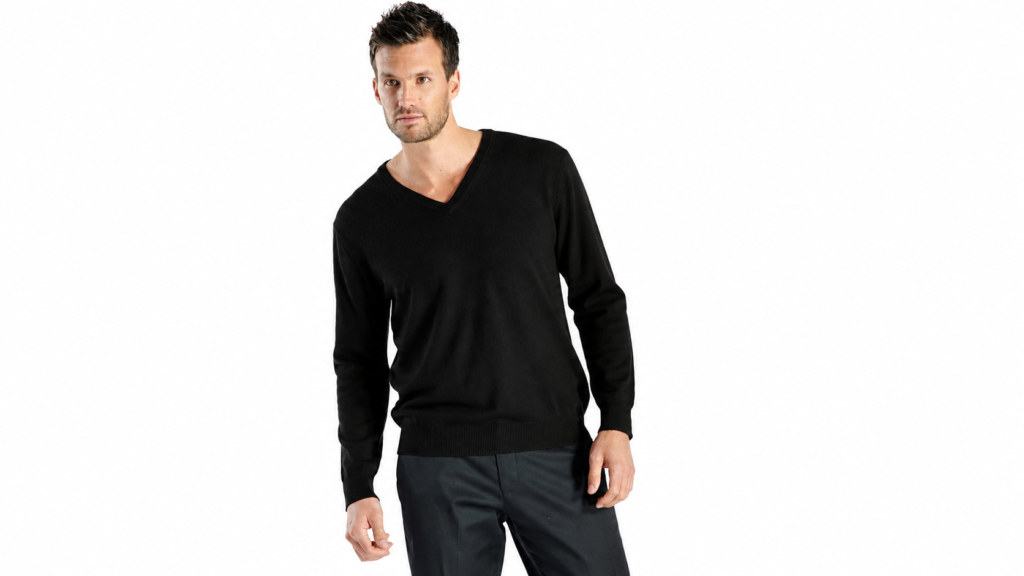
Ribbing helps the neckline retain its shape and sit comfortably against the body. When examining product photographs, look for an even edge with consistent stitching and a clearly defined V point.
The ribbed section should appear balanced on both sides. Uneven edges, visible twisting, or an unusually stretched opening may indicate inconsistent finishing, although photographs alone cannot confirm the garment’s actual quality.
If you can inspect the sweater in person, gently check whether the neckline returns to its original shape after light handling. Avoid pulling aggressively, as this can stretch delicate knitwear.
Choose the Correct Size
Sizing is one of the most common reasons a V-neck fails to sit properly. A sweater that is too small may pull across the chest, causing the neckline to spread. A sweater that is too large may hang away from the body, making the V appear wider or deeper than intended.
Check the chest measurement, shoulder width, body length, and sleeve length before purchasing. Compare these details with a sweater you already own that fits comfortably.
Do not rely on the size label alone. Sizing can vary between brands, and some designs are intentionally relaxed while others have a closer fit.
Select a Neckline Depth That Suits Your Wardrobe
A shallow V-neck generally offers more coverage, while a medium or deep V creates a more open appearance. The right choice depends on how you intend to wear the sweater.
If you regularly layer your cashmere over button-down shirts, choose a neckline that accommodates the collar without creating excess space around the chest. If you prefer wearing the sweater on its own, consider how much coverage you feel comfortable with.
The neckline should look balanced when you stand naturally, sit down, and move your arms. A sweater that fits well in a product photograph may behave differently during everyday use, so construction and sizing information are important.
Finding Affordable Cashmere Without Compromising Comfort
Price is an important consideration, but it should be evaluated alongside the sweater’s material and construction. A low price may be appealing, yet it is less useful if the garment loses its shape quickly or feels uncomfortable after a few hours.
Compare Fiber Content Carefully
Read the composition label before buying. A sweater marketed as cashmere may contain different proportions of cashmere and other fibers, so confirm whether it is pure cashmere or a blend.
A blend may be suitable if your priorities include a particular texture, price point, or care routine. However, compare products on an equal basis. A pure cashmere sweater and a cashmere blend should not be assumed to offer identical performance.
Clear product information makes it easier to understand what you are paying for and avoid misleading expectations.
Look Beyond the Lowest Price
Consider how often you expect to wear the sweater and whether it suits several outfits. A neutral V-neck in navy, grey, black, or beige can be worn with jeans, tailored trousers, skirts, and shirts.
A versatile sweater may offer better practical value than a cheaper design that works with only one or two outfits. Review the return policy, sizing guide, and care instructions before placing an order, particularly when buying knitwear online.
For shoppers comparing available designs, https://cashmeresweater.shop/cashmere-v-neck-sweater is a useful place to explore V-neck cashmere sweater options and review the details of individual styles.
Styling Affordable Cashmere V-Necks for Everyday Wear
A well-chosen V-neck can work across different settings without requiring an extensive wardrobe.
For Work and Smart Casual Outfits
Wear a navy or charcoal V-neck over a crisp white or pale blue shirt. Pair it with tailored trousers and simple loafers for a neat, professional appearance.
Make sure the shirt collar sits comfortably beneath the sweater. If the collar is too large or the sweater is too fitted, the fabric may bunch around the neckline and shoulders.
A medium-depth V-neck often works well for this combination because it reveals the collar without creating an excessively open chest area.
For Casual Outfits
For everyday wear, combine a cashmere V-neck with straight-leg jeans and comfortable shoes. Neutral colors provide an easy foundation, while muted green, burgundy, or blue can introduce more variety.
Choose a fit that allows natural movement without excessive fabric around the waist. If you plan to wear a jacket over the sweater, make sure the sleeves and shoulders do not feel restricted.
For Layering in Cooler Weather
Lightweight cashmere is useful beneath coats and blazers because it can provide warmth without adding too much bulk. A fitted cotton shirt or fine-knit top can serve as a comfortable base layer.
Avoid wearing several thick garments together if they restrict movement or pull at the neckline. A smooth base layer and a well-fitting outer garment can help preserve the sweater’s shape and make the outfit more comfortable.
How to Care for Cashmere and Reduce Pilling
Even a well-made cashmere sweater needs appropriate care. A gentle routine can help maintain its texture, shape, and appearance.
Follow the care label. Different garments may require different washing methods. Use a suitable detergent and avoid harsh treatments that can damage delicate fibers.
Reduce friction. Avoid carrying rough bags directly against the same area of your sweater every day. Choose outer layers that fit comfortably rather than rubbing tightly against the knitwear.
Let the sweater rest. Rotating between garments reduces repeated friction and gives the fibers time to recover between wears.
Dry it carefully. When the care instructions recommend washing, avoid twisting or wringing the sweater. Reshape it gently and dry it flat to help prevent stretching.
Store it folded. Hanging cashmere for long periods can stretch the shoulders and neckline. Keep it folded in a clean, dry place.
Remove pills gently. If small pills appear, use a suitable cashmere comb or fabric tool carefully, following its instructions. Avoid pulling pills by hand because this can draw out additional fibers and damage the surface.
These habits cannot eliminate all pilling, but they can help keep the sweater looking presentable for longer.
Common Buying Mistakes to Avoid
Several mistakes can lead to disappointment when shopping for affordable cashmere V-necks.
- Expecting cashmere to remain completely pill-free. Some surface pilling is normal with natural fibers, particularly in high-friction areas.
- Choosing a size based only on the label. Garment measurements provide a more reliable guide to fit.
- Ignoring neckline construction. Uneven ribbing or poor finishing can affect how the V-neck sits.
- Assuming every soft sweater is pure cashmere. Always verify the fiber composition.
- Overlooking care requirements. Delicate knitwear needs appropriate washing, drying, and storage.
- Buying based only on price. Consider construction, fit, versatility, and the information provided by the seller.
Taking a few minutes to assess these details can help you avoid an unsuitable purchase and choose a sweater that better matches your expectations.
Conclusion
The best affordable cashmere V-necks are not necessarily the cheapest or the thickest options. They are the sweaters that balance suitable fiber quality, thoughtful construction, a well-finished neckline, and a comfortable fit.
Some pilling is a normal characteristic of cashmere, but careful selection and proper maintenance can help reduce excessive surface wear. To avoid gaping, pay attention to neckline ribbing, chest measurements, shoulder fit, and the depth of the V.
Before purchasing, review the material description, compare measurements with a garment you already own, and consider how the sweater will fit into your daily wardrobe. With realistic expectations and consistent care, an affordable cashmere V-neck can remain a versatile and comfortable part of your clothing collection for many seasons.