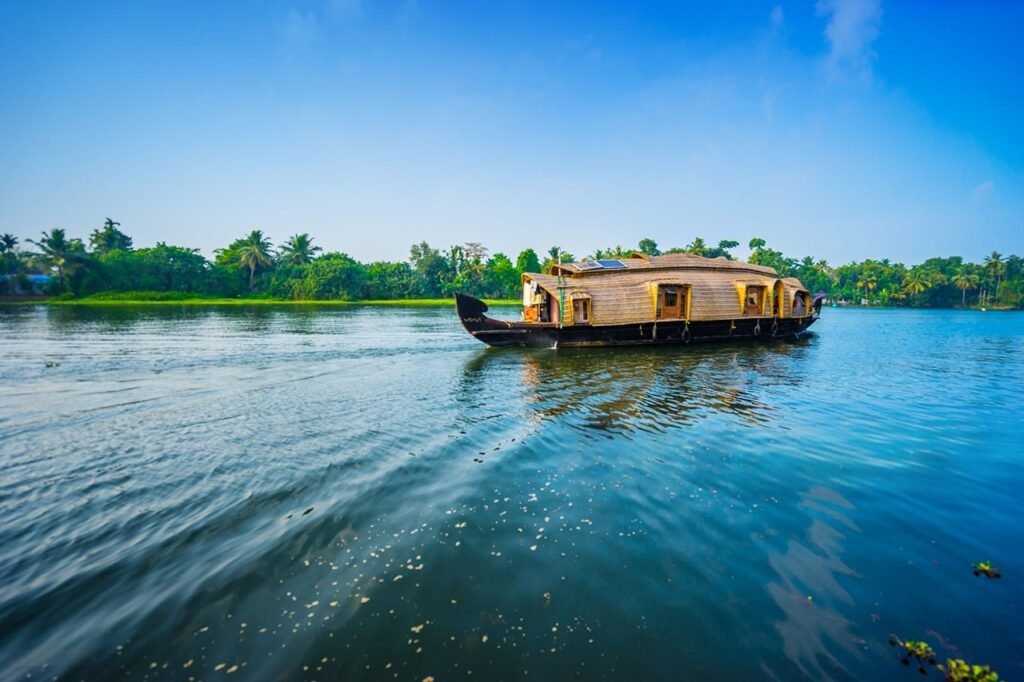
Most people plan a Kerala backwater trip around Alappuzha, then spend half the day stuck behind fifty other houseboats doing the same loop. Kollam runs on the same water, minus the traffic. This guide skips the generic checklist and tells you what’s actually worth your time here: a canoe route with no engine noise, the lake that started Kerala’s whole houseboat industry, and where to base yourself so you wake up to water instead of a parking lot. If you’re choosing between backwater resorts in Kerala, this is the case for picking Kollam over the crowd.
Why most backwater trips miss the point
Everyone wants the backwater photo. Fewer people ask which backwaters, and that’s where the trip goes wrong.
Alappuzha gets the tourism budget and the Instagram traffic. It also causes congestion. During peak season, its main channels turn into a lineup of nearly identical houseboats. Engines run, and guests photograph each other instead of the scenery.
Kollam solves this by accident. Geographically and historically, it’s the starting point of the backwater network. But this region’s tourism infrastructure developed at a slower pace. As a result, you get working villages instead of performance ones, and stretches of water quiet enough that a paddle cutting through sounds nothing like a diesel engine.
One disadvantage: unlike Alappuzha, with its well-planned, thought-out experience, Kollam won’t hand you anything ready-made. You’ll have to decide where to book a tour and where to stay.
Kollam: the lesser-known, more authentic alternative
Kollam’s backwaters are quite different, as they are natural waterways where locals go about daily life, not staged performances for tourists.
A tour on the backwaters
Enjoy water activities like a backwater boat trip or a paddle canoe adventure.
Ashtamudi Lake is the source of backwater adventure
Located in a beautiful area, Ashtamudi is the second-largest lake in Kerala and is the ‘gateway to the backwaters’ according to Kerala Tourism. Its name comes from a Malayalam word meaning ‘eight braids,’ a reference to the eight arms that branch out from the lake. The lake borders nearly a third of Kollam town.
Here’s why it’s worth the stop:
You can see Chinese fishing nets and working fishing villages all over the beach. However, these fishing activities aren’t staged for tourists; they are part of the everyday lives of people. Even now, the fishermen go about their routine of catching fish and repairing nets undisturbed.
Run by Kerala’s water transport department, the Kollam-Alappuzha cruise, which runs along Ashtamudi Lake and connecting canals as part of National Waterway 3, is a leisure trip of 55 kilometres in about 8 hours. It’s built to move slowly. That’s the point.
If you only have a few hours, DTPC runs a quick tour of Ashtamudi covering the lake, the nets, and the fisheries. It’s good for anyone without a full day to spare.
Munroe Island – A canoe trip you can only make by paddle
Many first-time visitors skip Munroe Island entirely. That’s the mistake. Munroe Island sits where the Kallada River meets Ashtamudi Lake. It’s a cluster of small islands linked by narrow canals, too narrow for houseboats.
Therein lies the attraction. A canoe seat is all you get, which means you won’t miss a thing and you’ll be close enough to touch the mangroves. You’ll find:
- A small village hand-making coir rope and mats from coconut fibre
- Paddy fields worked the traditional way
- Mangrove stretches with genuinely quiet water, no wake, no engine hum
Go early in the morning. The light is better, and the canals are stiller before the day’s boat traffic picks up.
Beyond the water
Kollam’s backwater identity connects to the rest of the district too. Thangassery Lighthouse and the Portuguese fort ruins sit a short drive from the lake. The cashew trail, still central to the local economy, gives you a look at an industry most tourists never see. Varkala’s cliffs and beach are close enough for a half-day trip if you want sea alongside your lake time.
Where to stay for it
This is where the resort choice actually changes your trip. A hotel with a pool and a view of the lake from the lobby is not the same as a property built right at the water’s edge.
Look for these when comparing backwater resorts in Kerala:
- Direct lake access, not just a lake-facing room. You want your own jetty or boat point, not a shuttle to one.
- Private balconies or terraces facing the water. Sunrise and sunset over a lake are the experience; a room that boxes you away from it defeats the purpose.
- On-site boat and kayak arrangements, ideally complimentary, so you’re not negotiating with an outside operator every morning.
If privacy matters as much as the view, private pool resorts in Kerala solve a specific problem: shared pools get crowded exactly when you want quiet. A private pool attached to a lake-view villa gives you both without trading one for the other. It’s a good fit for families or couples who want the water experience without sharing the property.
October to March is a comfortable window, cool enough for full days outdoors. Monsoon season, June through September, thickens the greenery and suits people prioritising Ayurveda and wellness stays over long boat days.
So, Kollam or Alappuzha?
Kollam won’t hand you the backwaters on a curated plate the way Alappuzha tries to. You have to choose the right lake, the right canoe route, the right base. Do that, and you get what most backwater trips promise, and few deliver: actual quiet, actual water, and a version of Kerala that isn’t performing for a camera.
Pick a resort with real lake access, book the Munroe Island canoe early, and give the Ashtamudi shoreline at least one unhurried evening. That’s the whole strategy.