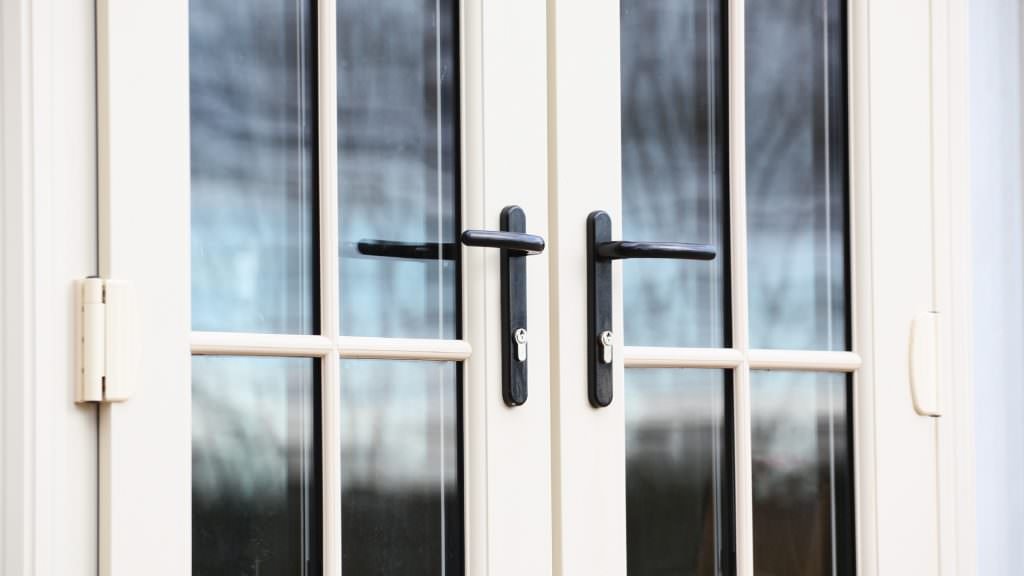
Choosing UPVC door handles looks simple until you start shopping. Then you’re faced with lever styles, security ratings, spindle sizes, backplate measurements and finishes that all seem nearly identical. They aren’t.
A cheap handle might look fine for six months, yet feel loose or expose the lock cylinder later. The right one should protect the locking mechanism, sit comfortably in your hand and suit the colour of your home. That’s the basic job. Some models do it much better than others, especially on busy front and back doors where the handle gets used dozens of times a day.
Which upvc door handles are best for home security?
For an external entrance, look first at the security construction rather than the finish. The strongest upvc door handles usually have a reinforced backplate, concealed or protected fixings and a design that shields the euro cylinder from gripping tools.
A TS 007-rated security handle is a sensible choice. This UK specification assesses resistance against common methods of attack, including attempts to reach or damage the cylinder. The recommends checking the star rating and Kitemark rather than relying on phrases such as “high security” printed on a product listing.
Three stars is the clearest option when the handle itself provides the main protection. Another accepted setup can combine a one-star security component with a two-star component to reach three stars overall. Check what’s already fitted before buying, because the cylinder and handle need to work as a pair.
I compared a £19 standard lever set with a security model priced around £54 recently. From the photographs, the difference didn’t look huge. The cheaper backplate was roughly 10 mm deep and left much more of the cylinder visible; the dearer one enclosed it closely and used thicker internal fixing points. That extra £35 made more sense than I first thought.
How do you measure a UPVC door handle correctly?
Don’t order from appearance alone. Plenty of handles look interchangeable in a small product image, but a difference of 5 mm can leave you with screw holes that don’t line up.
Measure the PZ distance first. That’s the space from the centre of the spindle hole to the centre of the circular part of the keyhole. Common UK measurements include 68 mm, 70 mm and 92 mm, although other sizes exist. Measure from centre to centre, not from the edges.
Next, check the distance between the fixing screws. Record the backplate length and width too. The spindle is normally 8 mm square, but its required length depends on the thickness of the door and hardware.
I once saw someone order a 92 mm PZ set because “92” appeared in the old lock paperwork. The actual handle measured 70 mm. Same white finish, very similar shape, completely useless when it arrived. Two minutes with a tape measure would’ve sorted it, but that’s how these purchases go sometimes.
Are security handles enough to protect the lock?
Not by themselves. A strong handle can make access to the cylinder much harder, yet it can’t compensate for a weak or badly protruding lock barrel.
Check how far the cylinder extends beyond the face of the backplate. It should fit closely rather than sticking out where it can be gripped. If you’re changing both parts, consider a TS 007 three-star cylinder or an SS312 Diamond-rated cylinder listed.
The multipoint locking mechanism matters as well. When you lift the lever, hooks, rollers or bolts should engage cleanly along the frame. If the handle has started feeling stiff, don’t assume a new set will cure it. The door may have dropped slightly on its hinges, which puts pressure on the gearbox. Fitting fresh upvc door handles over a struggling mechanism can hide the problem for a bit, then the new handle starts sagging too.
A locksmith or experienced door fitter is worth calling when the lock crunches, the key needs force, or the lever won’t return properly. Something isn’t sitting right there.
Which handle finish looks best on a UK home?
White remains the easy choice for older white frames. It blends in, costs less in many ranges and won’t make the entrance look overworked. Still, white coatings vary. A slightly creamy handle on a bright-white frame can look like it has aged before you’ve even fitted it.
Anthracite grey works well with modern grey frames and rendered properties. Black has more contrast and often suits cottages, red-brick terraces and newer doors with black glazing trims. Chrome feels sharper, though fingerprints show quickly. Satin nickel is quieter and usually more forgiving.
My pick for a busy family entrance would be satin stainless steel or a good-quality black powder-coated finish. I checked one polished chrome handle after roughly 30 hand contacts during a showroom visit; every mark showed under the ceiling lights. The satin sample beside it still looked tidy. Not scientific, obviously, but fairly convincing.
For coastal homes, ask about corrosion testing and the guarantee for the finish. Salt-heavy air isn’t kind to low-cost plated furniture. A handle can work perfectly and still look rough after one wet winter, which is annoying more than anything.
Should you choose lever-lever or lever-pad handles?
Lever-lever furniture has a standard lever on both sides. It’s familiar, comfortable and practical for most homes. Depending on the lock setup, closing the door may not secure it fully until you lift the lever and turn the key.
A lever-pad design has a shorter fixed or movable pad outside and a lever inside. On suitable lock systems, it can stop someone entering from outside once the door closes, even if they haven’t got a key. That sounds useful. It also makes accidental lockouts much easier.
Don’t swap between the two styles without checking the multipoint lock’s operation. The internal mechanism may require offset spindles or a particular configuration. If the listing says “split spindle”, pay attention; that small phrase changes how entry works.
For most households, I’d favour lever-lever unless there’s a clear reason for controlled outside access. It’s less fussy day to day.
How much should good handles cost?
Basic replacement pairs often start around £15 to £25. Better finished or branded sets commonly sit between £30 and £60, while certified security models may cost £50 to £100 or more.
Price alone proves very little. Look for the rating, material, fixing method, spring quality and guarantee. Well-made UPVC door handles should return smoothly after use without rattling against the backplate. If the lever already has play when it comes out of the box, send it back. That wobble won’t improve.
Professional fitting adds to the bill, but it may be worthwhile when drilling is needed or the cylinder must also be changed. Existing holes can limit your choices, especially on older doors.
Can you replace the handles yourself?
Usually, yes. Open the door, remove the internal fixing screws, pull both sides away carefully and keep hold of the spindle. Fit the new pieces without forcing them. Tighten each screw gradually so the backplates sit level.
Test the handle, key and multipoint lock several times while the door is open. Then test them again with it closed. If the mechanism becomes stiff only when closed, alignment is probably the issue.
Don’t overtighten the screws. This can pinch the mechanism or distort the plate. Snug is enough…
FAQs
Are all replacement handles the same size?
No. PZ measurements, fixing centres, backplate dimensions and spindle arrangements vary. Measure the existing hardware before ordering.
What does TS 007 mean on a handle?
It’s a security specification used for cylinders and protective door hardware. A genuine certified product should display its star rating alongside an approved certification mark.
How long should a good handle last?
A decent set can last many years, but usage, weather, door alignment and material quality all affect its life. Sagging, stiffness or visible corrosion are signs it needs attention.
Need a replacement? Measure the existing set, check the security rating and choose a finish you’ll still like next winter. Then buy once, and buy the right one.