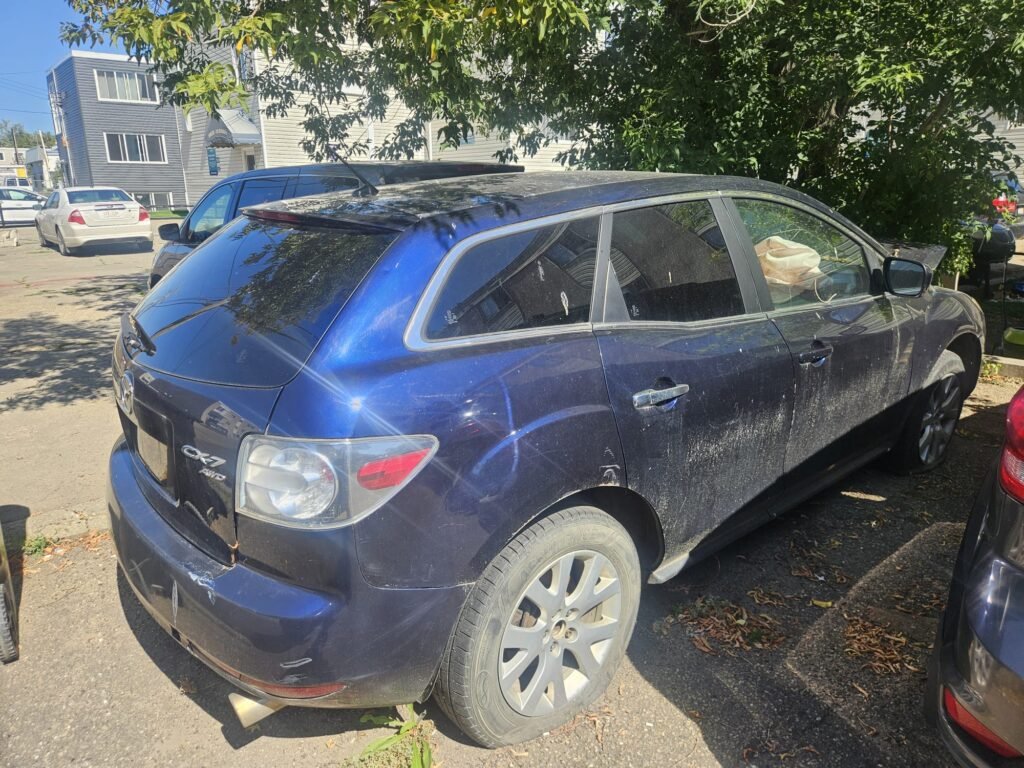
A car that will not roll is one of the more difficult vehicles to move, especially when the wheels are locked. This can happen after a serious breakdown, a dead battery, a seized brake, an accident, or simply because a vehicle has been sitting unused for a long time.
The important thing is not to force the vehicle to move. Dragging a locked-wheel car behind a tow truck can cause additional damage to the tires, suspension, drivetrain, or steering components. It can also create a safety problem for the people handling the vehicle.
If you’re dealing with a locked-wheel vehicle in Edmonton, a little preparation can make the towing process much smoother. Whether you’re moving the car to a repair shop, selling it, or getting rid of an unwanted vehicle, the goal is the same: make the vehicle accessible and tell the towing provider exactly what they’re dealing with.
Why Do Car Wheels Become Locked?
Before arranging towing, try to understand why the wheels are not turning.
A wheel can become locked for several reasons.
Seized Brakes
A vehicle that has been sitting for months may develop seized brake components. Rust can build up around brake rotors, calipers, drums, or other components.
In winter, moisture and freezing temperatures can make the problem worse.
Dead Battery
A dead battery itself does not normally lock the wheels, but it can prevent the vehicle from starting and may prevent an automatic transmission from being shifted into neutral.
This can make loading the vehicle more complicated.
Transmission Problems
A failed transmission or inability to shift the vehicle into neutral can prevent normal movement.
Some vehicles have a manual or electronic method for releasing the transmission, but the procedure varies significantly by make and model.
Accident Damage
A collision can damage suspension components, steering parts, wheels, axles, or the vehicle’s frame.
If the vehicle has been involved in a serious accident, don’t attempt to force the wheels to turn.
Parking Brake
A stuck or frozen parking brake can also prevent a vehicle from rolling.
This is particularly relevant during Edmonton winters when moisture can freeze around brake components.
Don’t Try to Drag the Car Yourself
One of the biggest mistakes people make is trying to pull a locked-wheel vehicle using another car or truck.
That can cause additional damage and create a serious safety hazard.
A locked wheel doesn’t simply mean the vehicle is heavier. It means the tires cannot rotate normally, so dragging the vehicle can scrape tires across the ground and place stress on components that weren’t designed to withstand that type of movement.
Instead, tell the towing company that the wheels are locked before they arrive.
This allows them to determine what equipment and loading method are appropriate.
Tell the Tow Operator Everything You Know
When arranging the tow, don’t simply say:
“The car doesn’t run.”
That information isn’t enough.
Explain whether:
- The wheels turn
- The steering works
- The vehicle can shift into neutral
- The parking brake is engaged
- The battery is dead
- The car has been sitting for a long time
- The vehicle has accident damage
- The tires are inflated
- The vehicle is accessible from the front or rear
- The car is parked inside a garage
- The vehicle is on private property
- There are obstacles around it
These details can make a significant difference.
A vehicle with a dead battery and freely rotating wheels is a different towing situation from a vehicle with four seized wheels and a locked steering system.
Clear the Area Around the Vehicle
Before the tow truck arrives, make the vehicle as accessible as possible.
Move other cars, bicycles, garbage bins, tools, or household items away from the vehicle if you have permission and it is safe to do so.
Look at the route the tow truck will need to access.
For example, if your car is parked tightly against a fence, inside a narrow garage, or behind another vehicle, tell the towing company in advance.
Don’t wait until the tow operator arrives to reveal a difficult access situation.
Check the Tire Condition
Locked wheels and damaged tires often go together.
A vehicle that has been sitting for a long time may have severely underinflated tires or a flat tire.
If the tires are still safely accessible, visually inspect them.
Don’t crawl underneath the vehicle or attempt risky repairs simply to make towing easier.
If a tire is flat, tell the tow provider.
Specialized towing equipment can often be used to move vehicles that cannot roll normally, but the operator needs to know about the problem.
Can You Put the Vehicle in Neutral?
If the vehicle has an automatic transmission, it may need to be in neutral for certain loading situations.
But what happens when the battery is dead or the electronic shifter won’t operate?
Some vehicles have a manual shift-lock release. Others have electronic procedures that require power or specific steps.
Check the owner’s manual if you have access to it.
If you’re unsure, don’t start disconnecting components or forcing the gear selector.
Tell the tow operator that the vehicle cannot be shifted into neutral.
They can determine the appropriate method for moving it.
What If the Steering Wheel Is Locked?
A locked steering wheel creates another challenge.
The tow operator needs to know whether the front wheels can turn.
If the steering system is damaged after an accident, don’t try to unlock or manipulate it yourself.
Even on an undamaged vehicle, avoid forcing the steering wheel aggressively.
The safest approach is to explain the situation to the towing provider and allow them to determine how the vehicle should be loaded.
Locked Wheels After an Accident
Accident-damaged vehicles require extra caution.
If a collision has damaged the suspension, steering, axle, or wheel assembly, attempting to drive or drag the car could make the damage worse.
Look for obvious signs such as:
- A wheel sitting at an unusual angle
- Severe tire damage
- Leaking fluids
- Broken suspension components
- Crushed body panels
- Steering damage
- Deployed airbags
- Parts hanging underneath the vehicle
Don’t attempt to make the vehicle roadworthy simply so it can be driven onto a tow truck.
Tell the operator about the accident and the visible damage before pickup.
What If the Car Has Been Sitting for Years?
Long-term storage creates its own set of problems.
A car that has been parked for years may have:
- Completely flat tires
- Seized brakes
- A dead battery
- Rusted components
- Rodent damage
- Deteriorated fluids
- Stuck suspension components
- Corrosion underneath the vehicle
At this point, your objective shouldn’t be to make the vehicle driveable just for towing.
The objective is to move it safely.
This distinction can save you from spending money on unnecessary repairs.
Preparing the Car for Towing When You’re Selling It
If you’re preparing an unwanted vehicle for sale, check the vehicle thoroughly before the tow truck arrives.
Remove personal belongings from:
- Glove box
- Centre console
- Door pockets
- Trunk
- Under-seat storage
- Spare-tire compartment
Also remove important documents, parking passes, garage remotes, personal electronics, and anything else you want to keep.
If the vehicle is being sold for cash, make sure you understand what documentation you need to complete the transaction.
Selling a Non-Running Car in Edmonton
A vehicle doesn’t have to drive to have value.
This is important for owners dealing with cars that have locked wheels, failed engines, damaged transmissions, accident damage, or extensive wear.
If you’re searching for cash for cars Edmonton, don’t assume that a non-running vehicle automatically needs to be repaired before you can sell it.
A cash car buyer may evaluate the vehicle based on its age, make, model, condition, parts potential, damage, and overall value.
The key is to provide accurate information.
Tell the buyer that the wheels are locked.
Tell them whether the vehicle starts.
Explain whether it can shift into neutral.
Mention any accident damage or major mechanical problems.
The more accurate the information, the easier it is to arrange an appropriate pickup.
Should You Repair the Wheels Before Selling?
Usually, you should calculate the numbers before spending money.
Suppose your old car is worth $2,500 in its current condition but needs $1,500 in brake and suspension repairs before it can move normally.
That doesn’t necessarily mean repairing it will increase its selling price by $1,500.
You could spend the money and still face other problems once the vehicle is inspected.
Get an estimate and compare the likely increase in value against the total repair cost.
For an older vehicle with several problems, selling it as-is may be more practical.
A Simple Locked-Wheel Towing Checklist
Before the tow truck arrives:
- Identify the problem.
Determine whether the issue involves the brakes, transmission, steering, battery, tires, or accident damage. - Tell the towing company.
Clearly explain that the wheels are locked. - Check access.
Make sure the vehicle can be reached by the tow truck or explain any access restrictions. - Remove personal belongings.
Check every compartment before the vehicle leaves. - Gather your documents.
Keep the relevant ownership and vehicle information ready. - Don’t force the vehicle.
Avoid dragging or pulling it with another vehicle. - Follow the tow operator’s instructions.
Let the professional determine the safest loading method.
Final Thoughts
A locked-wheel car can be difficult to tow, but it doesn’t have to become a major headache.
The most important step is communication. Tell the towing provider exactly what is wrong before they arrive. Explain whether the wheels turn, whether the vehicle shifts into neutral, whether the steering works, and whether the vehicle has suffered accident or mechanical damage.
If the car is being sold, don’t automatically spend thousands of dollars trying to make an old vehicle driveable. Compare the repair cost with its realistic value first.
For Edmonton vehicle owners considering cash for cars Edmonton, a locked-wheel vehicle may still be worth selling depending on its age, condition, parts, and overall value. Being honest about the vehicle’s condition allows the buyer and towing provider to prepare properly.
Ultimately, the goal isn’t simply to get a difficult vehicle onto a tow truck. It’s to move it safely, avoid unnecessary damage, and make a financially sensible decision about what happens to the car next.