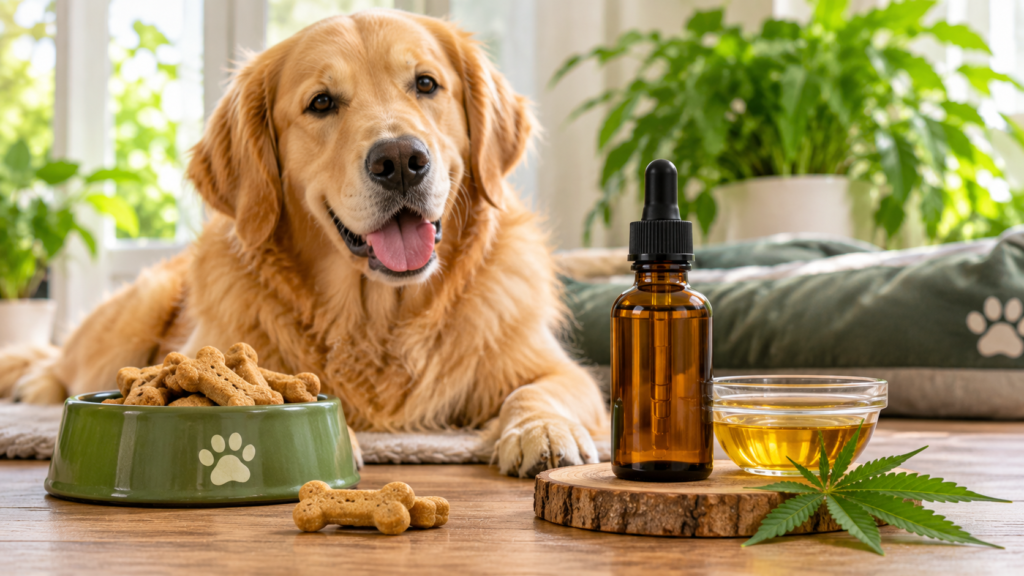
If you are considering CBD oil for dogs, the first question is almost always the same: how much is safe for my dog’s size? Unlike human supplements, there is no official dose for pets, and the numbers you find online vary widely. That is why a cautious, weight-based approach matters. This guide explains how weight fits into dosing, shares commonly cited starting ranges, shows how to calculate an amount from your bottle, and highlights the safety points every dog owner should know. It is educational only and does not replace advice from your veterinarian.
Important First: CBD Is Not FDA-Approved for Dogs
The FDA has not approved CBD for use in dogs, and research on long-term use in pets is still limited. Product quality can also vary, since pet CBD products are not held to the same standards as approved veterinary drugs. For these reasons, the safest first step is to speak with your veterinarian before giving your dog any CBD product, especially if your dog is a senior, has a health condition, or takes medication. This article is for general information and is not veterinary advice.
Why Weight Matters
Body weight is the main starting point for dosing because a Chihuahua and a Labrador process substances very differently. A serving that is tiny for a large dog could be too much for a small one. Weight is not the only factor, though. Age, overall health, sensitivity, other medications, and the strength of the product all play a part. That is why most guidance suggests starting low and increasing slowly, no matter how much your dog weighs.
Many owners ask about CBD because they want to support a dog’s comfort and routine. For background on the topic, EarthE CBD’s article Hemp Oil for Dogs: Benefits and Uses offers a general introduction.
Cautious Starting Amounts by Weight
Sources do not agree on a single number, which is a good reminder that no standard exists. Conservative starting amounts commonly cited by veterinary and pet-care sources range from about 0.05 mg to 0.2 mg of CBD per pound of body weight per day, while some sources suggest slightly higher. One veterinarian quoted in pet media suggests about 1 mg per 10 pounds of body weight, given twice daily.
To make this practical, here is what a starting amount of about 0.1 mg per pound looks like. These are examples for understanding the math, not a recommendation for your dog:
- 10 pounds: about 1 mg
- 25 pounds: about 2.5 mg
- 50 pounds: about 5 mg
- 75 pounds: about 7.5 mg
- 100 pounds: about 10 mg
You may see much higher numbers in research. For example, a well-known study on dogs with osteoarthritis used about 2 mg per kilogram of body weight twice daily, which is roughly 0.9 mg per pound. That was a research setting, and it is not a starting point for pet owners. Your veterinarian can tell you where in this range your dog should begin, if at all.
How to Calculate the Amount From Your Bottle
A label may show total milligrams in the bottle, but you give your dog a measured amount of liquid. To convert, you need the strength per milliliter.
- Find the total CBD in the bottle. For example, EarthE CBD’s CBD Dog Formula full spectrum drops are listed at 300mg.
- Find the bottle size in milliliters. Check the label, since the size is printed on the packaging.
- Divide total milligrams by milliliters. If a 300mg bottle holds 30 mL, it contains 10mg of CBD per milliliter.
- Divide your target amount by the strength. If your target is 2.5 mg and the oil is 10mg per mL, you would measure 0.25 mL.
- Measure carefully. Small amounts are hard to measure by eye, so use the dropper markings or ask your veterinarian or pharmacist for a syringe.
The example above uses a sample bottle size for illustration, so always use the figures printed on your own label.
Step-by-Step: Starting Your Dog on CBD
Once your veterinarian agrees that CBD is appropriate, a gradual approach helps you watch for any reaction:
- Start with a small amount. Many owners begin at the low end of the commonly cited range, or even lower for small or sensitive dogs.
- Give it with food. Mixing the oil into a small meal can make it easier for your dog to accept.
- Keep notes. Record the amount, the time, and how your dog behaves.
- Wait several days before changing anything. Give your dog time to show how they respond.
- Increase only slightly. If your veterinarian recommends going higher, do so in small steps.
- Stop and call your vet if something seems wrong. Unusual behavior is always worth a call.
Choosing a Safer CBD Product for Dogs
Product quality is as important as dosage. When you shop, look for:
- A pet-specific formula: Products made for dogs are designed with pet-appropriate ingredients and flavors.
- Third-party lab testing: A certificate of analysis should confirm CBD content and show THC levels and contaminant results.
- Clear labeling: The bottle should list total CBD, the size in milliliters, and the ingredients.
- No harmful ingredients: Avoid products with xylitol or other additives that are unsafe for dogs.
- A trustworthy brand: Look for a company that answers questions and shares its test results.
THC and Dogs: Why Caution Matters
Dogs can be more sensitive to THC than people. Full spectrum products contain trace amounts, which are small, but sensitive dogs may still react. That is why checking the lab report for THC content matters. Signs of too much THC can include wobbling, unusual sleepiness, drooling, dribbling urine, or vomiting. If you see these signs, contact your veterinarian or an emergency animal clinic right away. Also keep human CBD and THC products out of your dog’s reach, because some contain ingredients such as xylitol that are dangerous for dogs.
Possible Side Effects and When to Call the Vet
Dogs that take CBD may experience mild side effects, especially at higher amounts. Reported issues include:
- Drowsiness or low energy
- Loose stools or an upset stomach
- Dry mouth, shown by increased drinking
- Changes in appetite
Some studies have also noted changes in liver values in dogs, which is another reason to involve your veterinarian. CBD may also interact with certain medications because it can affect how the liver processes them. Call your vet if your dog seems unwell, stops eating, or shows any sign that worries you.
Common Mistakes to Avoid
- Guessing the amount instead of calculating it
- Using a human product instead of a pet formula
- Starting with a high dose because the bottle is strong
- Changing the amount every day
- Skipping the lab report
- Giving CBD to puppies, pregnant dogs, or dogs on medication without veterinary approval
Final Thoughts
There is no official answer to how much CBD oil for dogs you should give by weight, but a cautious approach protects your pet. Start with your veterinarian, choose a lab-tested pet formula, calculate the amount from your bottle, and begin at the low end of commonly cited ranges. Watch your dog closely, keep notes, and make changes slowly. Your dog’s safety and comfort matter more than reaching a specific number.
FAQs
How much CBD should I give my dog by weight?
There is no official amount. Commonly cited conservative starting amounts range from about 0.05 mg to 0.2 mg per pound of body weight per day. Ask your veterinarian to confirm the right starting amount for your dog.
Can I give my dog human CBD oil?
It is safer to choose a pet-specific product. Human products may differ in strength, flavor, and ingredients, and some contain additives that are unsafe for dogs.
How long does CBD take to work in dogs?
Timing varies. Oils often take around 30 to 60 minutes to show any effect, but it may take several days of consistent use to notice a pattern. Do not raise the amount too quickly.
Is CBD safe for puppies or senior dogs?
Puppies, seniors, and dogs with health conditions need extra caution. Always speak with your veterinarian before giving CBD to these dogs.
What should I do if my dog gets too much CBD?
Contact your veterinarian or an emergency animal clinic right away, especially if your dog seems wobbly, very sleepy, or unwell. Bring the product label with you.