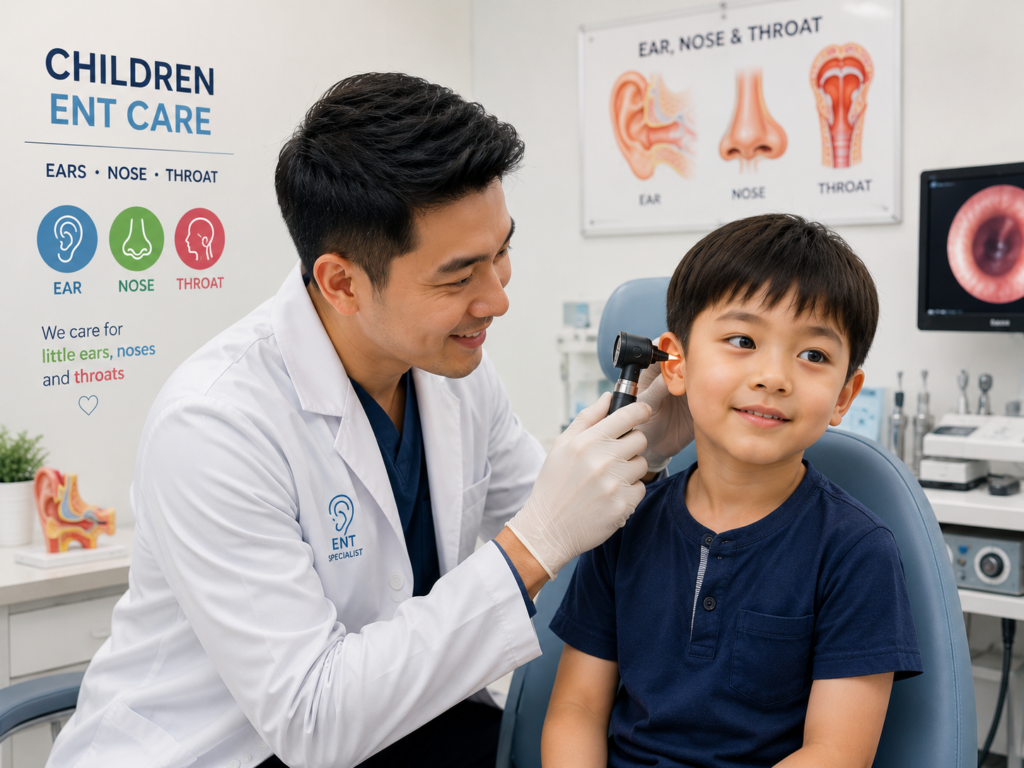
Children ENT refers to specialist care for ear, nose and throat conditions affecting babies, toddlers, children and teenagers. Unlike a routine medical check-up, a paediatric ENT assessment looks specifically at problems that may affect a child’s hearing, breathing, sleep, speech, swallowing and overall day-to-day comfort.
For parents in Singapore, knowing when to consult a children ENT Singapore specialist can save a lot of uncertainty. A child may not complain about a problem directly, and symptoms such as poor hearing, mouth breathing, snoring or repeated ear infections can sometimes look like ordinary childhood issues. When these signs keep returning, a proper assessment can help identify what is actually happening.
What Does a Children ENT Specialist Do?
A children ENT specialist assesses and treats conditions involving the ears, nose and throat in younger patients. The specialist considers the child’s age, symptoms, development and ability to cooperate during examination, rather than applying exactly the same approach used for adults.
Common reasons for a paediatric ENT consultation include recurrent ear infections, suspected hearing loss, blocked nose, persistent mouth breathing, snoring, enlarged adenoids or tonsils, recurrent throat infections, swallowing difficulties and certain problems affecting speech or communication.
When Should a Child See an ENT Specialist?
A simple rule for parents is this: if an ENT-related symptom keeps coming back, does not settle, becomes more noticeable or starts affecting normal activities, it is worth discussing with a doctor.
There is no need for parents to diagnose the condition themselves. Instead, look at the pattern. Is your child repeatedly asking you to repeat yourself? Are they snoring most nights? Do they constantly breathe through their mouth? Are ear infections happening again and again? These observations can be useful when deciding whether a children ENT specialist Singapore assessment is appropriate.
Signs That May Need Further Assessment
Some of the more noticeable signs include:
- Repeated ear infections or ear pain
- Suspected hearing difficulties
- Frequently asking people to repeat themselves
- Turning the television volume up
- Persistent blocked or runny nose
- Regular mouth breathing
- Loud or frequent snoring
- Recurrent sore throats
- Enlarged tonsils or adenoids
- Difficulty swallowing
- Frequent nosebleeds
- Foreign objects in the ear or nose
- Speech or communication concerns accompanied by possible hearing difficulties
One symptom on its own does not necessarily mean there is a serious problem. The frequency, severity and impact on the child’s daily life are important factors for the specialist to consider.
Why Hearing Assessment Matters for Children
Hearing is particularly important during childhood because children are constantly learning through sounds, conversations and interactions with people around them. A hearing issue may therefore present itself through behaviour rather than an obvious complaint about the ears.
A child with reduced hearing may appear distracted, misunderstand instructions, respond inconsistently when called or have difficulty following conversations in noisy environments. For younger children, parents may simply feel that something about their responses or communication is different.
Can Children Have Hearing Tests?
Yes. Children can undergo hearing assessments using different techniques depending on their age and developmental stage. Babies and toddlers may require different testing methods from school-aged children because they cannot always respond to conventional hearing tests.
Specialist paediatric hearing assessments can include tests such as OAE, ABR, ASSR, tympanometry, visual reinforcement audiometry and play audiometry when clinically appropriate. These tests help provide information about hearing ability and middle-ear function.
How Are Ear Infections Managed in Children?
Ear infections are common in childhood, but recurrent infections deserve proper attention. In some children, fluid can remain behind the eardrum after an infection, potentially causing temporary hearing difficulties.
A children ENT specialist in Singapore can examine the ear, assess the eardrum and determine whether the child needs medical treatment, monitoring, hearing assessment or another form of management. In selected cases, procedures such as myringotomy and grommet tube insertion may be considered.
The important point is that treatment should be based on the child’s actual condition rather than simply the number of times a parent remembers an ear infection occurring.
Is Snoring Normal for Children?
Occasional snoring can occur when a child has a cold or blocked nose, but persistent or loud snoring should be assessed, particularly when it is associated with disrupted sleep or breathing concerns.
One possible contributor is enlargement of the adenoids or tonsils, which can narrow the upper airway in some children. Other nasal or airway conditions may also play a role. An ENT specialist can assess the child and determine whether further investigation is needed.
What Parents Should Watch During Sleep
Parents can pay attention to whether the child:
- Snores regularly
- Sleeps with the mouth open
- Has restless sleep
- Frequently wakes during the night
- Appears to struggle with nasal breathing
- Has unusual breathing patterns during sleep
- Seems unusually tired during the day
These observations do not establish a diagnosis, but they give the paediatric ENT specialist Singapore a better picture of the child’s symptoms.
Why Does My Child Always Breathe Through the Mouth?
Persistent mouth breathing can happen for different reasons. A blocked nose, enlarged adenoids, allergies or other nasal and airway issues may make nasal breathing difficult.
If your child has been breathing through the mouth regularly for a prolonged period, it is sensible to find out why. Treating the underlying cause may be more useful than simply trying to change the habit without understanding what is preventing comfortable nasal breathing.
Can Enlarged Adenoids Affect a Child?
Yes, enlarged adenoids can contribute to nasal obstruction and mouth breathing, and they may also be associated with snoring or other sleep-related breathing symptoms.
The adenoids are tissue located behind the nose. They are part of the immune system, but enlargement can sometimes interfere with airflow or contribute to ENT symptoms. Whether treatment is necessary depends on the child’s symptoms and clinical findings.
An ENT examination can help determine whether enlarged adenoids are actually contributing to the child’s problems.
What Happens During a Paediatric ENT Consultation?
A consultation starts with understanding the child’s symptoms and medical history. Parents may be asked about ear infections, hearing, sleep, snoring, nasal breathing, throat problems and other changes noticed at home.
The specialist then decides which examinations or tests are appropriate. Depending on the child’s symptoms, this may involve examination of the ears, nose and throat, hearing evaluation or assessment of the nasal airway.
Does Every Child Need a Procedure?
No. A paediatric ENT consultation does not automatically mean surgery or another procedure. The appropriate management depends on the diagnosis, severity of symptoms, impact on the child’s life and clinical assessment.
Some children may simply need monitoring or medical treatment, while others may require further testing or a procedure. The purpose of specialist assessment is to establish what the child actually needs.
Why Choose a Specialist Children ENT Service in Singapore?
Parents often want more than a clinic that can simply examine an ear or throat. Children may become anxious around medical equipment, and younger patients may struggle to explain symptoms or follow instructions during testing.
Dedicated paediatric ENT care is designed around these practical realities. Novena ENT provides paediatric ENT and hearing services, including children’s hearing assessments and facilities intended for younger patients. The practice provides assessment and treatment for a range of children’s ear, nose and throat concerns.
Frequently Asked Questions About Children ENT Singapore
What is children ENT?
Children ENT is specialist ear, nose and throat care for infants, children and teenagers. It covers conditions affecting hearing, ears, nasal breathing, throat, tonsils, adenoids and related areas.
What is the difference between a general ENT doctor and a children ENT specialist?
Both may manage ENT conditions, but paediatric ENT care takes into consideration the child’s age, development, communication ability and specific needs during examination, testing and treatment.
Should I see a children ENT specialist for frequent ear infections?
If ear infections are recurring, persistent or associated with suspected hearing problems, an ENT assessment can help determine whether there is an underlying issue requiring further investigation.
Does my child need a hearing test if they can already speak?
Not necessarily, but speaking does not automatically confirm that hearing is normal. If parents notice inconsistent responses, difficulty following conversations or other hearing-related behaviours, professional assessment can provide greater clarity.
Is mouth breathing always caused by enlarged adenoids?
No. Mouth breathing can have several possible causes. Enlarged adenoids are one possibility, but a specialist assessment is needed to determine the underlying reason.
When should I look for a children ENT specialist Singapore clinic?
Consider seeking specialist advice when your child’s ear, nose or throat symptoms are persistent, recurrent or affecting sleep, hearing, breathing, communication, eating or everyday activities.
Get the Right Answers for Your Child’s ENT Concerns
Parents know their children best. If your child’s behaviour has changed, their hearing seems different, snoring has become frequent, or breathing through the nose seems difficult, those observations are worth taking seriously rather than repeatedly guessing what might be wrong.
For families looking for children ENT Singapore, children ENT specialist Singapore, or paediatric ENT specialist Singapore, Novena ENT provides dedicated specialist care for children’s ear, nose and throat concerns, together with paediatric hearing assessment services. Visit Novena ENT Paediatric ENT to learn more and arrange an assessment with the specialist team. The right evaluation can give parents something extremely valuable — a clearer understanding of what their child needs and what to do next.