Why Rental Property Safety Is Every Host Responsibility
When guests book a rental property, they are placing a significant degree of trust in the property owner. They are sleeping in an unfamiliar space, using appliances they have never operated before, and relying on the host to have ensured that the property meets basic safety standards. Carbon monoxide is an odorless, colorless gas that causes incapacitation and death without any warning signs that an affected person would recognize. These are life safety concerns, not operational inconveniences, and they require serious monitoring solutions.
How Layla Detects Smoke and Harmful Gas Events
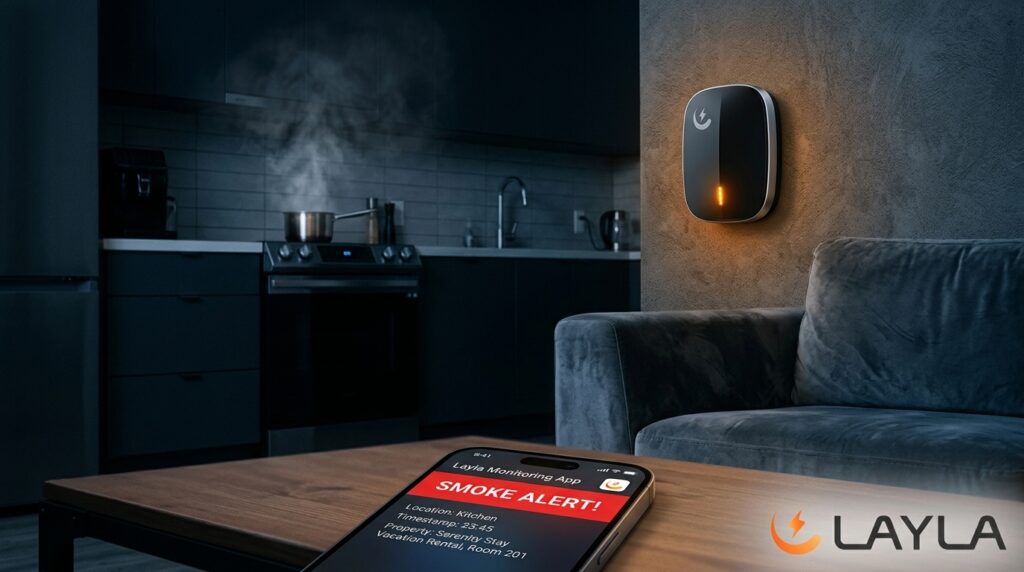
Layla smoke and harmful gas sensing operates through its air quality monitoring system, which continuously tracks particulate matter and volatile organic compound levels in the property. When these sensors detect sudden significant spikes in either measurement that are characteristic of smoke, burning materials, or dangerous gas releases, the system triggers an immediate alert to the property owner mobile device.
The Layla smart sensor at layla.eco provides this smoke and gas sensing capability as part of its comprehensive all in one monitoring approach. It is important for property owners to understand that Layla smoke and harmful gas sensing supplements rather than replaces certified life safety smoke detectors and carbon monoxide alarms required by local building codes.
The Critical Advantage of Remote Alerting for Property Managers
One of the most significant limitations of standard smoke detectors and CO alarms is that they only alert people who are physically present in or immediately adjacent to the property. Layla remote alerting capability changes this dynamic fundamentally. When air quality sensors detect a significant smoke or harmful gas event in the property, Layla sends an immediate push notification to the property owner phone regardless of where they are or what time it is.
Creating a Safety First Reputation That Drives Bookings
In a competitive short term rental market, the reputation of a property as genuinely safe and well managed is a significant competitive advantage. Guests reading reviews increasingly look for signals that a property is professionally managed and that their safety was a priority for the host. Layla at layla.eco helps property owners build a comprehensive, layered approach to guest safety that addresses immediate risks like smoke and CO alongside the slower developing risks like mold and air quality degradation.
What to Do When You Receive a Safety Alert From Layla
Knowing what to do when you receive a smoke or CO alert from your Layla sensor is essential preparation for any property manager. Keep emergency service numbers readily accessible. If you receive a smoke or fire alert, call emergency services immediately and then contact the guests through the platform messaging system or the emergency contact number they provided at booking. Do not wait to verify the alert through other means before calling for help. A false alarm is a minor inconvenience. A delayed response to a real emergency is potentially catastrophic.
Frequently Asked Questions
Q1: Does Layla replace certified smoke detectors and CO alarms?
A: No. Layla supplements these devices by alerting the remote property owner but it does not replace certified life safety devices required by local codes.
Q2: How fast does Layla alert me to a smoke or CO event?
A: Layla sends immediate push notifications when sensors detect significant spikes in PM2.5 or VOC levels consistent with smoke or harmful gas events.
Q3: Can Layla detect mold in my property?
A: Layla detects the humidity and temperature conditions that favor mold growth and sends mold risk alerts before visible mold develops.
Q4: What should I do when I receive a smoke alert from Layla?
A: Call emergency services immediately, then contact your guests through the platform messaging system to confirm awareness and ensure their safety.
Q5: Is Layla gas and smoke sensing accurate enough to rely on?
A: Layla provides meaningful additional sensing capability but is not a certified safety device. It works best as an additional alert layer alongside properly maintained certified detectors.