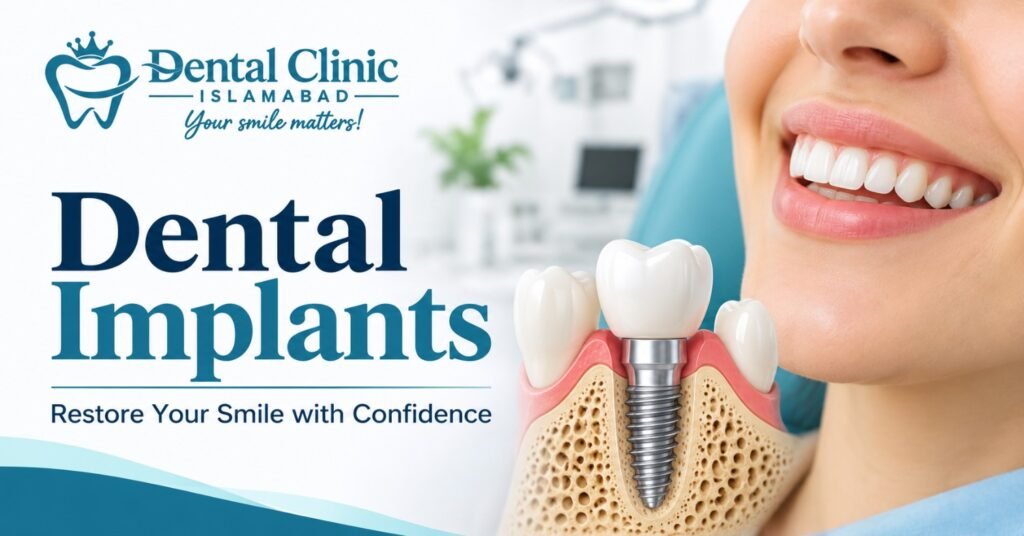
Losing a tooth can affect more than your smile. It may change the way you chew, speak, and feel about your appearance. A missing tooth can also create gaps that allow nearby teeth to shift over time. Fortunately, modern dentistry offers several ways to replace missing teeth, and dental implants provide a long-term option for eligible patients.
For people considering dental implants in Islamabad, understanding the treatment process, available options, healing period, and long-term care can make the decision easier. Dental implants replace missing tooth roots with small biocompatible posts that support crowns, bridges, or full-arch restorations. They aim to restore everyday oral function while creating a natural-looking appearance.
However, successful treatment involves more than placing an implant. A dentist must assess the gums, jawbone, bite, and overall oral health before recommending the right approach.
What Are Dental Implants?
Dental implants are artificial tooth roots that dentists place into the jawbone to support replacement teeth. Most implants consist of titanium, although other materials such as zirconia may suit selected cases.
After placement, the implant gradually bonds with the surrounding bone through a natural process called osseointegration. This connection creates a stable foundation for the final restoration.
A typical dental implant has three main components:
-
Implant post: A small screw-like structure that sits inside the jawbone and replaces the natural tooth root.
-
Abutment: A connector that attaches to the implant and holds the replacement tooth.
-
Dental crown: The visible part that resembles a natural tooth and restores chewing function.
Unlike removable dentures, implants remain fixed in the mouth. They can replace a single missing tooth, several teeth, or an entire arch, depending on the patient’s needs and available bone support.
Why Do People Choose Dental Implants?
Missing teeth can create practical and aesthetic concerns. Some people experience difficulty chewing certain foods, while others feel uncomfortable smiling or speaking in social situations.
Dental implants address these concerns by providing a fixed replacement that works more like a natural tooth.
Some potential benefits include:
-
Improved chewing ability: Fixed implant-supported teeth can make eating more comfortable.
-
Natural appearance: Custom-made crowns can match the surrounding teeth in shape, size, and colour.
-
Jawbone support: Implants stimulate the surrounding bone during function and can help reduce the bone loss associated with missing tooth roots.
-
Support for neighbouring teeth: A single implant does not require dentists to prepare adjacent healthy teeth, unlike some conventional dental bridges.
-
Stable tooth replacement: Implants do not move around during everyday activities like removable dentures may.
-
Long-term use: With proper placement, regular dental visits, and good oral hygiene, implants can last many years.
Nevertheless, implants require consistent care. They do not prevent gum disease around the implant, and the replacement crown may need maintenance or replacement over time.
Types of Dental Implants Available
Dentists select an implant solution according to the number of missing teeth, jawbone condition, and the patient’s expectations. Common options include the following.
1. Single Tooth Implant
A single-tooth implant replaces one missing tooth without relying on neighbouring teeth for support. The dentist places one implant into the jawbone and attaches a custom-made crown after healing.
This option may suit someone who has lost a tooth because of an accident, severe decay, or an extraction.
2. Multiple Dental Implants
When several teeth are missing, dentists can place multiple implants to support individual crowns or a dental bridge. The final design depends on the position of the gaps and the available bone.
For example, a patient missing three consecutive teeth may qualify for an implant-supported bridge instead of receiving three separate implants.
3. All-on-4 and All-on-6 Dental Implants
People who have lost most or all of their teeth may consider full-arch implant treatment. All-on-4 uses four strategically positioned implants to support a fixed set of replacement teeth, while All-on-6 uses six implants.
The dentist evaluates bone quality, bite forces, and overall oral health before choosing between these approaches.
4. Implant-Supported Dentures
Traditional dentures can sometimes slip or move while eating and speaking. Implant-supported dentures use dental implants to improve stability.
Depending on the design, the denture may attach to the implants through special connectors. Some designs allow patients to remove the denture for cleaning, while others remain fixed.
Who Is a Suitable Candidate for Dental Implants?
Dental implants can help many adults with missing teeth, but not everyone qualifies immediately. The dentist needs to assess the patient’s oral health and medical history before recommending treatment.
A suitable candidate generally has:
-
Completed jawbone growth.
-
Healthy gums without active periodontal disease.
-
Sufficient jawbone to support the implant or the option of bone grafting.
-
Good daily oral hygiene habits.
-
Overall health that allows normal healing.
-
Realistic expectations about treatment time and maintenance.
Certain conditions may require additional precautions. Uncontrolled diabetes, smoking, untreated gum disease, and some medical conditions can affect healing or increase the risk of complications.
Patients should also inform their dentist about prescribed medicines, previous surgeries, and existing health concerns. These details help the dental team develop a safer treatment plan.
What Happens If There Is Not Enough Jawbone?
Jawbone loss is a common concern among people who have lived with missing teeth for several years. After losing a natural tooth, the bone in that area may gradually shrink because it no longer receives normal stimulation from the tooth root.
Insufficient bone can make implant placement difficult. However, it does not automatically mean that dental implants are impossible.
A dentist may recommend bone grafting to improve the height or width of the jawbone. This procedure adds bone material to the affected area and allows it to heal before implant placement.
For patients missing upper back teeth, a sinus lift may also be necessary if the available bone height is insufficient.
The dentist determines whether these additional procedures are appropriate after reviewing dental imaging and examining the implant site.
Step-by-Step Dental Implant Procedure
Dental implant treatment involves several stages. The exact sequence depends on the patient’s oral condition, the number of implants, and whether additional procedures are necessary.
Step 1: Initial Consultation and Examination
The process begins with a detailed dental examination. The dentist checks the missing tooth area, surrounding teeth, gums, and bite.
Dental X-rays or a CBCT scan may help assess bone density, available space, and nearby anatomical structures.
During this appointment, patients can discuss their expectations, treatment options, estimated costs, and expected timeline.
Step 2: Preparing the Implant Site
Before implant placement, the dentist addresses any existing oral health problems. This may involve treating gum disease, removing an infected tooth, or performing bone grafting.
Some patients may qualify for immediate implant placement after extraction, while others need to wait for the extraction site to heal.
Step 3: Implant Placement Surgery
The dentist uses local anaesthesia to numb the treatment area. They then prepare a small opening in the jawbone and carefully position the implant.
After placement, the dentist closes the gum tissue or shapes it around the implant, depending on the surgical approach.
Patients may experience pressure during the procedure, but local anaesthesia helps prevent pain.
Step 4: Healing and Osseointegration
After surgery, the implant needs time to integrate with the jawbone. This process, known as osseointegration, creates a stable foundation for the replacement tooth.
Healing commonly takes around two to six months, although some cases require longer. Bone grafting and individual healing conditions can extend the timeline.
Step 5: Abutment and Crown Placement
Once the implant has integrated successfully, the dentist connects an abutment and prepares the final restoration.
The dental laboratory creates a crown that matches the surrounding teeth. The dentist checks its shape, colour, fit, and bite before completing the treatment.
The final restoration allows patients to use the replacement tooth for everyday activities.
How Long Do Dental Implants Take to Complete?
The treatment timeline varies from person to person. A straightforward implant case may take a few months, while patients who need bone grafting or additional treatment may require more time.
| Treatment stage | Approximate timeline |
|---|---|
| Consultation and examination | 1–2 visits |
| Implant placement | Usually one appointment |
| Initial gum healing | Around 1–2 weeks |
| Bone integration | Around 2–6 months |
| Final crown placement | After successful integration |
These timeframes are general estimates rather than fixed guarantees. Your dentist can provide a more accurate schedule after examining your teeth and jawbone.
Are Dental Implants Painful?
Many patients worry about discomfort during implant surgery. However, dentists generally perform the procedure under local anaesthesia, which numbs the treatment area.
Patients may feel pressure or movement during placement rather than sharp pain. After the anaesthesia wears off, mild soreness, swelling, or bruising can occur.
These symptoms usually improve over the following days. The dentist may recommend suitable pain relief and provide instructions for managing the surgical site.
If pain becomes severe, swelling increases, or bleeding does not settle, contact your dental provider for an assessment.
Dental Implant Aftercare: How to Protect Your New Teeth
Good aftercare plays an important role in implant healing and long-term maintenance. Although implant crowns do not develop cavities like natural teeth, the surrounding gums and bone can still develop infections.
Patients should follow these basic care practices:
-
Brush twice daily using a soft-bristled toothbrush.
-
Clean between teeth and around implants with suitable interdental brushes or floss.
-
Choose soft foods during the initial healing period.
-
Avoid smoking because it can interfere with healing.
-
Follow the dentist’s instructions about rinsing and prescribed medicines.
-
Attend follow-up appointments to monitor implant stability.
-
Avoid putting excessive pressure on the surgical area during recovery.
Regular professional cleaning also helps identify early signs of inflammation around an implant.
Dental Implants vs Dental Bridges: Which Option Is Better?
Both dental implants and conventional bridges can replace missing teeth. However, they work differently and offer different advantages.
| Feature | Dental Implants | Dental Bridges |
|---|---|---|
| Support | Jawbone | Adjacent teeth |
| Treatment | Surgical placement | Crown preparation |
| Effect on nearby teeth | Usually preserves them | Requires preparation of supporting teeth |
| Bone stimulation | Helps maintain bone in the implant area | Does not replace the missing root |
| Maintenance | Regular brushing and implant cleaning | Regular brushing and cleaning beneath the bridge |
| Treatment duration | Usually several months | Often shorter |
Neither option is automatically better for every patient. A dental bridge may be more appropriate when surgery is unsuitable or when the neighbouring teeth already need crowns.
A dental implant may be worth considering when the adjacent teeth are healthy and the patient wants an independent replacement.
The dentist should explain the advantages, limitations, and expected maintenance requirements of both options before treatment.
What Factors Affect the Cost of Dental Implants in Islamabad?
The cost of dental implants depends on several clinical and material-related factors. Every patient has different requirements, so dentists generally provide a treatment estimate after an examination.
Important factors include:
1. Number of Implants: Replacing one missing tooth usually requires a different treatment plan from replacing several teeth or a complete arch.
2. Implant Brand and Material: Different manufacturers offer implant systems with varying designs, materials, and clinical research backgrounds. The dentist can explain the selected implant system.
3. Crown Material: Porcelain and zirconia crowns have different aesthetic and functional characteristics. The choice depends on the tooth’s position, bite, and appearance requirements.
4. Bone Grafting: Patients with insufficient jawbone may need additional procedures before implant placement.
5. Additional Dental Treatment: Tooth extraction, gum treatment, and other preparatory procedures can affect the overall treatment cost.
6. Dentist’s Experience: The dentist’s qualifications, clinical experience, and expertise in implant dentistry also contribute to treatment planning.
When comparing treatment estimates, patients should ask whether the quoted amount includes the implant post, abutment, final crown, diagnostic imaging, and follow-up visits. This helps avoid unexpected expenses.
How to Choose the Right Dental Implant Dentist in Islamabad
Selecting the right dentist is an important part of implant treatment. The quality of planning, surgical technique, and final restoration can influence the overall outcome.
Consider these points before making a decision:
-
Professional qualifications: Check the dentist’s dental education, relevant postgraduate training, and experience with implant procedures.
-
Clinical experience: Ask about their experience with single-tooth, multiple-tooth, and full-arch implant treatments.
-
Diagnostic facilities: A proper assessment may require digital X-rays or CBCT imaging.
-
Treatment planning: The dentist should explain the procedure, healing period, possible complications, and alternative options.
-
Implant system: Ask about the brand and model of the implant being used.
-
Aftercare arrangements: Make sure the clinic provides follow-up appointments and long-term maintenance guidance.
Patients should feel comfortable asking questions before agreeing to surgery. A good treatment discussion includes both the expected benefits and possible risks rather than promising guaranteed results.
Dental Implant Treatment at Dental Clinic Islamabad
Patients looking for implant treatment can explore the services available at Dental Clinic Islamabad.
The clinic provides dental care in F-7 Markaz, Islamabad, where patients can discuss missing teeth, replacement options, and restorative treatment requirements.
Dr. Ahsan Rush provides implant-related dental care at the clinic. An initial consultation helps assess the condition of the gums, jawbone, and remaining teeth before developing an appropriate treatment plan.
Patients can discuss:
-
Whether a single-tooth implant or implant-supported bridge is suitable.
-
Whether the jawbone requires additional preparation.
-
Which crown material may suit their needs.
-
How long the treatment and healing process may take.
-
What maintenance will be necessary after crown placement.
For people considering Dental Implants in islamabad, an individual assessment is the best starting point for understanding the available treatment options.
Frequently Asked Questions About Dental Implants
1. How long do dental implants last?
Dental implants can last many years with proper placement and maintenance. Their lifespan depends on oral hygiene, gum health, general health, smoking habits, and regular professional monitoring. The implant crown may require replacement or repair over time.
2. Can dental implants replace multiple missing teeth?
Yes. Dentists can use multiple implants to support individual crowns, bridges, or full-arch restorations. The treatment design depends on the number of missing teeth and the available jawbone.
3. Can I get dental implants after several years of tooth loss?
Yes, many patients can receive implants even after several years of tooth loss. However, prolonged tooth loss may cause jawbone shrinkage. A dental examination and imaging help determine whether bone grafting is necessary.
4. How many days does it take to recover from implant surgery?
Initial gum healing generally takes around one to two weeks. However, complete integration between the implant and jawbone takes longer, commonly two to six months.
5. Are dental implants better than removable dentures?
Dental implants offer fixed support and do not move like conventional removable dentures. However, removable dentures remain a suitable option for some patients. The best choice depends on oral health, bone condition, budget, and personal preferences.
6. Can smokers get dental implants?
Smokers may qualify for dental implants, but smoking increases the risk of healing complications and implant failure. Dentists generally recommend stopping smoking before and after surgery to improve treatment conditions.
7. Can people with diabetes get dental implants?
People with diabetes may receive dental implants if their condition is appropriately managed. Uncontrolled blood sugar can interfere with healing and increase infection risks. The dentist should review the patient’s medical history before treatment.
8. What happens if a dental implant does not integrate with the bone?
Sometimes an implant fails to bond properly with the jawbone. The dentist may need to remove it, allow the area to heal, and assess whether another implant is possible. The reason for failure determines the next treatment steps.
Final Thoughts
Missing teeth can affect chewing, speech, facial appearance, and everyday confidence. Dental implants offer a fixed replacement option that can restore oral function while supporting a natural-looking smile.
However, successful treatment requires careful assessment, suitable implant placement, proper healing, and consistent oral hygiene. Patients should understand the available options and discuss the benefits, risks, and costs with a qualified dental professional before making a decision.
For anyone exploring dental implants in Islamabad, starting with a comprehensive dental examination can help identify the most appropriate solution for their individual needs.