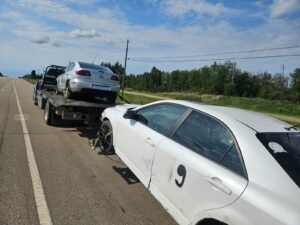
A car that will not start can make owners assume its value has dropped dramatically. After all, the engine is one of the most important components of a vehicle. But a non-running engine does not automatically mean the car has little or no cash value.
When a vehicle is being evaluated for a cash offer, buyers may consider much more than whether the engine starts. The transmission, catalytic converter, wheels, body panels, electronics, interior, recyclable metal, vehicle weight, make, model, and overall condition can all contribute to its potential value.
The key question is not simply, “Does the engine run?” It is “What value is still present in the vehicle?”
What Does a Non-Running Engine Mean for a Car’s Value?
An engine that does not run can affect the value of a vehicle because repairing or replacing it may be expensive. A buyer who plans to resell or repair the car has to consider those costs before making an offer.
However, there are many different reasons an engine may not run.
A vehicle could have:
-
A dead battery
-
A failed starter
-
Fuel-system problems
-
Electrical issues
-
Overheating damage
-
Internal engine damage
-
A seized engine
-
Lack of maintenance
-
Accident-related mechanical damage
These problems are not equal. A car that does not start because of a relatively simple issue may be valued differently from one requiring a complete engine replacement.
A Dead Engine Is Not the Same as a Dead Car
This is an important distinction.
Even when an engine has completely failed, the rest of the vehicle may still contain useful or valuable components.
The transmission could remain functional. The wheels may be reusable. Electronics, doors, mirrors, lights, seats, suspension components, and other parts may still have value.
The vehicle may also contain a significant amount of recyclable metal.
As a result, the engine’s condition is only one part of the overall evaluation.
Why the Make and Model Can Matter
The vehicle’s make and model can influence how much a non-running car is worth.
Some vehicles have strong demand for replacement parts. If many similar vehicles are still on the road, there may be a larger market for their used components.
A non-running vehicle can therefore still be useful as a source of parts.
For example, a damaged engine may reduce the vehicle’s value, but a good transmission or other desirable components could help offset some of that reduction.
What If the Engine Is the Only Major Problem?
This situation can be different from a vehicle that has multiple serious problems.
Suppose a car has a non-running engine but still has:
-
A good transmission
-
Intact body panels
-
Usable wheels
-
Complete interior
-
Functional electronics
-
Good glass
-
Valuable components
The buyer may still see considerable value in the vehicle.
On the other hand, if the engine is not running and the vehicle also has extensive rust, missing parts, severe collision damage, and a damaged transmission, the overall offer may be affected more substantially.
This is why the entire vehicle should be considered rather than focusing on one component.
Does an Engine Replacement Make the Car More Valuable?
Potentially, but repairing or replacing an engine can be expensive.
Before investing in a replacement engine, compare the expected repair cost with the potential increase in the vehicle’s market value.
For an older vehicle with substantial mileage or multiple other problems, an expensive engine replacement may not make financial sense.
For a newer vehicle in otherwise good condition, the calculation could be different.
The important point is to avoid assuming that every non-running car should be repaired before selling.
What About a Car With a Seized Engine?
A seized engine is generally a more serious mechanical problem than a simple starting issue.
Repairing it may require significant labor and replacement components. This can reduce the vehicle’s appeal to someone looking for a ready-to-drive car.
However, a seized engine does not eliminate the vehicle’s other sources of value.
The transmission, body, interior, wheels, electronics, and recyclable materials may still be considered when the vehicle is evaluated.
Can a Non-Running Car Still Qualify for a Cash Offer?
Yes. A vehicle does not necessarily need to be operational to receive a cash offer.
Buyers who handle unwanted, damaged, or scrap vehicles may evaluate cars based on their remaining parts and recyclable materials rather than expecting them to be road-ready.
The vehicle’s condition should be described accurately when requesting an offer.
Calgary owners can provide their vehicle details to a local cash-for-cars service to find out what the non-running car may be worth in its current condition.
Tell the buyer whether:
-
The engine starts
-
The vehicle moves
-
The transmission works
-
The tires are inflated
-
Major parts are missing
-
The car has collision damage
-
The vehicle has significant rust
-
You have the required ownership documents
This information can help create a more realistic evaluation.
Does Mileage Matter When the Engine Does Not Run?
Mileage can still be relevant.
A non-running engine with very high mileage may have experienced more wear than one with substantially lower mileage. However, mileage should not be considered by itself.
A lower-mileage car with severe accident damage may have less overall value than a high-mileage vehicle with many intact and usable components.
The vehicle’s complete condition provides a better picture.
How Does Vehicle Weight Affect the Offer?
Weight can matter when a vehicle is being evaluated partly for its scrap and recyclable material.
Larger vehicles generally contain more metal than small compact cars. If the vehicle has little resale or parts value, its recyclable materials can become a more important part of the overall evaluation.
However, weight does not automatically determine the final cash offer. Other factors, including parts, condition, make, model, and current market conditions, can also influence the amount.
What Other Parts Can Add Value?
Even with a non-running engine, several components may contribute to a vehicle’s value.
These can include:
Transmission
A usable transmission can be valuable depending on the vehicle and demand for the component.
Catalytic Converter
The materials inside a catalytic converter can contribute to its value.
Wheels
Alloy wheels and usable tires may have value depending on their condition and demand.
Electronics
Control modules, wiring, entertainment systems, sensors, and other electronic components may be useful.
Body Panels
Doors, hoods, fenders, bumpers, mirrors, and lights can potentially be reused.
Interior Components
Seats, dashboards, trim pieces, and other interior components may still be useful.
The more valuable components that remain intact, the more opportunities there may be for the vehicle to retain value despite its engine problem.
Should You Repair the Engine Before Selling?
Not automatically.
Before paying for repairs, get an idea of what the car could be worth in its current condition.
Then compare that amount with:
-
Engine repair costs
-
Replacement engine costs
-
Labor
-
Towing
-
Parts
-
Inspection expenses
-
Additional repairs that may be required
A vehicle rarely has just one problem. Once an engine repair begins, other worn components may also need attention.
If the vehicle is already old or has multiple problems, selling it as-is may be worth considering.
When repairs are no longer practical, Calgary scrap car removal can provide a straightforward option for selling and removing an unwanted vehicle in its existing condition.
How Can You Get a More Accurate Cash Offer?
Be transparent about the engine.
Instead of simply saying, “The car doesn’t run,” provide as much useful information as possible.
Explain whether the engine:
-
Cranks but does not start
-
Makes unusual noises
-
Overheats
-
Has completely seized
-
Has known internal damage
-
Stopped working after an accident
-
Has not been tested recently
Photos can also help show the vehicle’s condition.
The more complete the information, the easier it is for a buyer to understand what they are evaluating.
What Mistakes Should You Avoid?
One mistake is assuming that a non-running engine makes the entire car worthless.
Another is spending a large amount of money on repairs without first comparing the potential return.
Some owners also remove parts before getting an offer. This can change the vehicle’s overall value and make transportation more difficult.
Instead, consider getting an evaluation while the vehicle is still complete.
Final Thoughts
A non-running engine can lower a car’s cash offer, but it does not automatically determine the vehicle’s entire value.
The final amount can depend on the vehicle’s make and model, mileage, weight, remaining parts, body condition, transmission, recyclable materials, and current demand.
A car with a failed engine may still contain valuable components. Even when repairing the engine is not practical, the vehicle can potentially have value as a parts vehicle or source of recyclable materials.
Before spending money on a major engine repair, find out what the car may be worth in its current condition. Understanding the vehicle’s remaining value can help you compare your options and make a more informed selling decision.