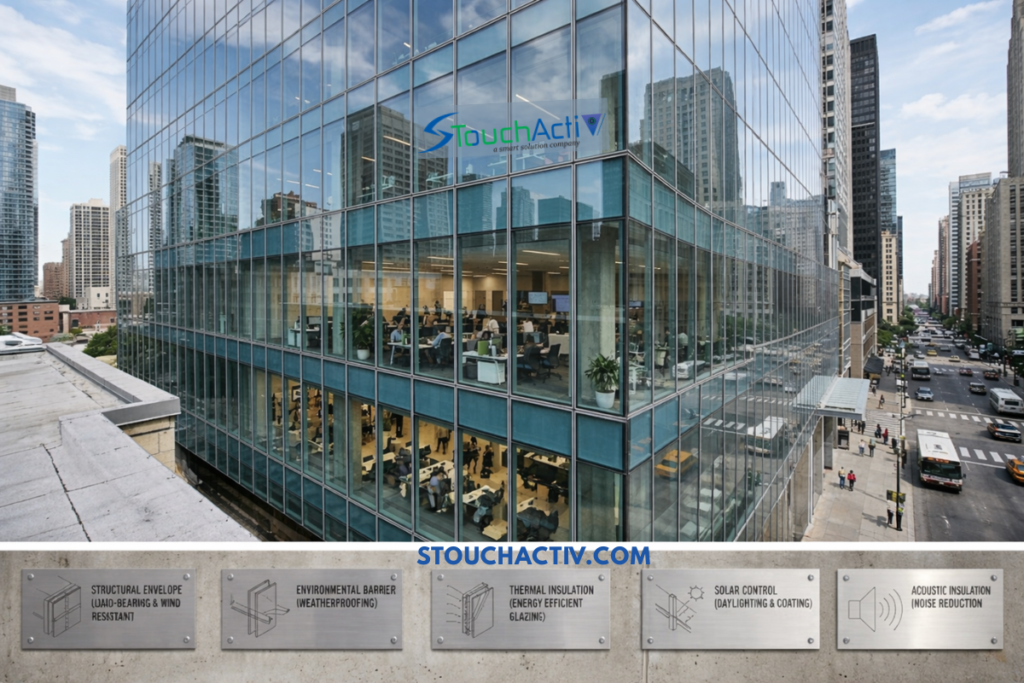
Modern architecture is shaped by innovation, efficiency, and refined aesthetics. One of the most influential elements driving this evolution is the curtain wall system, widely adopted in commercial complexes and high-rise buildings. This advanced façade solution blends visual elegance with strong functional performance, allowing architects to create sleek and contemporary exteriors. Beyond its striking appearance, it plays a crucial role in improving energy efficiency, optimizing natural light, and enhancing occupant comfort. Its lightweight structure reduces the load on the main framework, while durable materials ensure long-term reliability — making it a preferred choice in modern construction projects across diverse environments.
What Is a Curtain Wall System?
A curtain wall is a lightweight, non-load-bearing exterior covering attached to a building’s structural frame. Unlike traditional masonry walls, it does not support the building’s weight. Instead, it serves as a protective and decorative outer layer. These systems are typically constructed using aluminum frames combined with glass or composite panels, offering a sleek and modern finish that suits a wide range of architectural styles.
Key Functions of Modern Facade Systems
- Protection from External Elements A primary role of this façade system is to shield the structure from environmental factors such as rain, wind, and dust. Engineered sealing systems prevent water leakage and ensure long-term durability, even in challenging weather conditions.
- Improved Thermal Efficiency Energy efficiency is a major concern in modern construction. A well-designed curtain wall helps maintain indoor temperatures by reducing heat transfer. Insulated glazing units and thermally broken frames contribute to lower energy consumption and improved occupant comfort.
- Natural Light Enhancement Large glass panels allow natural daylight to flood interior spaces, reducing reliance on artificial lighting and creating a more pleasant and productive working environment.
- Structural Stability Support Although non-load-bearing, this facade is engineered to withstand wind pressure, seismic activity, and temperature variations. It transfers these environmental forces safely to the building’s primary structural frame.
- Noise Reduction In busy urban areas, noise control is essential. High-performance glazing used in these systems helps minimize external sound intrusion, ensuring a quieter and more comfortable indoor atmosphere.
Advantages of Curtain Wall Facades
- Modern Architectural Appeal The glass-dominated design adds a clean and contemporary look to any building. It is ideal for offices, retail malls, and luxury developments seeking a premium, high-end appearance.
- Lightweight Construction Compared to traditional masonry, this façade system is significantly lighter. The reduced structural load allows for taller buildings and more creative architectural expressions without compromising integrity.
- Energy Savings By improving insulation and maximizing daylight penetration, a curtain wall contributes to reduced energy bills over the building’s lifetime. This makes it a sustainable and cost-effective choice for modern developments.
- Faster Installation Process Prefabricated panels can be craned into position quickly, significantly reducing on-site construction time and associated labor costs compared to traditional cladding methods.
- Low Maintenance Requirements Materials such as aluminum and treated glass are inherently durable and resistant to corrosion. This ensures the system requires minimal upkeep over its operational lifespan.
- Design Flexibility Architects can experiment with different materials, finishes, colors, and panel layouts. The system offers extensive customization options to match virtually any design vision or brand identity.
- Eco-Friendly Solution Sustainability is a core advantage. Reduced energy consumption and compatibility with green building certification programs such as LEED and BREEAM make this façade solution a responsible environmental choice.
Types of Facade Systems
Stick System — Components are assembled on-site piece by piece, offering design flexibility but requiring more labor and time.
Unitized System — Pre-assembled panels are manufactured under factory-controlled conditions and installed on-site, ensuring consistent quality and faster project completion.
Semi-Unitized System — A hybrid approach that balances the cost efficiency of stick-built construction with the speed and quality of unitized assembly.
Applications in Modern Construction
These façade systems are widely used across commercial office spaces, shopping complexes, hotels, airports, institutional buildings, and high-rise residential towers. Their adaptability makes them suitable for virtually any architectural typology or climate condition.
Conclusion
The curtain wall system has become a cornerstone of contemporary architecture due to its blend of functionality, sustainability, and visual appeal. It protects buildings from the elements, improves energy performance, and gives architects unparalleled design freedom. From commercial towers to luxury residences, this façade solution delivers lasting value and a striking architectural presence.
Frequently Asked Questions (FAQ)
- What is the purpose of a curtain wall?
It acts as an external protective layer that enhances aesthetics while improving energy efficiency and weather resistance. - Is it a structural system?
No. It is a non-load-bearing assembly attached to the building’s primary frame and carries only its own weight. - How energy efficient is this façade system?
It significantly reduces heat transfer through insulated glazing and thermally broken frames, lowering overall energy consumption. - What materials are commonly used?
Aluminum frames, glass panels, and composite cladding materials are the most widely used components. - Is it suitable for residential buildings?
Yes. The system is increasingly popular in high-end residential towers and apartment developments seeking a modern aesthetic and energy performance.