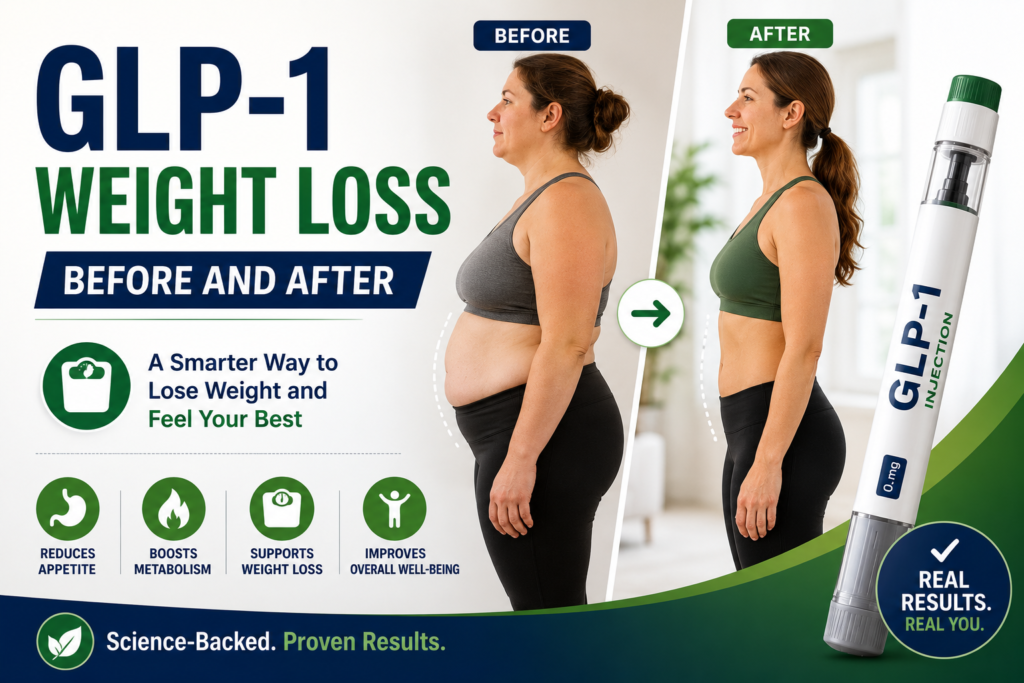
Search online for “GLP-1 weight loss before and after” and you’ll find thousands of dramatic transformation photos. Some people claim they’ve lost 20, 30, or even 50 pounds, while others report life-changing improvements in their health and confidence.
While these success stories can be inspiring, they can also create unrealistic expectations. Not everyone experiences rapid weight loss, and comparing your journey to someone else’s may lead to frustration.
The truth is that GLP-1 medications can help many people lose weight, but results depend on a variety of factors, including starting weight, lifestyle habits, consistency, and individual biology. Understanding what realistic before-and-after results look like can help you set healthier expectations and stay motivated throughout the process.
Why GLP-1 Before-and-After Photos Are So Popular
Weight loss transformations attract attention because they provide visible proof of change.
Many people who struggled with weight for years finally experience progress after starting GLP-1 treatment. As a result, they often share photos documenting their journey.
However, before-and-after photos rarely tell the complete story.
What you don’t see includes:
- How long the process took
- Dietary changes that were made
- Exercise routines
- Medical supervision
- Individual health conditions
- Periods of slow progress or plateaus
Looking only at the final result can create the impression that success happened much faster than it actually did.
What Makes GLP-1 Different From Traditional Dieting?
Many traditional diets rely heavily on willpower.
People often feel hungry, deprived, and constantly tempted by cravings, making long-term adherence difficult.
GLP-1 medications work differently by helping regulate appetite and satiety signals.
Users frequently report:
- Feeling less hungry
- Becoming full sooner
- Thinking about food less often
- Having fewer cravings
- Finding portion control easier
This shift can make healthy eating habits feel more sustainable compared to restrictive dieting approaches.
Realistic Weight Loss Expectations
One of the biggest mistakes people make is expecting celebrity-level transformations within a few weeks.
In reality, healthy and sustainable weight loss usually occurs gradually.
Many healthcare professionals consider losing 1–2 pounds per week to be a reasonable goal.
Clinical studies suggest that many users may lose approximately:
After 1 Month
- 2–8 pounds for many individuals
- Reduced appetite
- Better portion control
- Fewer cravings
After 3 Months
- 5–10% of starting body weight in some individuals
- Noticeable changes in clothing fit
- Improved confidence
- Better eating habits
After 6 Months
- Significant weight reduction for many users
- More visible body composition changes
- Improved mobility
- Increased energy levels
After 12 Months
- Potential loss of 10–20% of starting body weight
- Long-term lifestyle improvements
- Better overall health markers
Individual outcomes vary, but meaningful change often becomes more noticeable over time.
What a 20-Pound Weight Loss Can Look Like
People often underestimate how significant a 20-pound loss can be.
Depending on height, body composition, and starting weight, losing 20 pounds may result in:
- Smaller waist measurements
- Looser clothing
- Improved facial definition
- Better physical endurance
- Increased confidence
Even moderate weight loss can produce noticeable improvements in appearance and health.
What a 50-Pound Weight Loss Can Look Like
Larger transformations tend to receive the most attention online.
For individuals with higher starting weights, a 50-pound loss may lead to:
- Dramatic body shape changes
- Improved mobility
- Reduced joint stress
- Better blood sugar control
- Significant improvements in daily activities
However, these transformations often take many months and require consistent effort.
Why Your Results May Not Match Someone Else’s
One of the most important things to remember is that every weight loss journey is unique.
Several factors influence outcomes.
Starting Weight
People with higher body weights often lose more pounds overall.
Diet Quality
Nutritious eating habits can improve results significantly.
Physical Activity
Regular movement supports fat loss and muscle maintenance.
Sleep
Poor sleep may interfere with appetite regulation and recovery.
Stress
Chronic stress can influence eating habits and hormone levels.
Genetics
Individual biology plays a major role in how the body responds to weight loss efforts.
Because of these variables, two people taking the same medication may experience very different results.
Beyond the Physical Transformation
Many before-and-after discussions focus entirely on appearance.
However, some of the most meaningful changes happen internally.
Users often report:
Improved Relationship With Food
Many people feel less controlled by cravings and emotional eating patterns.
Better Energy Levels
Carrying less body weight may improve daily energy and physical performance.
Increased Confidence
Reaching health goals often improves self-esteem and motivation.
Better Health Markers
Some individuals experience improvements in blood sugar management and other health indicators.
These benefits may be just as important as the number displayed on the scale.
Why Some People Hit a Plateau
Weight loss rarely follows a perfectly straight path.
Many users experience periods where progress slows or temporarily stops.
Common reasons include:
- Metabolic adaptation
- Reduced calorie needs
- Water retention
- Changes in activity levels
- Inconsistent habits
Plateaus are normal and do not necessarily mean the medication has stopped working.
Remaining consistent often helps people move past temporary stalls.
Common Mistakes That Slow Results
Some habits can limit progress even while taking GLP-1 medication.
These include:
Relying Solely on Medication
The best results usually occur when medication is combined with healthy lifestyle habits.
Ignoring Protein Intake
Protein helps preserve muscle mass and supports satiety.
Being Too Sedentary
Regular movement contributes to long-term success.
Expecting Overnight Results
Sustainable weight loss requires patience and consistency.
Avoiding these common mistakes may help maximize outcomes.
Can Weight Return After Stopping GLP-1?
This is one of the most frequently asked questions.
Because GLP-1 medications help regulate appetite, some people notice increased hunger after stopping treatment.
Without healthy habits in place, weight regain may occur.
This is why many experts encourage individuals to use treatment as an opportunity to build sustainable behaviors that can continue long after medication use ends.
The Truth About Before-and-After Photos
Before-and-after photos can be motivating, but they should not become the standard by which you judge your own success.
Every person’s body responds differently.
Some people lose weight quickly, while others progress more gradually. Neither approach is necessarily better.
What matters most is building habits that support long-term health rather than chasing rapid results.
The most impressive transformation is often not the photo itself but the healthier lifestyle that made it possible.
Final Thoughts
GLP-1 weight loss before-and-after stories demonstrate what can be possible, but they don’t always show the full journey. Meaningful results typically require time, consistency, and realistic expectations.
Rather than focusing on dramatic transformations, concentrate on steady progress, healthier habits, improved confidence, and overall well-being. Whether your goal is to lose 10 pounds or 100 pounds, sustainable success is usually built one healthy choice at a time.
Frequently Asked Questions
How much weight do people usually lose on GLP-1 medications?
Many users lose between 10% and 20% of their starting body weight over time, although results vary significantly.
When do before-and-after changes become noticeable?
Some people notice physical changes within a few months, while others may require longer to see visible results.
Can exercise improve GLP-1 results?
Yes. Exercise supports fat loss, muscle preservation, and overall health.
Is rapid weight loss common with GLP-1?
Some individuals lose weight quickly, but gradual and consistent progress is generally more common.
Are before-and-after photos realistic?
Some are, but they often represent exceptional outcomes and may not reflect the average user’s experience.