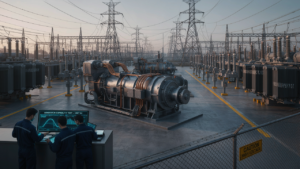
As power demand continues to grow worldwide, large-scale energy projects require reliable and efficient electrical infrastructure to ensure uninterrupted power delivery. At the heart of this infrastructure lies the substation—a critical component responsible for voltage transformation, power distribution, system protection, and grid stability.
An optimized substation design is essential for maximizing operational efficiency, reducing project costs, improving safety, and supporting future expansion. Whether the project involves renewable energy integration, industrial facilities, utilities, or transmission networks, careful planning and engineering can significantly enhance long-term performance.
This article explores the key strategies for optimizing substation design in large power projects and highlights the importance of professional electrical substation installation and advanced substation utility solutions.
1. Start with Comprehensive Load and System Analysis
Every successful substation project begins with a detailed assessment of current and future power requirements. Understanding load growth, peak demand patterns, system contingencies, and network expansion plans helps engineers design a substation capable of meeting both immediate and long-term needs.
A thorough load analysis enables project teams to:
- Determine transformer capacity requirements
- Identify voltage regulation needs
- Evaluate fault current levels
- Plan for future scalability
- Minimize the risk of overdesign or underdesign
Accurate forecasting ensures that the substation can operate efficiently throughout its lifecycle while avoiding costly upgrades in the near future.
2. Prioritize Reliability and Redundancy
Large power projects cannot afford unexpected outages. Reliability should be a core objective during the substation design process.
Engineers often incorporate redundancy through:
- Multiple transformers
- Backup power supplies
- Dual busbar configurations
- Redundant protection systems
- Alternative transmission paths
The appropriate level of redundancy depends on project requirements, regulatory standards, and operational risks. By designing for reliability from the beginning, organizations can reduce downtime, improve service continuity, and protect critical infrastructure.
Modern substation utility solutions also utilize advanced monitoring technologies that help identify potential issues before they affect operations.
3. Optimize Equipment Selection and Layout
The physical layout of a substation directly impacts safety, maintenance accessibility, construction costs, and operational efficiency.
When selecting equipment, engineers should evaluate:
- Transformer efficiency ratings
- Circuit breaker performance
- Switchgear reliability
- Protection and control systems
- Environmental operating conditions
Proper equipment placement can improve airflow, reduce cable lengths, simplify maintenance procedures, and enhance worker safety.
Additionally, compact and modular designs are becoming increasingly popular for utility and industrial projects. These solutions reduce land requirements and accelerate construction schedules while maintaining high performance standards.
Careful equipment selection combined with strategic layout planning contributes significantly to an optimized substation design.
4. Incorporate Advanced Digital Technologies
Digital transformation is reshaping the power industry, and modern substations are becoming smarter than ever.
Advanced technologies such as:
- Intelligent Electronic Devices (IEDs)
- SCADA systems
- Remote monitoring platforms
- Predictive maintenance tools
- Digital protection relays
provide real-time visibility into substation performance.
These technologies help operators monitor equipment health, detect abnormalities, and respond quickly to changing grid conditions.
For large power projects, digital substations offer several advantages:
- Improved operational efficiency
- Reduced maintenance costs
- Enhanced system reliability
- Faster fault detection
- Better asset management
Integrating digital capabilities during the design phase ensures the substation remains future-ready and capable of supporting evolving grid requirements.
5. Focus on Safety and Regulatory Compliance
Safety remains one of the most important considerations in electrical infrastructure projects. A well-engineered substation must comply with industry standards, utility regulations, and local safety requirements.
Key safety considerations include:
- Proper grounding systems
- Arc flash protection
- Equipment clearances
- Fire protection measures
- Emergency shutdown procedures
- Personnel access control
Compliance with applicable standards helps reduce operational risks while ensuring reliable system performance.
Professional electrical substation installation teams play a critical role in maintaining compliance throughout construction and commissioning. Their expertise helps ensure that every component is installed correctly and tested according to established industry guidelines.
By prioritizing safety from design through installation, project owners can minimize hazards and protect both personnel and assets.
6. Plan for Future Expansion and Sustainability
Power systems continue to evolve as renewable energy sources, battery storage systems, and smart grid technologies become more widespread. Substations designed solely for current requirements may struggle to accommodate future developments.
Forward-thinking engineers design substations with expansion capabilities such as:
- Additional transformer bays
- Spare switchgear capacity
- Flexible control systems
- Expandable communication networks
- Renewable energy integration points
Sustainability should also be considered during the design process. Energy-efficient transformers, environmentally friendly insulation technologies, and optimized equipment configurations can reduce environmental impact while lowering operating costs.
Modern substation utility solutions increasingly focus on balancing performance, sustainability, and long-term adaptability.
Conclusion
Optimizing substation design for large power projects requires a strategic combination of engineering expertise, advanced technology, safety planning, and future-focused infrastructure development. From detailed load analysis and equipment selection to digital integration and expansion planning, every decision influences the overall reliability and efficiency of the power system.
Investing in high-quality substation design and professional electrical substation installation not only improves operational performance but also reduces lifecycle costs and supports long-term grid stability.
As energy demands continue to grow, organizations that embrace innovative substation utility solutions will be better positioned to deliver reliable, efficient, and sustainable power for years to come.