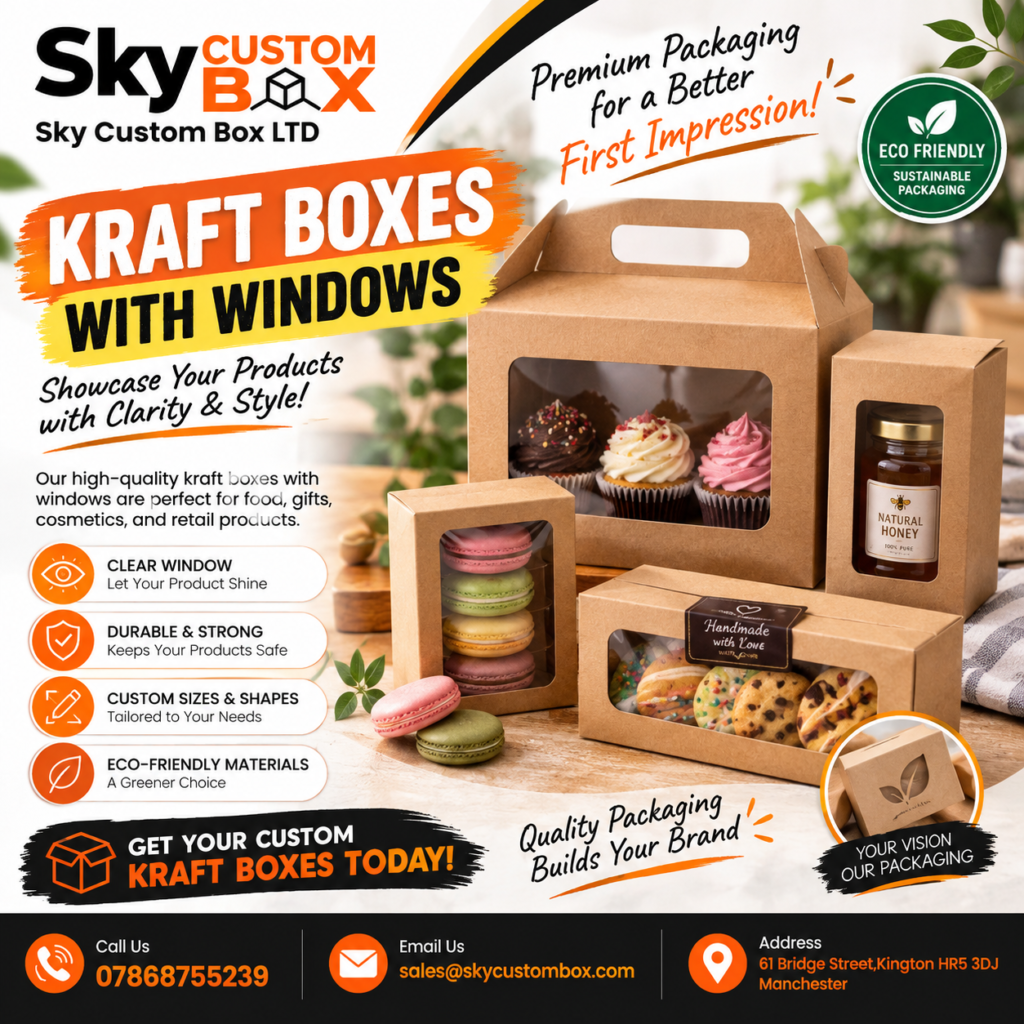
Packaging has become more than a protective layer around a product. For modern brands, it can influence purchasing decisions, communicate product quality, support sustainability goals, and create a memorable unboxing experience. Among the many packaging formats available today, kraft boxes with windows have become a practical option for businesses that want to combine natural-looking materials with product visibility.
A transparent window allows customers to see what is inside without opening the package, while kraft paper provides a simple, recyclable-looking appearance that works across many retail categories. From bakeries and confectionery businesses to cosmetics, handmade products, gifts, and small retail items, window packaging can provide both functional and visual benefits.
For brands developing packaging today, the challenge is to balance appearance, protection, sustainability, cost, and usability. Understanding how window kraft packaging works can help businesses make better packaging decisions.
Why Kraft Boxes with Windows Are Popular
Kraft packaging is commonly associated with a natural, understated aesthetic. Its brown or neutral appearance can give products an artisanal and authentic feel, making it particularly suitable for brands that want to communicate simplicity and craftsmanship.
The addition of a transparent window introduces another important benefit: product visibility.
Customers can inspect the product before making a purchase, which can be especially valuable when appearance is part of the buying decision. For example, a bakery may use a window to display decorated cookies, while a gift business can showcase the contents of a carefully arranged product set.
Some of the main advantages include:
- Product visibility: Customers can see the contents without opening the box.
- Natural presentation: Kraft materials provide a simple and contemporary appearance.
- Brand flexibility: Boxes can be printed, stamped, labelled, or finished in different ways.
- Retail practicality: A visible product can make shelf presentation more engaging.
- Versatile applications: The format can be adapted for food, gifts, cosmetics, crafts, and retail products.
- Potential material efficiency: Lightweight kraft board can provide packaging strength without unnecessary bulk.
However, the window itself should be considered carefully. Depending on the application, brands may need to evaluate the type of transparent material, its recyclability, durability, and suitability for direct or indirect food contact.
Designing Window Kraft Boxes for Different Products
Effective packaging starts with understanding the product rather than selecting a box style first. The dimensions, weight, fragility, presentation requirements, and storage conditions all influence the appropriate design.
For lightweight retail products, a compact kraft window box may be sufficient. Products that require additional protection may need stronger board, internal inserts, dividers, or structural features.
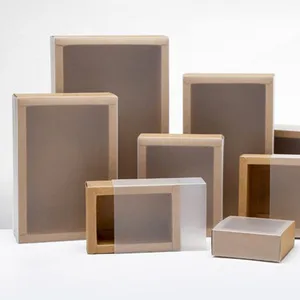
The window should also be positioned strategically. A large window creates maximum product visibility, while a smaller window can preserve more printable surface for branding and product information.
When planning a design, consider:
- Product dimensions: The box should provide enough space without excessive movement.
- Window placement: Position the window where it highlights the most attractive part of the product.
- Board strength: Select material appropriate for stacking, transportation, and handling.
- Printing area: Reserve sufficient space for logos, instructions, ingredients, or other information.
- Opening mechanism: Consider whether customers need easy access or whether tamper resistance is more important.
- Internal presentation: Inserts can prevent products from shifting and improve the appearance when the package is opened.
These details can make a significant difference to the final customer experience.
Practical Applications Across Retail and Packaging
The versatility of kraft boxes with windows makes them suitable for a broad range of products. Their appearance can be adapted to minimalist, premium, rustic, handmade, or contemporary brand identities.
Bakery and Confectionery
Cookies, cupcakes, chocolates, pastries, and other visually appealing products can benefit from transparent packaging. Customers can immediately see decoration, colour, size, and arrangement.
For food-related applications, businesses should also ensure that all materials and coatings are appropriate for the intended food-contact environment.
Cosmetics and Personal Care
Small soaps, handmade cosmetics, bath products, candles, and accessories can be displayed through a window while maintaining a natural packaging aesthetic.
A kraft exterior combined with clean typography can create a simple presentation that appeals to brands focused on handcrafted or environmentally conscious positioning.
Gifts and Handmade Products
Gift businesses can use window kraft boxes to reveal the product while still providing an organised and protective presentation. Handmade jewellery, small crafts, stationery, and seasonal products are examples where visibility can add value.
Retail and Promotional Products
Small merchandise, samples, accessories, and promotional products can also be packaged in windowed kraft formats. The visible product can help customers understand what they are receiving without relying entirely on printed descriptions.
Common Packaging Challenges and How to Solve Them
Although window packaging has several advantages, it also creates design and manufacturing considerations that should not be overlooked.
Balancing Visibility and Protection
A larger window can improve visibility but may reduce the amount of board surrounding the product. For fragile or heavier items, structural strength should take priority.
Solution: Test different window sizes and box constructions before moving into larger production quantities.
Choosing Appropriate Window Material
Not all transparent films have the same characteristics. Clarity, flexibility, durability, moisture resistance, and end-of-life considerations can vary.
Solution: Ask packaging suppliers about the exact film or transparent material being used and whether it suits the product’s storage and transportation conditions.
Avoiding an Oversized Box
Excess empty space can make a package look inefficient and may increase material usage and shipping volume.
Solution: Measure the product accurately and use inserts or structural supports when necessary.
Maintaining Brand Consistency
Natural kraft packaging can look attractive, but an unplanned combination of colours, fonts, and labels can make the packaging appear inconsistent.
Solution: Establish a simple visual system covering typography, logo placement, colours, imagery, and product information.
Sustainability Claims
Consumers increasingly pay attention to packaging sustainability, but claims such as “eco-friendly” can be vague if they are not supported by specific material information.
Solution: Communicate measurable information where possible, such as material composition, recyclability instructions, recycled content, or relevant certifications.
Packaging Trends Shaping Modern Kraft Boxes
Packaging design is increasingly influenced by sustainability, e-commerce, personalisation, and customer expectations.
One notable trend is minimalist packaging. Instead of covering every available surface with graphics, brands are increasingly using restrained typography, simple logos, and natural material textures.
Another trend is personalisation. Digital printing technologies make it easier for businesses to produce packaging for limited collections, seasonal campaigns, events, or different product ranges.
There is also growing interest in functional packaging. Customers expect boxes to be easy to open, store, transport, and dispose of. Attractive packaging that is difficult to use can create a poor experience.
For businesses working with packaging specialists such as Sky Custom Box, the planning stage can be used to consider structural design, printing requirements, product dimensions, and presentation together rather than treating them as separate decisions.
Best Practices Before Ordering Packaging
Before committing to a packaging format, businesses should create a clear specification. This reduces the possibility of costly changes later.
A useful packaging checklist includes:
- Product length, width, and height
- Product weight
- Required internal clearance
- Desired window size and position
- Board thickness
- Printing requirements
- Closure style
- Insert or divider requirements
- Storage conditions
- Shipping requirements
- Labelling and regulatory information
- Material and disposal considerations
- Expected order quantities
It is also useful to request a physical prototype or sample where possible. A design that looks correct on a screen may behave differently when folded, filled, stacked, or transported.
For businesses operating in the UK packaging market, local suppliers and packaging manufacturers can also help clarify production specifications and practical requirements. For example, businesses researching packaging solutions in the UK may encounter providers serving locations such as Kington and Manchester, including Sky Custom Box.
Conclusion
Kraft boxes with windows offer a practical combination of product visibility, natural presentation, and adaptable packaging design. They can work particularly well for products where appearance influences purchasing decisions, including food, gifts, cosmetics, handmade goods, and small retail products.
CONTACT US:
ABOUT US:
Social Media: