Packaging plays an important role in how customers perceive a product, particularly in industries where presentation, protection, and brand identity influence purchasing decisions. From luxury cosmetics and candles to electronics, jewellery, and corporate gifts, rigid boxes offer a durable and professional packaging solution for businesses of different sizes.
For UK retailers, manufacturers, and e-commerce brands, finding large rigid box packaging UK options requires balancing quality, appearance, and production costs. The objective is not simply to select the lowest-priced box but to find packaging that protects products, supports branding, and remains commercially practical.
Understanding rigid box construction, wholesale ordering, material choices, and customisation options can help businesses make better decisions when sourcing packaging for retail displays, gift collections, or product deliveries.
1. What Is Large Rigid Box Packaging?
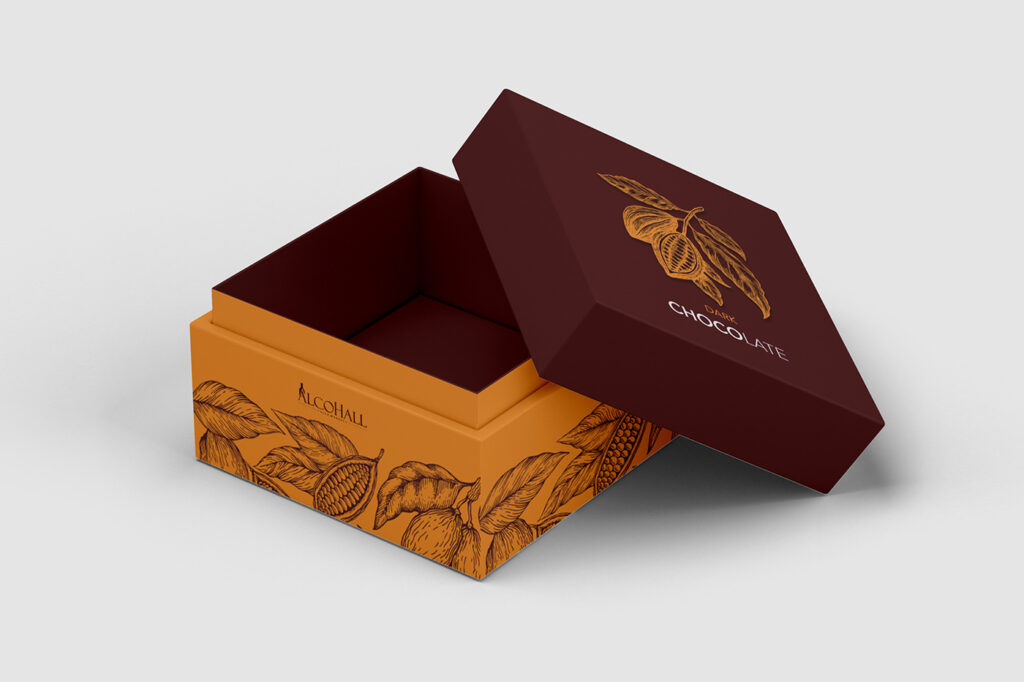
Rigid boxes are made from thick, sturdy paperboard that retains its shape rather than folding flat like conventional carton packaging. They are commonly wrapped in printed paper, textured paper, or other decorative materials to create a refined appearance.
Unlike standard folding cartons, rigid boxes generally arrive pre-assembled or in a partially constructed format, depending on their design. Their solid structure makes them suitable for products that require a premium presentation or additional packaging support.
Common applications include:
- Luxury gift sets and corporate hampers
- Cosmetics and skincare collections
- Candles and fragrance products
- Watches, jewellery, and accessories
- Premium electronics and promotional products
- Clothing, footwear, and fashion accessories
- Retail gift boxes and seasonal collections
Large rigid boxes are particularly useful when a product contains several components or requires a structured presentation. For example, a gift set containing candles, fragrance bottles, and accessories may benefit from a box with fitted compartments that keep each item organised.
However, box dimensions should be selected carefully. An unnecessarily large box can increase material consumption, storage requirements, and transport costs. The most effective design provides sufficient room for the products and protective inserts without excessive unused space.
Read More:
2. How to Find Affordable Large Rigid Box Packaging in the UK
Businesses searching for affordable rigid packaging should evaluate the complete cost of ownership rather than focusing exclusively on the quoted price per unit.
The final cost can depend on board thickness, box dimensions, covering materials, printing, decorative finishes, inserts, production quantity, and delivery arrangements.
Compare Wholesale Quantities
Wholesale purchasing can reduce the average manufacturing cost per box because production setup and other fixed costs may be distributed across a larger order.
Businesses exploring large rigid box packaging UK wholesale options should request quotations for several quantities where practical. Comparing different production volumes can reveal whether ordering additional units provides a meaningful saving.
Nevertheless, a larger order is not always the most economical decision. Excess inventory can occupy valuable warehouse space, become outdated when branding changes, or tie up money that could be used elsewhere in the business.
Before committing to a wholesale order, consider:
- Expected monthly or seasonal sales.
- Available storage space.
- Packaging shelf life and design stability.
- Minimum order quantities.
- Delivery costs and production lead times.
- The cost per usable, finished box.
For businesses with predictable demand, bulk ordering may be suitable. Smaller brands with changing product ranges may benefit from more modest production runs, even if the unit price is slightly higher.
Simplify the Box Design
Custom finishes can improve visual appeal, but every additional feature may increase manufacturing costs.
A clean design using a suitable paper covering, a well-positioned logo, and consistent brand colours can still create a premium appearance.
Cost-conscious options may include:
- Standard box shapes and dimensions.
- One or two print colours instead of complex artwork.
- Minimal foil stamping or embossing.
- Standard internal inserts.
- Reusable design templates across product collections.
These choices can help businesses maintain a professional identity without paying for decorative features that do not significantly improve the customer experience.
Read More:
https://www.skycustombox.com/blog/
3. Materials, Sizes and Customisation Options
Material selection affects the box’s strength, appearance, weight, and overall price. Choosing the right combination requires understanding the product and how the packaging will be used.
Selecting Suitable Materials
Rigid boxes typically use dense paperboard cores covered with decorative paper or other suitable wrapping materials. The thickness and construction should reflect the size and weight of the packaged products.
For heavier products, stronger board construction and a well-designed base may be necessary. Lightweight items may require less reinforcement, although the finished box should still maintain its shape during normal handling.
The outer covering can also influence the perceived quality of the packaging. Options may include smooth printed paper, textured finishes, coloured paper, or specialised decorative surfaces.
Choosing the Right Dimensions
Large boxes require accurate measurements to prevent wasted space and unnecessary material use.
When planning a custom box, measure:
- The length, width, and height of the product.
- Any accessories or additional items included in the package.
- The space required for inserts and protective cushioning.
- The clearance needed for easy placement and removal.
- The final external dimensions for storage and shipping calculations.
For multi-product packaging, it is often useful to create a layout showing where each component will sit inside the box. This helps identify potential movement, uneven weight distribution, and areas where additional support may be required.
Practical Customisation Features
Custom rigid packaging can incorporate several features to support presentation and usability.
A magnetic closure may create a neat opening experience, while ribbon pulls can help customers remove products from deep boxes. Dividers and fitted inserts can separate products and reduce movement.
Foil stamping, embossing, and printed artwork can reinforce brand recognition. However, features should be selected according to the intended use rather than added simply because they are available.
A packaging sample is especially useful for large or complex designs. It allows businesses to check dimensions, opening mechanisms, material quality, and insert fit before approving a full production run.
Read More:
4. Empty Rigid Box Packaging: Uses, Benefits and Challenges
Empty rigid box packaging UK suppliers serve businesses that need boxes for their own products, gift collections, retail operations, or fulfilment processes.
Purchasing empty boxes can be practical when a business wants to control its own product assembly, add branded tissue paper, arrange items internally, or prepare gift sets according to individual orders.
Common uses include:
- Corporate gift packaging.
- Wedding and event gift boxes.
- Subscription and promotional gift sets.
- Retail presentation boxes.
- Handmade product collections.
- Product launch kits and marketing materials.
One advantage of empty rigid boxes is that they can be stored separately from the products until orders are ready for assembly. This may provide flexibility when managing different product combinations.
However, rigid boxes can occupy more space than flat-packed folding cartons. Businesses should confirm whether the boxes arrive fully assembled, partially assembled, or in a collapsible construction.
Storage requirements can make a significant difference to the overall economics of packaging, especially for small retailers operating from limited premises.
It is also important to establish whether empty boxes include internal inserts, lids, magnetic closures, or other specified components. Clear specifications reduce the risk of receiving packaging that does not meet operational requirements.
5. Packaging Trends, Sustainability and Common Buying Mistakes
The packaging industry continues to place greater emphasis on practical design, material efficiency, and responsible sourcing. Premium packaging is increasingly expected to combine attractive presentation with efficient use of materials.
Reducing Material Waste
Rigid boxes use more structural material than many lightweight carton formats. Businesses should therefore assess whether a rigid box is necessary for every product or whether a folding carton could provide adequate protection and presentation.
When rigid packaging is appropriate, potential improvements include:
- Selecting dimensions that closely match the contents.
- Avoiding unnecessary decorative layers.
- Using inserts designed for the specific product.
- Reviewing whether the outer covering and inserts can be recycled.
- Choosing materials based on documented supplier specifications.
Recyclability depends on the actual materials, coatings, adhesives, and local recycling facilities. Businesses should avoid making broad environmental claims without verifying the relevant evidence.
Mistakes to Avoid When Ordering Wholesale
Several purchasing mistakes can increase packaging costs or create avoidable delays.
Ordering without a sample: A digital design cannot fully demonstrate material texture, structural strength, or how the box opens.
Choosing dimensions based only on appearance: A visually impressive box may be too large, difficult to store, or unsuitable for the product.
Ignoring delivery expenses: The quoted unit price may not include freight, handling, or other applicable charges.
Overlooking production timelines: Custom printing and finishing can require additional lead time, particularly before seasonal promotions.
Prioritising price over functionality: A low-cost box that damages products or creates assembly problems can become more expensive in the long run.
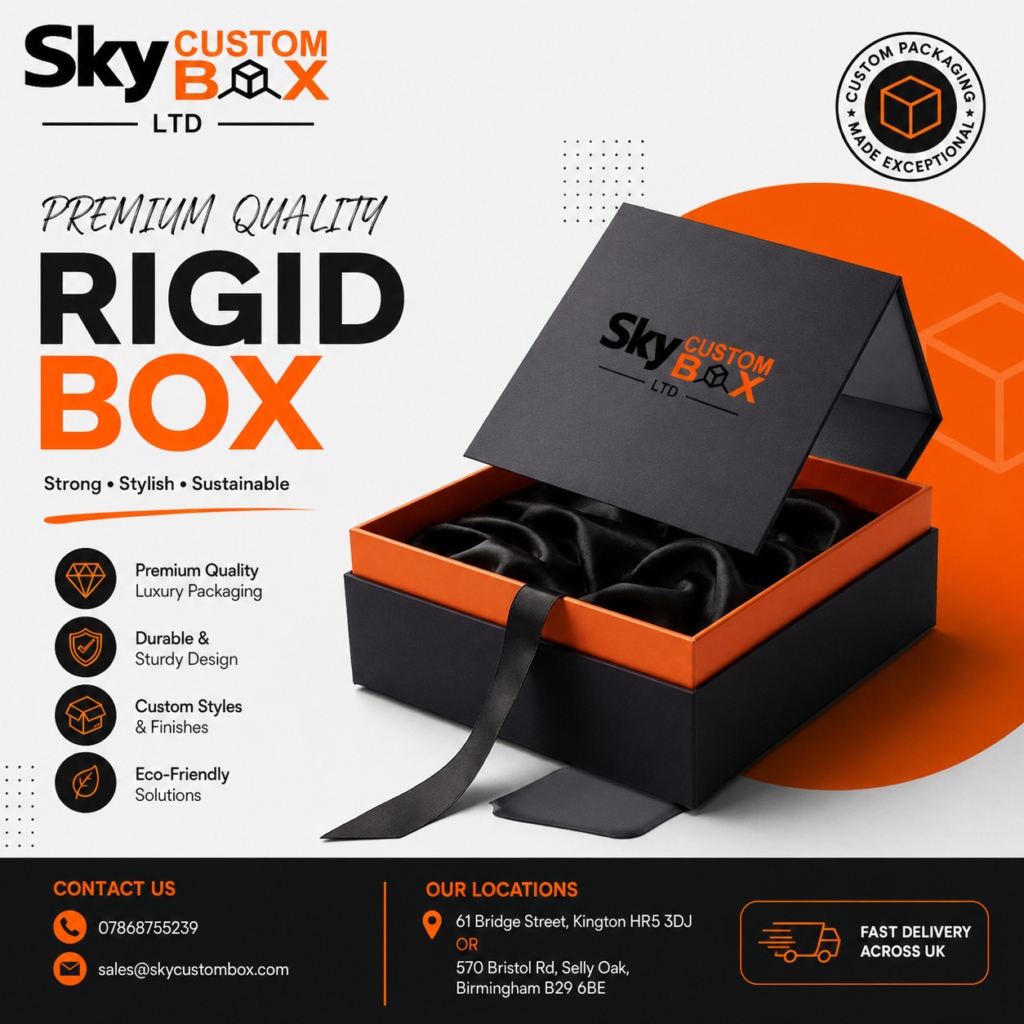
Businesses researching custom packaging providers, including Sky Custom Box, can compare specifications, samples, order quantities, finishing options, and delivery arrangements before deciding which solution meets their requirements.
Conclusion
Finding large rigid box packaging UK cheap options involves understanding the relationship between product requirements, materials, design complexity, and order volume. Wholesale purchasing can reduce unit costs, while standardised dimensions and simpler finishes may help businesses control expenditure without sacrificing presentation.
CONTACT US:
ABOUT US:
Social Media: