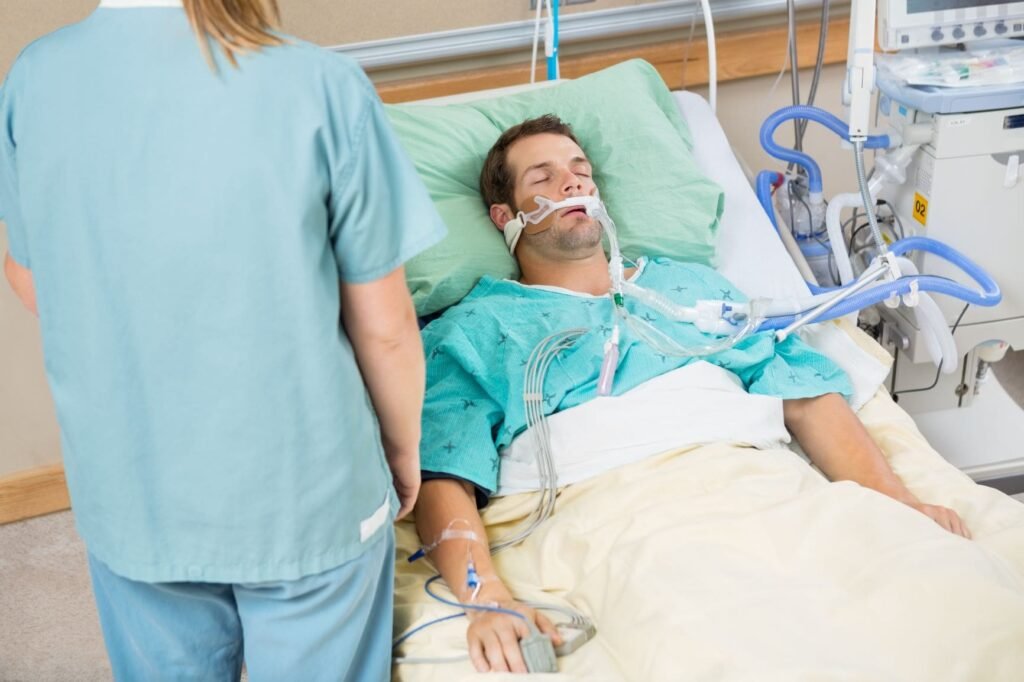
Mechanical ventilation is a life-support treatment used when a person cannot breathe adequately on their own. An invasive ventilator supports breathing by delivering oxygen-rich air into the lungs through a breathing tube. It is commonly used in intensive care for severe respiratory failure, serious infections, major injuries, surgery, and other critical conditions.
What Is Mechanical Ventilation?
Mechanical ventilation is a medical treatment that uses a ventilator to assist or replace a person’s natural breathing. In invasive ventilation, a healthcare professional places a tube into the airway, usually through the mouth. The ventilator then delivers controlled breaths while the medical team treats the underlying illness.
What Is Invasive Ventilation?
Invasive ventilation means that mechanical breathing support is delivered through an artificial airway rather than a face mask. The most common method is endotracheal intubation, where a tube is placed through the mouth into the windpipe. In some patients requiring prolonged support, a tracheostomy may be considered.
Why Is Invasive Ventilation Needed?
Invasive ventilation may be required when the lungs cannot provide enough oxygen or remove sufficient carbon dioxide. It can also be used when a patient is unable to maintain a safe airway or breathe effectively. Severe pneumonia, acute respiratory distress syndrome, major trauma, neurological problems, and certain surgeries may require ventilator support.
Common Conditions Requiring Ventilator Support
Several serious conditions can result in the need for mechanical ventilation. These include severe pneumonia, acute respiratory distress syndrome, chronic obstructive pulmonary disease exacerbations, respiratory failure, severe asthma attacks, major chest injuries, neurological disorders affecting breathing, and complications following major surgery. The decision depends on the patient’s overall clinical condition.
How Does a Mechanical Ventilator Work?
A mechanical ventilator pushes a controlled mixture of air and oxygen into the lungs through the breathing tube. It can regulate factors such as the amount of air delivered, breathing rate, oxygen concentration, and pressure. The healthcare team adjusts these settings according to the patient’s condition, blood oxygen levels, and lung function.
What Happens During Intubation?
Before intubation, the medical team prepares the patient and monitors vital signs such as heart rate, blood pressure, and oxygen saturation. Medication may be given to provide sedation and help with the procedure. A breathing tube is carefully inserted into the airway and connected to the ventilator so respiratory support can begin.
Monitoring a Patient on a Ventilator
Patients receiving invasive ventilation require close monitoring, usually in an intensive care environment. Doctors and nurses regularly assess oxygen levels, breathing parameters, blood pressure, heart rate, and blood gas measurements. Ventilator settings may be changed frequently as the patient’s lung function improves, worsens, or responds to treatment.
Types of Mechanical Ventilation
Mechanical ventilation can be delivered using different modes depending on the patient’s needs. Some modes provide more control over each breath, while others allow the patient to initiate breathing with ventilator assistance. The selected mode depends on respiratory function, underlying disease, level of consciousness, and the patient’s ability to breathe independently.
Oxygen and Pressure Support
A ventilator can provide supplemental oxygen and carefully controlled airway pressure. Oxygen concentration may be adjusted to maintain adequate blood oxygen levels while avoiding unnecessarily high exposure when possible. Pressure settings can help keep certain parts of the lungs open and improve gas exchange in patients with respiratory failure.
Sedation During Mechanical Ventilation
Some patients need sedative medications while they are receiving invasive ventilation, particularly during the early period after intubation. Sedation can reduce discomfort and anxiety and help the patient tolerate the breathing tube and ventilator. Medical teams generally adjust sedation according to the patient’s condition and may reduce it when appropriate.
Possible Risks and Complications
Mechanical ventilation can be lifesaving, but invasive ventilation also carries potential complications. These may include ventilator-associated pneumonia, airway irritation, lung injury from pressure or excessive volumes, blood pressure changes, and complications related to prolonged immobility. Careful monitoring, appropriate ventilator settings, infection-control measures, and regular reassessment help reduce these risks.
What Is Ventilator-Associated Pneumonia?
Ventilator-associated pneumonia is a lung infection that can develop in some patients receiving mechanical ventilation. The presence of an artificial airway can allow microorganisms to enter the lower respiratory tract. Healthcare teams use measures such as appropriate oral care, infection-control practices, and careful airway management to reduce the risk of infection.
How Long Does Mechanical Ventilation Last?
The duration of mechanical ventilation varies considerably. Some patients require support for only a few hours or days, while others may need it for weeks or longer. The length depends on the underlying illness, lung recovery, neurological function, overall health, and ability to breathe safely without mechanical assistance.
What Is Weaning From a Ventilator?
Weaning refers to the gradual process of reducing ventilator support as the patient’s condition improves. Before removing the breathing tube, clinicians assess whether the patient can breathe adequately, maintain appropriate oxygen levels, protect the airway, and manage secretions. A spontaneous breathing trial may be performed to evaluate readiness for extubation.
Extubation After Mechanical Ventilation
Extubation is the removal of the endotracheal tube once the medical team determines that continued invasive ventilation is no longer necessary. After extubation, some patients may need supplemental oxygen or other breathing support. Medical staff closely monitor breathing, oxygen levels, cough strength, and airway protection during the recovery period.
Mechanical Ventilation in Intensive Care
Most patients requiring invasive ventilation are cared for in an intensive care unit where continuous monitoring is available. The healthcare team may include pulmonologists, critical care physicians, respiratory therapists, nurses, and other specialists. Treatment focuses not only on supporting breathing but also on addressing the underlying condition causing respiratory failure.
Recovery After Ventilator Support
Recovery after mechanical ventilation depends on the severity and duration of the illness. Some people recover quickly, while others experience weakness, fatigue, difficulty swallowing, coughing, or reduced exercise tolerance. Rehabilitation, nutritional support, physiotherapy, and follow-up care may help patients gradually regain strength and respiratory function.
Book Online Appointment With Best Pulmonologist via InstaCare
If you have concerns about persistent breathing problems, chronic lung disease, recurrent respiratory failure, or other conditions affecting your lungs, specialist evaluation can help determine appropriate care. Book online appointment with best pulmonologist via InstaCare for professional assessment, respiratory guidance, and personalized management based on your condition.
Conclusion
Mechanical ventilation provides essential breathing support when a person cannot maintain adequate ventilation or oxygenation independently. Invasive ventilation can be lifesaving in critical illness, but it requires careful monitoring and individualized treatment. Understanding intubation, ventilator support, possible complications, weaning, and recovery can help patients and families better understand this important intensive-care treatment.
FAQs
- What is invasive mechanical ventilation?
Invasive mechanical ventilation is a form of respiratory support in which a ventilator assists or replaces natural breathing through an artificial airway. Usually, an endotracheal tube is placed into the windpipe and connected to a mechanical ventilator.
- Why would someone need to be put on a ventilator?
A person may need a ventilator when they cannot breathe adequately or maintain safe oxygen and carbon dioxide levels. Severe pneumonia, respiratory failure, acute respiratory distress syndrome, serious injuries, neurological conditions, and certain surgical complications can require mechanical ventilation.
- Is a person awake while on a ventilator?
It depends on the patient’s condition and treatment plan. Some patients receive sedation to improve comfort and help them tolerate the breathing tube, while others may be awake or only lightly sedated. The medical team adjusts sedation according to individual needs.
- How long can someone stay on a ventilator?
There is no fixed duration. Some patients need ventilation for a short period, while others require prolonged support because of severe illness or slow recovery. Doctors regularly assess respiratory function and determine when it is safe to reduce or stop ventilator support.
- What happens after a person comes off a ventilator?
After extubation, patients are monitored closely to ensure they can breathe safely without invasive support. Some may need supplemental oxygen or non-invasive breathing assistance. Weakness, fatigue, throat discomfort, or difficulty swallowing can occur, particularly after prolonged ventilation, and recovery may require rehabilitation.