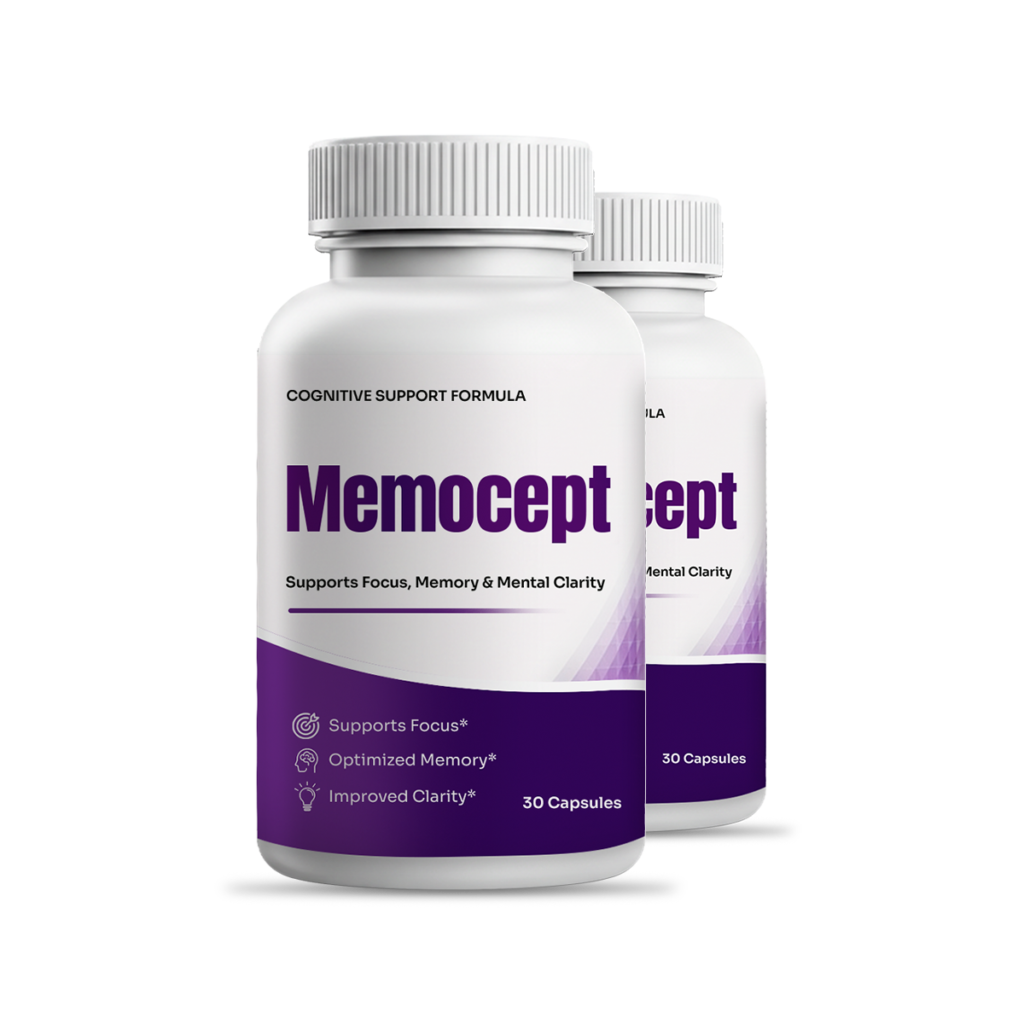
Introduction: What Is Memocept?
Memocept is marketed online as a dietary supplement intended to support memory, concentration, mental clarity, and general cognitive wellness. It is promoted toward adults who want to stay focused, manage everyday mental demands, and maintain their cognitive abilities as they age.
Interest in brain health supplements has grown as people look for ways to manage busy schedules, remember information, and stay mentally engaged. Students may want to concentrate during study sessions, professionals may want to stay focused at work, and older adults may be concerned about changes in memory and thinking.
These concerns have encouraged the development of supplements containing vitamins, minerals, amino acids, and botanical ingredients. However, not every supplement marketed for brain health has been demonstrated to improve memory or prevent cognitive decline.
Memocept’s online descriptions are not entirely consistent. One website describes a seven-ingredient capsule formula containing amino acids, niacin, calcium, and beta-alanine. Other websites describe different ingredient combinations and cognitive-support approaches. Therefore, consumers should verify the exact Memocept product and supplement label before relying on any ingredient list or advertised benefit.
It is also important to distinguish Memocept from the so-called VapoRub trick for brain health. Vicks VapoRub is a topical product intended for specific labeled uses, including temporary cough relief when applied to the chest and throat. It is not an established treatment for memory problems, concentration difficulties, or cognitive decline.
This Memocept review examines the supplement’s advertised purpose, commonly reported ingredients, available evidence, potential safety concerns, and practical considerations before buying. It also explains what consumers should know about the VapoRub trend and how to support brain health through better-established habits.
What Is Memocept Used For?
Memocept is marketed as a cognitive-support supplement. Depending on the specific seller and formulation, its advertised purposes may include supporting memory, concentration, mental clarity, and everyday cognitive performance.
These are marketing claims, not proof that the product produces measurable improvements.
1. Memory Support
Memory allows people to learn information, recall experiences, and use previously acquired knowledge.
Some supplements are marketed to support memory by providing nutrients involved in normal nervous-system function. However, the presence of a nutrient does not automatically mean that taking more of it will improve memory in someone who already receives adequate amounts.
A supplement’s potential effects depend on its ingredients, quantities, the person’s nutritional status, and the quality of the available research.
2. Focus and Concentration
Concentration involves directing attention toward a task while limiting distractions.
Sleep deprivation, stress, anxiety, certain medications, and underlying medical conditions can affect concentration. A supplement cannot be assumed to correct these issues simply because its marketing mentions mental focus.
Before considering a supplement, it can be useful to examine sleep quality, workload, hydration, nutrition, and other factors that influence attention.
3. Mental Clarity
The term mental clarity is commonly used in wellness marketing to describe feeling alert, organized, and able to think clearly.
However, it is not a single standardized clinical outcome. To establish that a product improves mental clarity, researchers would need to define the outcome and evaluate the product using appropriate methods.
Testimonials describing better focus may reflect individual experiences, but they cannot establish that Memocept produces the same result for other users.
4. General Cognitive Wellness
Cognitive health involves several abilities, including memory, attention, language, learning, reasoning, and decision-making.
Maintaining these abilities depends on a range of factors, including cardiovascular health, sleep, physical activity, nutrition, social engagement, and medical conditions.
A supplement may provide nutrients that support normal physiological functions, but it should not be assumed to prevent dementia, treat Alzheimer’s disease, or reverse cognitive decline.
Memocept Ingredients: What Should You Know?
One online Memocept website lists seven ingredients: L-arginine, L-arginine alpha-ketoglutarate, L-citrulline hydrochloride, L-citrulline malate, beta-alanine, niacin, and calcium. Other websites using the Memocept name describe different formulations.
You can review one published ingredient description at Memoscept’s ingredient page. This is a seller-published source, not independent proof that the ingredients improve cognition.
The following sections explain the roles and limitations of ingredients listed in that particular seven-ingredient description. They should not be treated as a confirmed ingredient list for every product sold under the Memocept name.
1. L-Arginine
L-arginine is an amino acid used by the body to make proteins and other compounds. It also participates in the production of nitric oxide, a molecule involved in blood-vessel relaxation and circulation.
Some supplement formulations include L-arginine because of its role in nitric oxide production.
However, the fact that nitric oxide is involved in circulation does not prove that taking L-arginine improves memory or concentration.
Research on L-arginine varies according to the population, dosage, health condition, and outcome being investigated. Evidence about circulation cannot automatically be translated into evidence of improved cognitive performance.
People taking medicines that affect blood pressure or circulation should consult a healthcare professional before using supplements containing L-arginine.
2. L-Arginine Alpha-Ketoglutarate
L-arginine alpha-ketoglutarate, often abbreviated as AAKG, combines L-arginine with alpha-ketoglutarate.
It is used in some sports and nutritional supplements, primarily because of its proposed relationship with nitric oxide production and circulation.
However, evidence supporting AAKG for exercise-related outcomes does not establish that it improves memory or prevents age-related cognitive decline.
The amount present in a supplement is also important. Results from studies using a particular dose cannot automatically be applied to products containing smaller quantities or different combinations of ingredients.
Consumers should look for research on the exact formulation and intended use rather than relying on general claims about blood flow.
3. L-Citrulline
L-citrulline is an amino acid that participates in the body’s urea cycle and can contribute to the production of L-arginine.
Some supplements include it to support nitric oxide pathways.
Nevertheless, the biological role of L-citrulline does not establish that a supplement containing it improves attention, learning, or memory.
The effects of supplementation can depend on the dose, the individual’s health, and the outcome being measured.
If Memocept is being considered for cognitive support, the important question is whether the finished product has been tested in suitable human studies—not merely whether one of its ingredients participates in a normal physiological process.
4. Beta-Alanine
Beta-alanine is an amino acid commonly studied in relation to exercise performance. It contributes to the production of carnosine, a compound involved in buffering acidity in muscle tissue.
It is not an established treatment for memory loss or cognitive decline.
Some sports supplements contain beta-alanine to support specific forms of high-intensity exercise. Those findings should not be presented as proof that the ingredient improves everyday mental performance.
Beta-alanine can also cause a temporary tingling sensation, particularly at certain doses. Anyone considering a product containing it should check the label and consult a healthcare professional if they have concerns.
5. Niacin, or Vitamin B3
Niacin is an essential vitamin involved in energy metabolism and normal cellular function. It is also important for the nervous system.
A deficiency in essential nutrients can affect health, so correcting a confirmed deficiency may be beneficial.
However, taking additional niacin does not automatically improve memory or concentration in people who already receive enough vitamin B3.
The dose matters. High amounts of certain forms of niacin can cause flushing and other adverse effects, and some formulations may affect the liver or blood glucose.
Consumers should check the amount listed on the supplement facts panel rather than assuming that more is better.
6. Calcium
Calcium is an essential mineral required for healthy bones and teeth, muscle contraction, nerve signaling, and other bodily functions.
Normal calcium regulation is important for the nervous system, but this does not mean that extra calcium improves cognitive performance in people who already obtain adequate amounts.
Excessive calcium intake from supplements may create health concerns, particularly for some people with kidney problems or those taking certain medicines.
The amount in the specific Memocept formulation should be checked before use.
7. Other Ingredients in Differently Marketed Formulas
Some websites using the Memocept name describe formulations involving vitamins, minerals, or botanical extracts rather than the seven ingredients listed above.
These descriptions should not be combined into one assumed formula.
For example, if a seller lists an additional botanical ingredient, consumers should confirm its exact name, amount, standardization, and relevant safety information.
The evidence supporting one botanical extract may not apply to another extract or to a product containing a different dose.
Important: No ingredient list should be considered verified for your bottle of Memocept until it matches the packaging and seller information for the exact product being purchased.
Does Memocept Really Work for Memory and Focus?
Memocept’s specific effectiveness cannot be established from promotional descriptions alone. A reliable assessment would require verified formulation details and appropriate clinical evidence on the finished product.
There are several important distinctions to consider.
Individual Ingredients Are Not the Same as a Finished Supplement
An ingredient may participate in a biological process without producing a noticeable improvement when taken as a supplement.
For example, an amino acid may be involved in nitric oxide production, but that does not prove that a capsule containing the amino acid improves memory.
Similarly, a vitamin is essential for normal health, but additional intake may not provide extra cognitive benefits when a person’s nutritional needs are already met.
The overall formula, dosage, absorption, and characteristics of the people taking the supplement can all influence the outcome.
Testimonials Cannot Establish Effectiveness
Some customers may report feeling more focused or mentally alert after taking a supplement.
These experiences may be genuine, but they cannot establish that the supplement caused the change. Sleep, expectations, daily routines, and other factors may also influence how someone feels.
Controlled studies are more useful for evaluating effectiveness because they can compare outcomes between people receiving the intervention and an appropriate control group.
What Does Research Say About Brain Supplements?
The National Institute on Aging explains that evidence for dietary supplements intended to prevent Alzheimer’s disease or cognitive decline remains limited. Some research has produced promising findings, but no vitamin or supplement is currently recommended specifically for preventing Alzheimer’s disease.
Read more in the National Institute on Aging’s overview of diet and Alzheimer’s disease prevention.
This does not mean that supplements are never useful. Correcting a nutritional deficiency can be important, and particular ingredients may have established uses in specific circumstances.
It does mean that broad claims about improving memory, preventing dementia, or reversing cognitive decline should be evaluated carefully.
Memocept and the VapoRub Trick for Brain Health
The phrase VapoRub trick is sometimes used in online wellness discussions involving memory, mental clarity, or brain health. However, Vicks VapoRub and Memocept are different types of products and should not be treated as interchangeable.
Vicks VapoRub is a topical ointment containing ingredients such as camphor, menthol, and eucalyptus oil in its US formulation. Its labeled uses include temporary cough relief when applied to the chest and throat and temporary relief of minor muscle and joint aches when used according to the directions.
The official product information is available through Vicks and the DailyMed drug label.
Neither source establishes VapoRub as a treatment for memory problems, concentration difficulties, or cognitive decline.
Does VapoRub Improve Memory?
There is no reliable clinical evidence establishing that applying VapoRub improves memory or prevents cognitive decline.
Its strong scent may create a noticeable sensory experience, but experiencing a smell does not demonstrate that a person’s memory or brain function has improved.
A familiar scent may evoke memories or associations for some people. That is different from treating a condition affecting memory.
Can VapoRub Increase Blood Flow to the Brain?
VapoRub is not an established treatment for increasing blood flow to the brain or improving cognitive function.
A cooling sensation produced by menthol does not prove that cerebral circulation has improved or that more oxygen is reaching brain tissue.
People experiencing persistent concentration difficulties or memory changes should not rely on a topical ointment instead of an appropriate medical assessment.
Is It Safe to Apply VapoRub Near the Nose?
Follow the instructions on the specific product label. The US VapoRub label warns against use by mouth and in the nostrils and advises avoiding contact with the eyes.
Do not apply the ointment inside the nose or use it in an improvised brain-health routine.
Camphor-containing products can be harmful if swallowed, and misuse can create additional risks. Do not heat VapoRub or add it to hot water, as the manufacturer warns that doing so can cause splattering and burns.
If a person has accidentally swallowed the product, contact a poison-control service or seek urgent medical guidance rather than waiting for symptoms.
The safest approach is to use topical products only for their labeled purposes.
Potential Benefits of Memocept: What Can Be Reasonably Expected?
Any potential benefit depends on the actual formulation and the evidence supporting it. Without reliable studies of the finished product, Memocept should not be assumed to produce specific cognitive improvements.
Convenient Supplement Format
The seven-ingredient version described by one website is sold as a daily capsule. A capsule may be convenient for people who prefer a simple routine.
However, convenience does not establish effectiveness. The ingredient quantities, manufacturing quality, and suitability for the individual remain important.
Nutritional Support
If a supplement contains essential nutrients, it may contribute to normal nutrient intake.
This can be relevant when a person has a documented deficiency or has been advised by a healthcare professional to use a particular supplement.
Nevertheless, the presence of nutrients does not establish that Memocept improves memory in otherwise healthy people.
Support for a Consistent Wellness Routine
Some people find that following a daily routine encourages them to pay attention to sleep, hydration, nutrition, and other health habits.
A routine can be useful when it supports realistic and sustainable behavior.
That benefit should not be confused with proof that a specific supplement improves cognitive performance.
Potential Side Effects and Safety Considerations
The safety of Memocept depends on its actual ingredients, quantities, manufacturing quality, and the person’s health circumstances.
Because websites using the Memocept name describe different formulas, consumers should not assume that every product has the same risk profile.
Digestive Symptoms
Some supplements may cause nausea, abdominal discomfort, or other digestive symptoms.
If symptoms persist or become severe, stop using the supplement and seek appropriate medical advice.
Blood Pressure and Medication Interactions
If the verified formula contains L-arginine or L-citrulline, people taking medicines that affect blood pressure or circulation should seek professional guidance before using it.
Interactions may depend on the specific medication and the person’s medical history.
Do not stop prescribed medication or change its dose because of a supplement advertisement.
Vitamin and Mineral Intake
Niacin and calcium can be useful nutrients, but excessive intake may cause adverse effects.
Check the quantity per serving and consider other supplements or fortified foods that may contribute to total daily intake.
A healthcare professional or pharmacist can help assess whether the combination is suitable.
Allergies and Ingredient Sensitivities
Review the complete ingredient list, including inactive ingredients, flavorings, capsule materials, and potential allergens.
If the label does not provide enough information to identify what the product contains, contact the seller before purchasing.
Pregnancy, Breastfeeding, and Chronic Conditions
People who are pregnant or breastfeeding should consult a healthcare professional before starting a supplement intended to improve cognitive performance.
The same advice applies to people with chronic medical conditions, those taking regular medication, and anyone who has experienced an adverse reaction to a supplement.
A product marketed as natural is not automatically safe for every person.
How to Check Whether Memocept Is Legitimate
Several websites use the Memocept name while describing different ingredients and formulations. This makes verification particularly important before buying.
1. Confirm the Exact Website and Product
Check the website address, manufacturer name, contact information, and packaging details.
Do not assume that all websites using a similar name are operated by the same company or sell the same formulation.
2. Match the Ingredients to the Label
Review the supplement facts panel on the actual bottle or a clear image provided by the seller.
Compare the listed ingredients and quantities with those described on the website.
If the product page and packaging do not match, request clarification before ordering.
3. Look for Relevant Clinical Research
Check whether claims about memory and focus are supported by human studies on the actual formulation.
Evidence involving an individual nutrient does not automatically establish that a multi-ingredient supplement produces the same result.
Be cautious when a seller uses scientific terminology without providing identifiable research or explaining the study’s limitations.
4. Check Manufacturing and Quality Information
Look for clear manufacturer details, batch identification, expiration information, and quality-control statements.
A statement that a product is manufactured in a registered facility should not be interpreted as proof that the supplement has been approved to treat memory loss.
In the United States, dietary supplements are not approved by the FDA for effectiveness in the same way as prescription medicines.
5. Review Pricing and Refund Conditions
Before ordering, confirm the total price, shipping costs, subscription terms, cancellation process, and refund policy.
Save the purchase confirmation and a copy of the seller’s stated terms.
These checks can help you make a more informed decision without assuming that a product is effective simply because of its marketing.
Better-Supported Ways to Support Brain Health
A supplement is only one possible part of a person’s overall health routine. Several lifestyle measures are more broadly supported as ways to maintain general health and support cognitive wellness.
1. Get Consistent, Adequate Sleep
Sleep is important for attention, learning, and memory.
Many adults benefit from approximately seven to nine hours of sleep each night, although individual needs vary.
Maintaining a regular bedtime, limiting late-night distractions, and creating a comfortable sleeping environment may help support consistent sleep.
If you experience persistent insomnia, loud snoring, or excessive daytime sleepiness, discuss these symptoms with a healthcare professional.
2. Stay Physically Active
Physical activity supports cardiovascular health and overall well-being.
Walking, cycling, swimming, dancing, and other activities can be adapted to different fitness levels.
Adults are generally encouraged to work toward at least 150 minutes of moderate-intensity aerobic activity per week, alongside muscle-strengthening activities on two or more days, when appropriate for their health and abilities.
People with medical conditions or mobility limitations can ask a healthcare professional about suitable options.
3. Eat a Balanced Diet
A balanced eating pattern can include vegetables, fruit, whole grains, legumes, nuts, fish, and other sources of protein and healthy fats.
Some dietary patterns, including Mediterranean-style eating, have been associated with better cognitive outcomes in observational research. However, evidence does not establish that a specific diet can guarantee prevention of dementia.
The National Institute on Aging discusses the current evidence and its limitations in its brain-health and Alzheimer’s prevention guidance.
4. Manage Cardiovascular Risk Factors
High blood pressure, diabetes, high cholesterol, smoking, and other cardiovascular risk factors can affect long-term health, including brain health.
Regular medical checkups and appropriate management of existing conditions can help address these risks.
Do not discontinue prescribed treatment in favor of a supplement marketed for circulation or cognitive support.
5. Keep Learning and Stay Socially Engaged
Reading, learning a new skill, participating in hobbies, and maintaining social connections can provide opportunities for mental engagement.
These activities are not guaranteed to prevent cognitive decline, but they can contribute to an active and fulfilling lifestyle.
Choose activities that are enjoyable enough to maintain over time rather than relying on a single mental exercise or supplement.
6. Investigate Persistent Memory Problems
Occasional forgetfulness can occur for many reasons, including stress, poor sleep, medication effects, and normal variation in attention.
However, persistent or worsening memory difficulties deserve professional assessment, particularly when they interfere with daily activities.
A clinician can consider potential causes, including medication effects, sleep disorders, depression, nutritional deficiencies, and neurological conditions.
Early assessment can help identify problems that may be treatable and determine whether further evaluation is needed.
Memocept Review: Final Verdict
Memocept is marketed as a brain-health supplement intended to support memory, focus, and mental clarity. However, websites using the name describe different formulations, so the exact ingredients and intended use should be verified before purchasing.
The seven-ingredient formulation described by one website includes L-arginine, L-arginine alpha-ketoglutarate, L-citrulline, beta-alanine, niacin, and calcium. These ingredients have biological roles, but their presence does not establish that the finished supplement improves memory or prevents cognitive decline.
Without reliable clinical evidence on the exact product, its specific effectiveness remains uncertain.
The VapoRub trick should also be treated separately. Vicks VapoRub is a topical product for its labeled uses, not a proven brain-health treatment. Applying it inside the nose or using it in an improvised cognitive-health routine is not recommended.
If you are considering Memocept, verify the label, manufacturer, safety information, research claims, price, and refund terms. Speak with a healthcare professional if you take medication, have an existing medical condition, or are experiencing persistent changes in memory or concentration.
The bottom line: Memocept’s advertised cognitive benefits should not be treated as proven without appropriate evidence. For long-term brain health, prioritize sleep, physical activity, balanced nutrition, management of medical conditions, and professional assessment when symptoms persist.
Frequently Asked Questions About Memocept
1. What is Memocept?
Memocept is a name used for supplements marketed to support memory, focus, and cognitive wellness. Different websites describe different formulations, so the exact product should be confirmed using its label and seller information.
2. Does Memocept improve memory?
Its effectiveness cannot be established from marketing claims alone. Reliable clinical research on the exact formulation would be needed to determine whether it produces meaningful improvements in memory.
3. What ingredients are in Memocept?
One online description lists L-arginine, L-arginine alpha-ketoglutarate, L-citrulline hydrochloride, L-citrulline malate, beta-alanine, niacin, and calcium. Other websites describe different formulas, so check the label on the specific product you are considering.
4. Is Memocept a VapoRub trick?
No. Memocept is marketed as a cognitive-support supplement, while Vicks VapoRub is a topical ointment for specific labeled uses. They are different products and should not be treated as interchangeable.
5. Can VapoRub improve brain function?
There is no reliable clinical evidence that VapoRub improves memory, focus, or cognitive function. Use it only according to its label and do not apply it inside the nostrils.
6. Is Memocept safe to use daily?
Safety depends on the exact ingredients, doses, other medicines, and individual health circumstances. Follow the verified product label and consult a healthcare professional if you have concerns or take medication.
7. Can Memocept prevent Alzheimer’s disease?
There is no established evidence that Memocept prevents Alzheimer’s disease. No dietary supplement is currently recommended specifically for preventing Alzheimer’s or other forms of cognitive decline.
8. How can I check whether Memocept is legitimate?
Verify the website, manufacturer, supplement facts panel, ingredient quantities, quality information, pricing, and refund conditions. Be cautious of claims promising guaranteed improvements or disease prevention.
9. What is a better way to support memory and focus?
Consistent sleep, physical activity, balanced nutrition, management of cardiovascular risk factors, and regular mental and social engagement can support overall health. Persistent memory difficulties should be assessed by a healthcare professional.
10. Should I buy Memocept?
Consider it only after verifying the exact formulation and reviewing its evidence, safety information, and price. Do not rely solely on testimonials or promises of dramatic cognitive improvements.