If you’ve been researching ways to improve acne scars, enlarged pores, or uneven skin texture, you’ve probably come across microneedling. It’s one of the most talked-about treatments offered at a Skin Clinic in PCMC, and for good reason it works with your skin’s own healing process rather than against it.
Microneedling has become one of the most popular dermatologist-recommended skin rejuvenation procedures worldwide. Instead of masking skin concerns, it stimulates your skin to repair and renew itself from within, gradually improving texture, tone, and overall appearance.
This guide walks you through exactly what microneedling is, how it works, what to expect during recovery, and how to know if it’s the right choice for you.
What Is Microneedling?
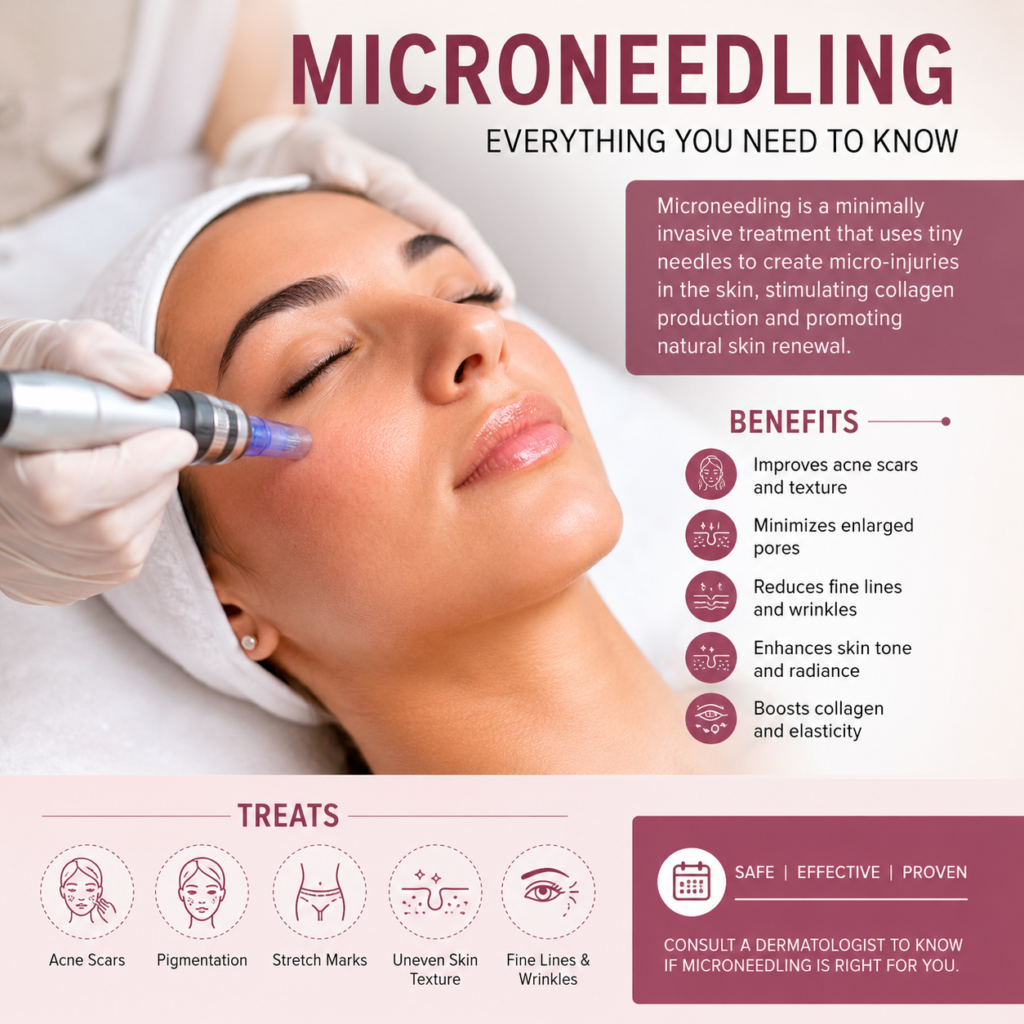
Microneedling, also known as collagen induction treatment, is a process that uses a device equipped with small, sterile needles to induce micro-punctures in the skin’s surface.
These controlled micro-injuries cause your skin to respond naturally, producing more collagen and elastin, the two proteins that maintain skin firm, smooth, and youthful.
Collagen is vital for maintaining healthy skin. Natural collagen production slows with age, which is why skin may appear thinner, looser, or more textured over time. Microneedling stimulates your skin’s natural collagen production.
How Does Microneedling Work?
The process may sound intense, but it’s actually quite simple once you understand the steps involved.
- Fine needles are used to induce controlled micro-injuries at a specific depth.
- Your skin identifies these as tiny injuries and begins the natural healing process.
- This causes collagen remodeling, in which new collagen fibers begin to develop beneath the surface.
- Over the next few weeks, you’ll see a progressive improvement in skin texture, tone, and firmness.
Microneedling is a long-term skin investment rather than a fast fix because the results take time to materialize.
What Skin Concerns Can Microneedling Treat?
Microneedling is versatile and can help with a wide range of skin concerns.
| Skin Concern | How Microneedling Helps |
|---|---|
| Acne scars | Breaks down scar tissue and stimulates new collagen |
| Pigmentation | Encourages even skin tone over multiple sessions |
| Enlarged pores | Improves skin structure around pores, making them less visible |
| Fine lines | Boosts collagen to soften early signs of aging |
| Wrinkles | Improves skin elasticity and firmness |
| Uneven skin tone | Promotes smoother, more consistent texture |
| Stretch marks | Stimulates collagen in affected areas |
| Mild skin laxity | Tightens skin gradually through collagen renewal |
Benefits of Microneedling
Improves Acne Scars
Microneedling helps to break down the fibrous tissue that causes acne scars, allowing smoother skin to grow as new collagen forms beneath.
Reduces Pigmentation
Microneedling, with frequent sessions, can help to smooth out uneven or discolored skin over time.
Boosts Collagen Production
This is the primary benefit: more collagen implies firmer, healthier-looking skin from the inside out.
Improves Skin Texture
After a full treatment cycle, rough or bumpy skin might become considerably smoother.
Minimizes Enlarged Pores
As the skin structure around pores strengthens, pores become smaller and less visible.
Softens Fine Lines
Early symptoms of aging, such as tiny wrinkles around the eyes and lips, might lessen as collagen levels increase.
Step-by-Step Microneedling Procedure
Here’s what a typical professional microneedling treatment session looks like:
- Consultation – Your skin is examined to determine whether microneedling is appropriate for your concerns.
- Skin cleansing: The treatment area is carefully washed to remove makeup, oil, and dirt.
- Numbing lotion – A topical numbing cream is used to ensure your comfort during the process.
- Microneedling device: A sterile, device-controlled tool that causes precise micro-injuries on the skin.
- A soothing serum or growth-factor solution is used to aid in healing.
- Post-treatment instructions – You will be given explicit advice on how to care for your skin over the next few days.
Choosing a suitable Skin Treatment in PCMC performed by skilled specialists assures that the treatment is carried out properly, using hygienic equipment and the appropriate needle depth for your skin type.
Recovery Timeline
Recovery from microneedling is generally quick, but it’s helpful to know what to expect at each stage.
- Day 1: The skin is red, akin to a little sunburn, and slightly sensitive.
- Day 2-3: Redness subsides, and the skin may feel dry or slightly tight.
- Week 1: As the first healing process completes, the skin texture begins to feel smoother.
- Weeks 2–4: Collagen remodeling continues, with moderate noticeable improvement.
Most patients are able to resume their normal daily activities within a day or two, making recuperation easier than with more intrusive procedures.
Microneedling Aftercare Tips
Proper aftercare plays a big role in how well your skin heals and responds to treatment.
- Apply sunscreen on a daily basis to protect the recovering skin.
- Use a mild and fragrance-free cleanser.
- Keep skin hydrated with a proper moisturizer.
- Avoid makeup for at least 24 hours.
- Avoid active chemicals such as retinol or exfoliating acids temporarily.
- Limit your direct sun exposure during the healing phase.
Following these steps helps your skin heal properly and supports better long-term results.
Common Myths About Microneedling
- Myth: Microneedling causes tremendous agony. When numbing cream is administered beforehand, most people describe the sensation as moderate pressure or tingling rather than pain.
- Myth: A single session produces permanent results. Microneedling requires numerous sessions to provide apparent, long-term improvement; it is a gradual process, not a one-time treatment.
- Myth: Home rollers are equally effective as professional treatment. At-home rollers use shorter, less precise needles and do not provide the sterile, controlled environment of a professional setting.
- Myth: Microneedling makes the skin thinner. The contrary is true: by increasing collagen, microneedling strengthens and thickens the skin over time.
- Myth: Anyone can do microneedling safely. Proper technique, hygiene, and needle depth are critical, hence it should only be performed by skilled specialists.
Frequently Asked Questions
1. Does microneedling remove acne scars?
Answer: Microneedling can greatly reduce the look of acne scars by increasing collagen synthesis, although it may not fully eliminate them. Multiple sessions often result in more obvious, long-term improvement.
2. How many microneedling sessions are needed?
Answer: Most people require three to six sessions, spaced four to six weeks apart, to see noticeable effects. The exact amount is determined by your specific skin issue and severity.
3. Is microneedling safe for all skin types?
Answer: Yes, microneedling is generally safe for a wide range of skin types and tones because it does not use heat or light. A expert skin assessment can help establish appropriateness.
4. How long does it take to recover after microneedling?
Answer: Most redness and sensitivity disappear within two to three days. Full healing and collagen remodeling occur over the next two to four weeks.
5. Does microneedling hurt?
Answer: Prior to treatment, a topical numbing lotion is administered, so most people experience just mild pressure or tingling rather than severe pain.