Mobile devices have become an essential part of everyday life. From communication and entertainment to business operations, banking, and productivity, people rely heavily on smartphones and tablets. As the number of mobile devices continues to grow, businesses such as repair centers, refurbishers, retailers, resellers, trade-in companies, and IT departments need reliable ways to evaluate device condition quickly and accurately.
This is where phone diagnostic software can make mobile device analysis significantly easier. Instead of relying entirely on manual inspections and separate testing tools, businesses can use specialized software to evaluate multiple components of a smartphone in a structured and efficient way.
Modern diagnostic solutions can test hardware functionality, identify potential problems, collect device information, and generate useful reports. By simplifying these processes, businesses can reduce testing time, improve accuracy, and provide customers with greater confidence in their devices.
What Is Phone Diagnostic Software?
Phone diagnostic software is a technology solution designed to test and analyze the condition and functionality of mobile devices. It can evaluate different hardware components and software-related information to help determine whether a device is working properly.
Depending on the platform, diagnostic software may test components such as the touchscreen, display, cameras, speakers, microphone, buttons, sensors, battery, connectivity features, and other essential functions. It may also provide information related to device identification, operating system details, storage, and hardware configuration.
For businesses handling a large number of smartphones, this type of software provides a more consistent alternative to manual testing. Technicians can follow standardized testing procedures and receive results in a clear format.
Why Mobile Device Analysis Matters
Accurate mobile device analysis is important for several reasons. A smartphone may look perfect externally while still having internal or functional problems. A camera might produce poor images, a microphone may not record correctly, or a sensor may fail during normal use.
For repair shops and refurbishers, identifying these problems before selling or returning a device is essential. Missing a defect can lead to customer complaints, returns, additional labor, and damage to a company’s reputation.
Businesses involved in trade-ins also need accurate assessments because device condition can directly influence valuation. A phone with a fully functional display and battery may have a different value from one with several hardware problems.
Reliable testing therefore helps businesses make better decisions while creating a more transparent experience for customers.
How Phone Diagnostic Software Simplifies Testing
Traditional smartphone testing can involve multiple manual steps. A technician may need to open different menus, use separate applications, inspect physical components, and manually record the results. This process can become slow when dozens or hundreds of devices need to be evaluated.
Phone diagnostic software brings many of these activities together in a single testing environment. A technician can initiate a predefined test sequence and review the results in one place.
Automated testing can also reduce inconsistencies between technicians. Instead of relying solely on individual experience, businesses can establish standardized testing procedures that every employee follows.
This is especially valuable for companies operating multiple locations because standardized processes help maintain consistent quality across different stores and service centers.
Key Components That Can Be Tested
Display and Touchscreen
The display is one of the most important smartphone components. Diagnostic testing can help identify issues such as dead pixels, display abnormalities, brightness problems, or touchscreen areas that do not respond correctly.
Touchscreen testing is particularly useful because some touch-related problems may not be obvious during a quick visual inspection.
Cameras
Modern smartphones often contain multiple cameras, including front-facing and rear-facing cameras. Diagnostic testing can help verify whether cameras are functioning correctly.
Businesses can use testing to identify problems with camera operation, image capture, focus, or other camera-related functions before a device reaches a customer.
Speakers and Microphone
Audio functionality is another important part of smartphone testing. Diagnostic tools can evaluate speakers and microphones to identify potential problems with sound output or recording.
Testing these components can help prevent situations where a customer discovers that calls, recordings, videos, or media playback do not work properly after purchasing a device.
Battery and Charging
Battery condition is an important consideration for both consumers and businesses. Diagnostic solutions can provide useful battery-related information and help identify potential charging issues.
For refurbished devices, battery testing can contribute to better quality control and help businesses determine whether a device is ready for resale or requires additional attention.
Sensors
Smartphones contain numerous sensors that support everyday features. Depending on the device and software, testing may include accelerometers, gyroscopes, proximity sensors, ambient light sensors, and other components.
A complete diagnostic process can help identify sensor-related problems that might otherwise remain unnoticed.
Connectivity
Connectivity features such as Wi-Fi, Bluetooth, mobile network functionality, and other communication technologies can be important to test before a device is sold or returned to a customer.
Identifying connectivity problems early can reduce future support requests and improve customer satisfaction.
The Role of Phone Clinix in Mobile Device Testing
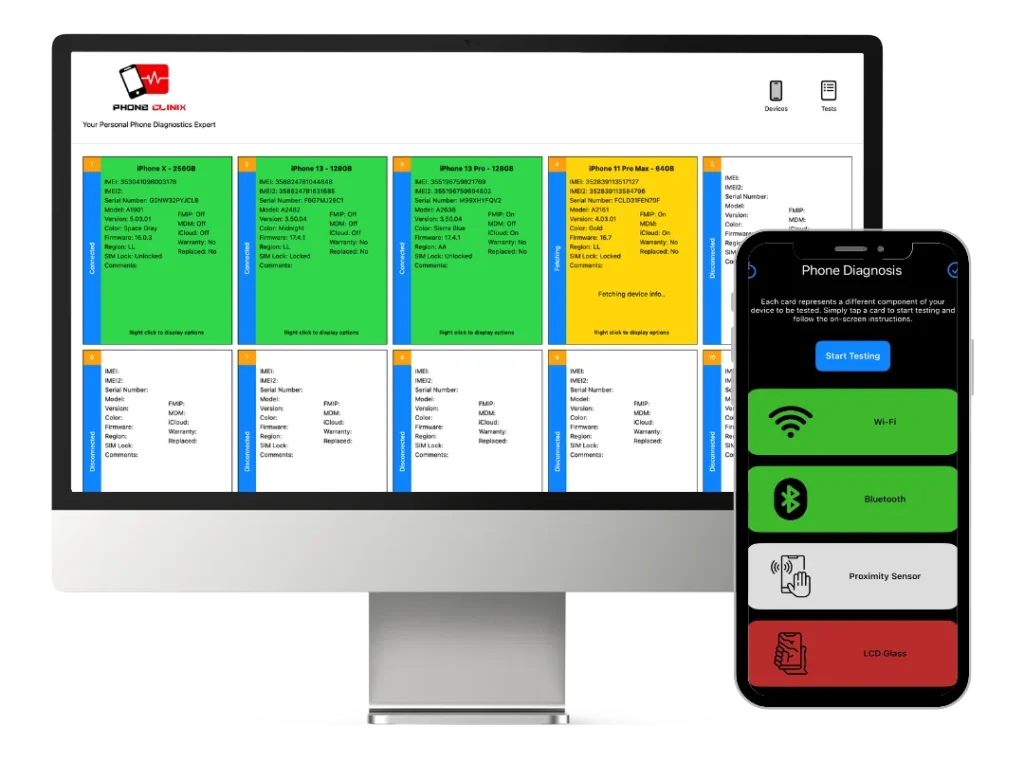
Businesses looking for an efficient way to manage mobile device diagnostics can consider solutions such as Phone Clinix. The platform is designed to support businesses that need structured and efficient mobile device testing.
By bringing multiple diagnostic checks into a streamlined process, Phone Clinix can help businesses improve the way they evaluate smartphones. A more organized testing workflow can reduce unnecessary manual work and make it easier for technicians to understand device results.
For companies processing a high volume of devices, having a centralized diagnostic approach can also make quality control easier to manage.
Benefits for Repair Shops
Repair shops deal with a wide variety of device problems every day. Customers may arrive with complaints about screens, batteries, cameras, charging, audio, connectivity, or other components.
Using phone diagnostic software, technicians can perform structured tests before and after repairs. Pre-repair testing can help establish the initial condition of a device, while post-repair testing can confirm that important functions are working correctly.
This approach can help repair shops reduce missed problems and provide customers with clearer information about the work performed.
Diagnostic reports can also be useful when communicating test results to customers. Instead of simply saying that a device has been checked, technicians can provide a more understandable overview of the tested components.
Benefits for Refurbishers and Resellers
Refurbishing companies often process large quantities of used smartphones. Manually testing every component can require significant time and labor.
Automated diagnostic workflows can make the evaluation process more scalable. Devices can be tested according to consistent procedures, allowing businesses to identify defects and classify devices more efficiently.
This can support better inventory management because businesses can determine which devices are ready for resale, which require repairs, and which may need additional inspection.
For resellers, accurate testing can also contribute to customer confidence. Customers are more likely to trust refurbished products when businesses can demonstrate that devices have been properly tested.
Benefits for Trade-In Programs
Trade-in programs depend heavily on accurate device assessment. Businesses need to determine whether a smartphone is functional and identify issues that could affect its value.
Phone diagnostic software can support trade-in workflows by providing objective test results. Instead of relying entirely on visual inspection, businesses can evaluate important hardware functions before assigning a device condition or value.
This can make the trade-in process more consistent and reduce disputes between customers and businesses.
Improving Customer Satisfaction
Customer satisfaction is closely connected to product quality and transparency. When customers purchase a used or refurbished smartphone, they want confidence that the device will perform as expected.
A structured diagnostic process can help businesses deliver that confidence. Devices that undergo comprehensive testing are less likely to contain unnoticed functional issues.
For repair customers, testing can also demonstrate that the device was checked after service. This can create a stronger sense of trust and professionalism.
When businesses combine accurate testing with clear communication, they can create a better overall customer experience.
Reducing Human Error
Manual testing is valuable, but it can also be affected by human error. A technician may accidentally skip a component, record a result incorrectly, or overlook a problem during a busy period.
Automated testing workflows can reduce these risks by providing predefined procedures. Technicians can follow the same sequence across devices, making the overall process more consistent.
This does not eliminate the need for professional judgment, but it can provide technicians with better information when making decisions.
Saving Time and Increasing Productivity
Time is an important resource for mobile device businesses. The more devices a company processes, the more important testing efficiency becomes.
A streamlined diagnostic workflow can help technicians spend less time switching between tools and manually recording results. This can increase the number of devices a business can evaluate during a working day.
Higher testing efficiency can be particularly valuable for high-volume refurbishers, retail stores, repair chains, and trade-in operations.
Creating Better Quality Control Processes
Quality control is essential when dealing with used and refurbished smartphones. Businesses need repeatable processes that help ensure every device meets their standards.
With phone diagnostic software, companies can establish testing procedures based on their specific requirements. Devices can be evaluated using consistent criteria before they move to the next stage of the workflow.
This can improve internal accountability and make it easier to identify recurring device problems.
Making Device Reports Easier to Understand
Diagnostic results are most useful when businesses can understand and communicate them clearly. A good diagnostic solution should make test outcomes accessible to technicians and, where appropriate, customers.
Clear reporting can show which components passed testing and which require attention. This information can support repair decisions, resale classifications, trade-in evaluations, and customer communications.
For businesses, organized reports can also provide useful documentation for internal quality assurance.
Supporting a Scalable Mobile Testing Strategy
As a business grows, its mobile testing requirements can grow as well. A process that works for ten devices per day may become inefficient when the company begins processing hundreds or thousands.
A scalable diagnostic solution can help businesses maintain testing standards as their device volume increases. Instead of constantly adding manual processes, companies can build structured workflows around their diagnostic technology.
This can make mobile device operations more efficient while supporting consistent quality across larger inventories.
Choosing the Right Diagnostic Solution
Businesses should consider several factors when selecting phone diagnostic software. Compatibility is important because companies may handle different smartphone models, operating systems, and hardware configurations.
Ease of use is another major consideration. Technicians should be able to understand the testing workflow without extensive training.
Businesses should also consider reporting capabilities, testing speed, scalability, device coverage, and the ability to integrate diagnostics into existing workflows.
A solution should ultimately support the company’s specific business model rather than simply offering a large number of features.
The Future of Mobile Device Analysis
Mobile device testing is likely to become increasingly automated as smartphones become more sophisticated and businesses process larger numbers of devices.
Future diagnostic technologies may provide more detailed analytics, improved automation, stronger reporting, and better integration with inventory and customer management systems.
Artificial intelligence and data-driven analysis may also contribute to identifying patterns in device failures and helping businesses make more informed decisions.
As the secondary smartphone market continues to grow, reliable device analysis will remain an important part of repair, refurbishment, resale, and trade-in operations.
Conclusion
Mobile device analysis does not have to be complicated or time-consuming. With the right phone diagnostic software, businesses can create a more structured approach to testing smartphones, identifying faults, improving quality control, and increasing operational efficiency.
Solutions such as Phone Clinix can help businesses streamline the diagnostic process and make mobile testing easier to manage. From repair shops and refurbishers to resellers and trade-in programs, organizations can benefit from consistent testing and clearer device information.
Ultimately, effective diagnostics are about more than finding technical problems. They help businesses deliver reliable products, reduce avoidable returns, improve customer trust, and build stronger operational processes. As the mobile device industry continues to evolve, efficient diagnostic technology will become an increasingly valuable part of successful device management.