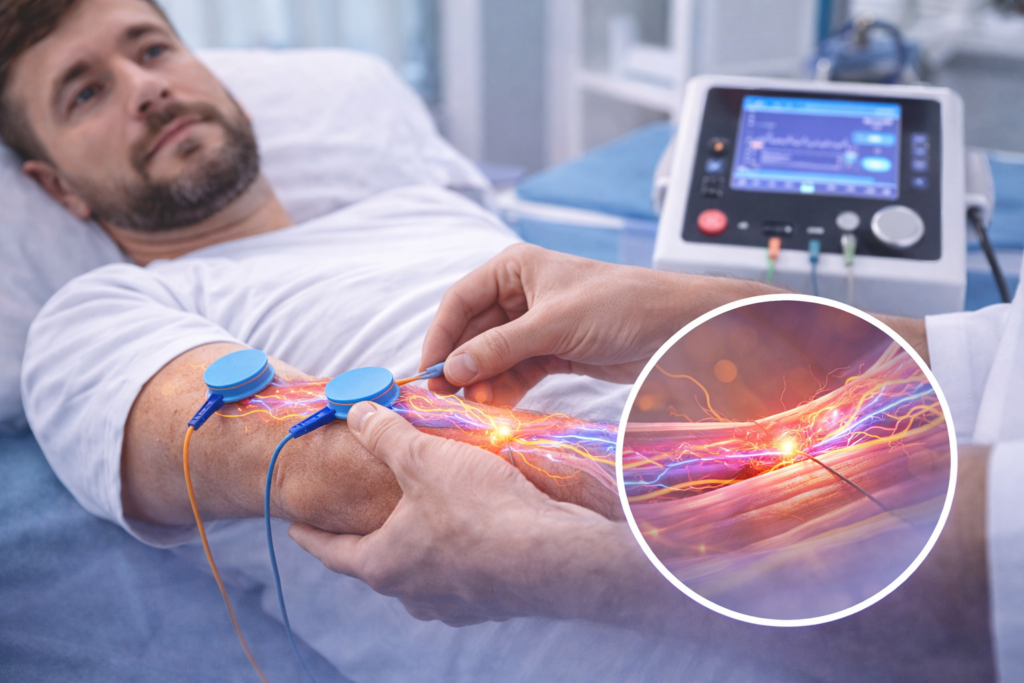
Peripheral Nerve Repair...
Peripheral nerves play a vital role in connecting the brain and spinal cord to the rest of the body. They allow us to move our muscles, feel sensations, and perform everyday activities such as walking, gripping objects, and responding to temperature or pain. When these nerves are damaged because of an injury, accident, surgery, or other causes, normal movement and sensation can be affected.
Peripheral nerve repair is a specialized treatment designed to restore the continuity and function of damaged peripheral nerves. Depending on the type and severity of the injury, treatment may involve surgical repair, nerve grafting, nerve transfers, rehabilitation, or a combination of approaches. Understanding the condition and available treatments can help patients make informed decisions about their care.
What Are Peripheral Nerves?
Peripheral nerves form an extensive communication network throughout the body. They carry signals between the central nervous system and areas such as the arms, hands, legs, and feet.
These nerves perform two primary functions. Sensory nerves carry information from the body to the brain, allowing you to feel touch, pressure, temperature, and pain. Motor nerves carry signals from the brain and spinal cord to muscles, enabling movement.
Damage to a peripheral nerve can interfere with either or both functions. A person may experience numbness, tingling, weakness, loss of movement, or persistent pain depending on which nerve is affected.
What Causes Peripheral Nerve Damage?
Peripheral nerve injuries can occur for many different reasons. Traumatic injuries are among the most common causes, particularly when nerves are cut, stretched, compressed, or severely damaged.
Common causes include:
- Road traffic and workplace accidents
- Deep cuts or lacerations
- Fractures and dislocations
- Sports injuries
- Crush injuries
- Surgical complications
- Prolonged nerve compression
- Certain medical conditions
- Tumors affecting nerves
The severity of damage can vary significantly. A nerve may simply be bruised or compressed, or it may be partially or completely severed. The type of injury has a major influence on whether the nerve can recover naturally or requires surgical intervention.
Symptoms of Peripheral Nerve Injury
Symptoms depend on the location and extent of the nerve damage. Some people experience symptoms immediately following an injury, while others develop them gradually.
Typical symptoms include numbness, weakness, tingling, burning sensations, reduced coordination, and difficulty moving the affected area. Some patients may also experience sharp or electric-shock-like pain.
For example, an injury to a nerve in the hand may make it difficult to grasp objects or move individual fingers. Damage to a nerve in the leg can affect walking, balance, or the ability to move the foot.
Persistent symptoms should be evaluated by an appropriately qualified medical professional, particularly after a significant injury.
What Is Peripheral Nerve Repair?
Peripheral nerve repair refers to surgical techniques used to restore damaged nerves and create an environment that supports nerve regeneration.
When a nerve has been cut or significantly damaged, the ends may no longer be able to communicate effectively. Repair aims to reconnect the nerve or bridge the damaged section so that nerve fibers can potentially grow toward their original targets.
The specific procedure depends on factors such as the type of injury, location of the damaged nerve, length of the damaged segment, time since injury, and overall health of the patient.
Types of Peripheral Nerve Repair
Several surgical techniques may be considered depending on the injury.
Direct Nerve Repair
When the damaged nerve ends can be brought together without excessive tension, a surgeon may perform direct nerve repair. The nerve ends are carefully aligned and joined using specialized microsurgical techniques.
The goal is to provide a pathway through which regenerating nerve fibers can grow.
Nerve Grafting
Sometimes a section of the nerve is missing, making direct repair impossible without placing excessive tension on the nerve. In such situations, a nerve graft may be considered.
A segment of nerve tissue is used to bridge the gap between the damaged ends. Depending on the circumstances, the graft may come from another part of the patient’s body or involve an alternative nerve repair material.
Nerve Transfer
A nerve transfer may be considered when the original nerve has sustained severe damage or when repairing it directly is unlikely to provide adequate recovery.
In this technique, a functioning nerve or part of a functioning nerve is redirected to the damaged nerve or its target muscle. This can provide an alternative pathway for nerve signals.
Nerve transfers can be particularly useful in selected complex injuries involving the upper or lower limbs.
How Is Peripheral Nerve Injury Diagnosed?
Before deciding on treatment, a specialist generally evaluates the patient’s medical history, symptoms, physical examination findings, and the mechanism of injury.
Additional tests may be recommended. These can include nerve conduction studies and electromyography, which help assess how nerves and muscles are functioning.
Imaging techniques such as ultrasound or magnetic resonance imaging may also be used in selected cases to identify structural nerve damage or surrounding injuries.
Early and accurate assessment is important because some nerve injuries may recover without surgery, while others may benefit from timely intervention.
The Peripheral Nerve Repair Procedure
Peripheral nerve surgery is often performed using microsurgical techniques because peripheral nerves can contain very small structures that require precise alignment.
During surgery, the damaged portion of the nerve is carefully assessed. If direct repair is possible, the nerve ends may be precisely aligned and connected. If a gap exists, a graft or another reconstruction technique may be used.
The exact surgical approach varies from patient to patient. Factors such as the location of the injury, nerve size, injury pattern, and surrounding tissue damage all influence the procedure.
The surgeon’s objective is to create the best possible pathway for nerve regeneration while minimizing tension and additional trauma to the nerve.
Recovery After Peripheral Nerve Repair
Recovery following peripheral nerve repair is different from recovery after many other types of surgery because nerves generally regenerate slowly.
The healing process may take months or longer, depending on the severity and location of the injury. Improvement in sensation or movement may occur gradually rather than immediately.
Physical and occupational therapy are often important components of rehabilitation. Therapy can help maintain joint flexibility, preserve muscle function, improve coordination, and teach patients how to safely use the affected limb during recovery.
Patients may also need to follow restrictions during the early stages of healing to protect the repaired nerve.
Factors That Affect Recovery
Several factors can influence the outcome of peripheral nerve repair.
The location and severity of the injury are particularly important. Injuries closer to the muscle or sensory target may have different recovery prospects than injuries farther away because regenerating nerve fibers must travel a certain distance.
Other factors include the patient’s age, general health, timing of treatment, type of nerve affected, extent of tissue damage, and adherence to rehabilitation.
It is important to understand that successful surgical repair does not necessarily mean immediate restoration of normal function. Nerve regeneration and functional recovery can take considerable time.
Why Early Evaluation Matters
If a nerve is severely damaged, delaying evaluation may affect treatment options and recovery. Some nerve injuries can be observed initially because spontaneous recovery is possible, while complete nerve injuries may require reconstruction.
Anyone experiencing persistent numbness, weakness, loss of movement, or unusual pain following an injury should seek professional medical assessment.
Early diagnosis allows specialists to determine the nature of the injury and develop an appropriate treatment strategy.
Rehabilitation After Nerve Surgery
Surgery is only one part of the recovery process. Rehabilitation can play an important role in helping patients regain useful function.
A rehabilitation program may include range-of-motion exercises, strengthening exercises, sensory re-education, coordination activities, and strategies for protecting areas with reduced sensation.
Occupational therapy can be particularly valuable for people whose hand or arm function has been affected. Patients may learn techniques that help them perform daily activities safely while nerve function gradually returns.
Consistency is important because recovery can be slow, and progress may occur in stages.
Potential Risks and Considerations
As with any surgical procedure, peripheral nerve repair carries potential risks. These may include infection, bleeding, scarring, incomplete nerve recovery, persistent pain, or failure to achieve the desired level of function.
There is also no guarantee that normal nerve function will be restored completely. The outcome depends heavily on the nature of the original injury and other individual factors.
A qualified peripheral nerve specialist can explain the potential benefits, limitations, risks, and expected recovery timeline before treatment.
Conclusion
Peripheral nerve repair can provide an important treatment option for people with significant nerve injuries affecting movement, sensation, or both. Advances in microsurgery, nerve grafting, nerve transfers, and rehabilitation have expanded the options available for complex peripheral nerve injuries.
Because every nerve injury is different, treatment must be tailored to the individual. Early assessment, appropriate surgical planning, and structured rehabilitation can all contribute to the best possible functional recovery.
If you have experienced a traumatic injury accompanied by persistent numbness, weakness, loss of movement, or nerve pain, consulting a qualified specialist can help determine whether observation, rehabilitation, peripheral nerve repair, or another treatment approach is appropriate.