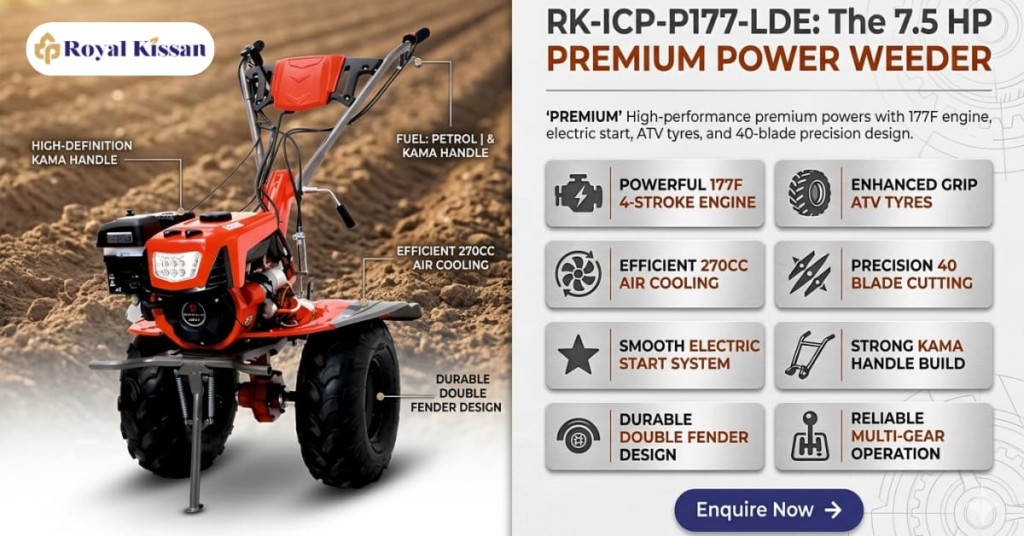
A power weeder machine is an important piece of agricultural equipment used for weeding, soil cultivation, inter-cultivation, and land preparation. Like any agricultural machine, regular maintenance is essential to keep the power weeder working efficiently and safely. Proper maintenance can improve machine performance, reduce fuel consumption, prevent unexpected breakdowns, and extend the overall service life of the equipment.
Royal Kissan manufactures agricultural machinery with a focus on durability, performance, and ease of operation. However, even a high-quality power weeder requires regular inspection and servicing to maintain its performance in demanding farming conditions.
Why Power Weeder Maintenance Is Important
A power weeder works in dusty, muddy, and sometimes wet agricultural environments. Soil, crop residue, moisture, and dust can accumulate around the engine, blades, transmission, and other components.
Regular maintenance helps to:
- Maintain consistent engine performance
- Improve fuel efficiency
- Reduce wear and tear
- Prevent unexpected breakdowns
- Increase machine life
- Maintain effective tilling and weeding performance
- Reduce long-term repair expenses
- Improve operator safety
Farmers who follow a regular maintenance schedule can get better performance from their power weeder throughout the agricultural season.
1. Check the Engine Regularly
The engine is one of the most important components of a power weeder machine. Before starting the machine, inspect the engine for visible leaks, loose components, unusual noises, or other signs of damage.
For petrol and diesel models, follow the engine manufacturer’s recommended service intervals. Check the engine oil level regularly and replace the oil according to the recommended schedule.
Never operate the machine with insufficient or contaminated engine oil because inadequate lubrication can cause excessive component wear and potentially serious engine damage.
2. Clean the Air Filter
Agricultural fields contain large amounts of dust and soil particles. The air filter prevents these particles from entering the engine.
A dirty or blocked air filter can restrict airflow and negatively affect engine performance.
Therefore:
- Inspect the air filter regularly.
- Clean or replace it according to the manufacturer’s instructions.
- Do not operate the machine with a damaged air filter.
- Increase inspection frequency when working in particularly dusty conditions.
A clean air filter helps the engine breathe properly and maintain efficient operation.
3. Check Engine Oil
Engine oil lubricates internal engine components and helps reduce friction and heat.
Before operating the power weeder, check the oil level according to the engine manufacturer’s instructions. The machine should be parked on a suitable level surface when checking the oil.
If the oil appears contaminated or the service interval has been reached, replace it with the recommended grade and quantity.
Always follow the specific engine manual because oil requirements can differ between power weeder models.
4. Inspect the Rotary Blades
The rotary blades are responsible for cutting weeds and cultivating soil. Because they operate directly in the field, they experience considerable wear.
Inspect the blades regularly for:
- Excessive wear
- Cracks
- Bending
- Loose fasteners
- Damage caused by stones or hard objects
Replace damaged or excessively worn blades rather than continuing to use them.
Important: Always switch off the engine, disconnect the appropriate starting system where applicable, and ensure all moving parts have completely stopped before inspecting or working near the blades.
5. Maintain the Gearbox and Transmission
The gearbox transfers engine power to the wheels and rotary mechanism. Proper lubrication is important for smooth operation and reduced wear.
Check gearbox oil levels and replacement intervals according to the power weeder manufacturer’s instructions.
Look for signs such as:
- Oil leakage
- Abnormal sounds
- Difficulty changing gears
- Excessive vibration
- Unusual heating
If any of these symptoms occur, stop using the machine and have it inspected by a qualified technician.
6. Check Belts, Chains, and Drive Components
Depending on the power weeder design, belts, chains, or other drive components may be used to transfer power.
Inspect these components regularly for signs of:
- Cracking
- Excessive slack
- Damage
- Unusual wear
- Misalignment
A loose or damaged drive component can reduce machine efficiency and potentially create a safety hazard.
Replacement and adjustment should be performed according to the manufacturer’s specifications.
7. Inspect Tyres and Wheels
Tyres provide traction and stability while the power weeder is operating.
Before fieldwork, check:
- Tyre condition
- Inflation pressure where applicable
- Wheel fasteners
- Excessive tread wear
- Cracks or other damage
Correct tyre condition helps the operator maintain better control, particularly when working on uneven agricultural land.
8. Check Fasteners and Bolts
Vibration during agricultural operations can gradually loosen nuts, bolts, and other fasteners.
Regularly inspect important connections around:
- Engine mounting
- Handle assembly
- Gearbox
- Blade assembly
- Wheels
- Protective guards
Tighten loose fasteners according to the manufacturer’s recommended specifications. Avoid over-tightening components that require a specific torque.
9. Keep the Power Weeder Clean
Cleaning should be part of routine maintenance.
After completing fieldwork, remove accumulated:
- Soil
- Mud
- Crop residue
- Grass
- Dust
- Moisture
Pay particular attention to the rotary blades, underside of the machine, wheels, and other areas where soil can accumulate.
Allow the machine to dry properly before storage. Avoid directing high-pressure water at sensitive electrical or engine components unless the manufacturer’s instructions specifically permit it.
10. Check the Fuel System
For petrol or diesel power weeders, use clean fuel that meets the engine manufacturer’s specifications.
Inspect the fuel system periodically for leakage or damaged hoses. Keep the fuel tank and surrounding area clean.
If the machine will be stored for an extended period, follow the engine manufacturer’s instructions for fuel-system preparation. This is particularly important because stale fuel can cause starting and running problems.
11. Inspect the Handle and Controls
The handle is the primary control point for the operator. Before starting work, check that the handle assembly is secure and that controls operate correctly.
Pay attention to:
- Throttle control
- Clutch operation
- Gear controls
- Engine stop control
- Handle fasteners
Never operate a machine if an important control is damaged or malfunctioning.
12. Follow a Preventive Maintenance Schedule
A simple maintenance schedule can help farmers avoid major problems.
Before Every Use
Perform a quick inspection of:
- Engine oil
- Fuel
- Air filter condition
- Blades
- Tyres
- Fasteners
- Leaks
- Controls
- Protective guards
After Every Use
Clean the machine thoroughly and remove soil and crop residue. Inspect the blades and other working components for damage.
Periodically
Carry out scheduled engine, gearbox, transmission, and other component servicing according to the manufacturer’s maintenance instructions.
Before Long-Term Storage
Clean the entire machine, protect appropriate metal surfaces from corrosion, prepare the fuel system as instructed by the engine manufacturer, and store the power weeder in a clean, dry, covered location.
Common Power Weeder Problems and Possible Causes
Even with regular maintenance, a power weeder may occasionally develop problems.
Power Weeder Does Not Start
Possible causes can include:
- Insufficient or unsuitable fuel
- Engine-control setting issues
- Dirty air filter
- Fuel-system problems
- Ignition-system problems on petrol models
- Battery or starting-system issues on applicable models
Refer to the engine manual or contact an authorized service professional rather than repeatedly attempting to start a faulty machine.
Engine Loses Power
A loss of power may be associated with a restricted air filter, unsuitable fuel, engine maintenance requirements, excessive load, or another mechanical issue.
Excessive Vibration
Excessive vibration may result from damaged or incorrectly fitted blades, loose components, worn parts, or an imbalance in the rotating assembly.
Stop the machine and inspect it before continuing operation.
Poor Weeding Performance
If the machine is not providing the expected cultivation or weeding performance, inspect the blades, working depth, soil conditions, and machine settings. Worn or damaged blades may need replacement.
Safety Tips for Power Weeder Maintenance
Safety should always come first when maintaining agricultural machinery.
Before performing maintenance:
- Stop the engine.
- Allow hot components to cool.
- Ensure moving parts have completely stopped.
- Keep children and unauthorized people away from the machine.
- Wear appropriate protective equipment.
- Use the correct tools.
- Never bypass safety guards or controls.
- Follow the manufacturer’s service instructions.
- Never inspect moving blades while the engine is running.
- Contact a qualified technician for complicated repairs.
Royal Kissan: Supporting Better Agricultural Machinery
Royal Kissan is committed to providing reliable agricultural machinery designed around the practical requirements of modern farmers. A well-maintained power weeder machine can become a valuable long-term investment by helping farmers complete essential field operations efficiently.
Whether you choose a compact machine for small-scale cultivation or a higher-powered model for demanding agricultural applications, proper maintenance remains essential for achieving dependable performance.
Regular inspection, timely servicing, correct lubrication, proper cleaning, and safe operation can significantly contribute to the machine’s longevity. Farmers should always follow the specific maintenance instructions supplied with their Royal Kissan power weeder because service requirements can vary between models and engines.
Final Thoughts
A power weeder is an investment in agricultural efficiency. However, purchasing a quality machine is only the first step. Regular maintenance is what helps protect that investment over the long term.
By keeping the engine serviced, blades sharp and secure, transmission properly maintained, tyres in good condition, and the machine clean, farmers can help ensure reliable operation during critical farming activities.
Royal Kissan continues to focus on quality agricultural machinery and farmer-oriented solutions. With proper care and responsible operation, a Royal Kissan power weeder can provide dependable assistance for weeding, cultivation, soil preparation, and other agricultural operations for years to come.