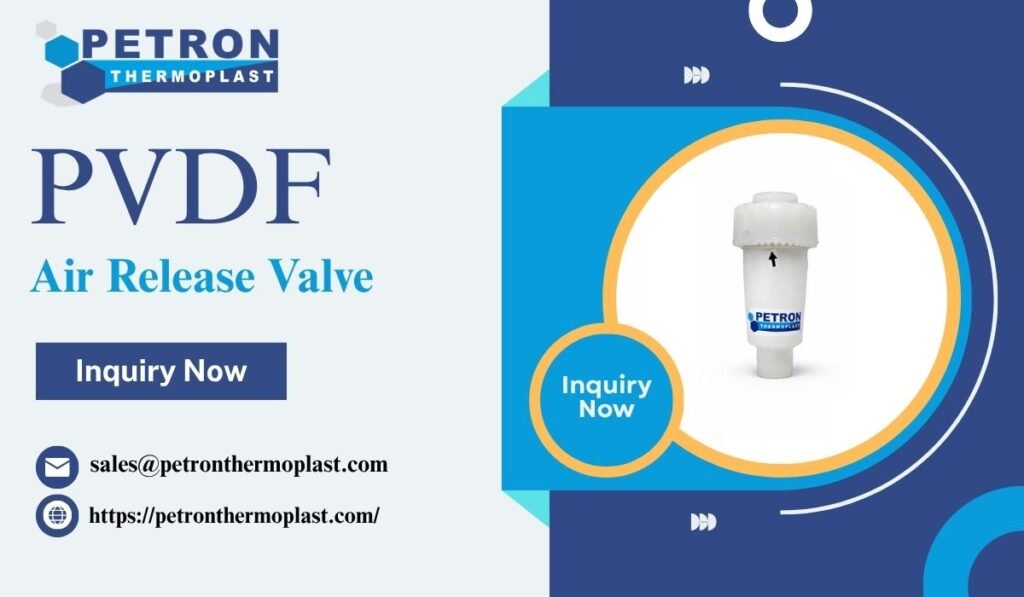
Industrial piping systems are designed to transport liquids safely and efficiently across manufacturing facilities, chemical plants, water treatment units, and process industries. During operation, air can accumulate inside pipelines and affect flow performance, pressure stability, and overall system efficiency. Selecting a suitable air release valve helps manage trapped air and supports reliable pipeline operation.
A PVDF Air Release Valve is a specialized thermoplastic valve solution for compatible industrial applications where chemical resistance and corrosion protection are important. Manufactured using polyvinylidene fluoride (PVDF), this type of valve can be considered for selected chemical processing and customized piping projects.
Petron Thermoplast offers thermoplastic piping products and industrial fluid-handling solutions for different project requirements. Businesses planning a new pipeline installation or upgrading an existing system can explore suitable PVDF valve options based on their application, operating conditions, and installation needs.
What Is a PVDF Air Release Valve?
A PVDF Air Release Valve is a valve designed to release accumulated air from a compatible piping system. Depending on its design, an air release valve may allow trapped air to escape while the pipeline is filled or operating.
The valve body is made from PVDF, a high-performance thermoplastic known for its resistance to many aggressive chemicals and its useful mechanical properties. This makes PVDF a potential material choice for specific industrial environments where conventional metal components may face corrosion concerns.
The valve’s operating mechanism, pressure rating, temperature limits, connection type, and chemical compatibility must be confirmed for the selected model. Not every PVDF valve is suitable for every fluid or pipeline condition.
Why Choose a PVDF Air Release Valve for Customized Piping Projects?
Customized piping projects often have unique requirements related to chemical compatibility, pipeline dimensions, pressure conditions, and installation arrangements. Selecting the right valve material and design is important for long-term performance.
- Excellent Chemical Resistance
PVDF provides resistance to many acids, halogens, and other industrial chemicals. It can be considered for suitable chemical handling applications where the valve may be exposed to corrosive fluids or vapours.
Chemical compatibility depends on the specific chemical, concentration, temperature, exposure duration, and valve construction. Always verify compatibility before installation.
- Corrosion-Resistant Material
Corrosion can damage metallic valve components and increase maintenance requirements. PVDF provides a non-metallic alternative for compatible operating environments and may help reduce corrosion-related concerns.
- Support for Pipeline Air Management
Air release valves are used to discharge accumulated air from appropriate piping arrangements. Correct air management can help support stable system operation and reduce problems associated with trapped air.
The exact function depends on the valve design. An air release valve should not be assumed to perform every function of a vacuum breaker or combination air valve.
- Suitable for Customized Installations
Industrial projects may require specific connection sizes, mounting arrangements, or integration with existing thermoplastic pipelines. The appropriate valve configuration should be selected according to the system design and available product options.
- Low-Maintenance Potential
A properly selected valve can help reduce avoidable maintenance issues. Regular inspection is still necessary to check for blockages, leaks, wear, and changes in operating performance.
Applications of PVDF Air Release Valves
PVDF air release valves may be considered for a range of industrial projects when the selected valve is compatible with the process conditions.
Chemical Processing Plants
Chemical plants often use specialized piping systems to transfer process liquids between storage tanks, reactors, filtration equipment, and treatment units. A compatible air release valve can be considered where air accumulation needs to be managed.
Acid and Chemical Transfer Lines
Some chemical transfer systems require corrosion-resistant thermoplastic components. PVDF may be suitable for certain chemicals, but the exact fluid concentration and operating temperature must be checked.
Industrial Water Treatment
Water treatment facilities may use air release valves at suitable points in pipeline networks. Valve selection depends on water quality, operating pressure, system design, and the type of air management required.
Pharmaceutical and Specialty Chemical Facilities
Certain process systems require materials that meet specific cleanliness and compatibility requirements. PVDF valves may be evaluated for compatible applications, subject to any necessary documentation, validation, and regulatory requirements.
Customized Industrial Piping Projects
Specialized installations may involve unusual pipeline routes, limited space, or particular connection requirements. Selecting the correct valve configuration helps support proper integration into the overall piping system.
Key Benefits of PVDF Air Release Valves
The main benefits depend on the application and valve design. Potential advantages include:
- Chemical resistance: PVDF resists many compatible aggressive chemicals.
- Corrosion protection: A non-metallic valve body can reduce concerns associated with metal corrosion.
- Pipeline efficiency: Appropriate air release arrangements can help manage trapped air.
- Project flexibility: Available configurations may support different piping layouts.
- Industrial suitability: PVDF can be considered for selected demanding chemical environments.
- Maintenance planning: Regular inspection and correct valve selection can help limit unexpected operational issues.
- Integration with thermoplastic systems: Compatible connections may allow installation in suitable plastic piping networks.
How to Select the Right PVDF Air Release Valve?
Before placing an order, review the following technical factors.
- Identify the Fluid
Provide the exact name of the liquid or gas, chemical concentration, and expected operating temperature. These details are essential for assessing material compatibility.
- Confirm the Pipeline Size
The valve connection must match the pipeline design. Check nominal diameter, connection standard, and available installation space.
- Review Pressure Conditions
Confirm normal operating pressure, maximum pressure, and possible pressure surges. The valve must remain within its specified operating limits.
- Determine the Required Valve Function
Identify whether the system needs to release accumulated air, admit air during draining, or perform both functions. Different valve designs serve different purposes.
- Consider Installation Location
Air release valves are often installed at locations identified by the piping designer, such as appropriate high points where air can accumulate. The correct position depends on the pipeline profile and system requirements.
- Check Maintenance Access
Ensure the valve can be inspected and serviced safely. Consider isolation arrangements and the manufacturer’s maintenance instructions.
- Request Technical Documentation
Ask for product dimensions, pressure-temperature ratings, connection details, chemical compatibility information, and installation guidance before finalizing the purchase.
Why Choose Petron Thermoplast?
Petron Thermoplast provides thermoplastic products and industrial piping solutions for different application requirements. For customized PVDF air release valve projects, buyers should share clear technical details to help identify a suitable configuration.
When discussing your requirement, provide:
- Required valve size and connection type
- Chemical name and concentration
- Operating pressure and temperature
- Required valve function
- Quantity and project schedule
- Installation or customization requirements
- Delivery location and documentation needs
Bulk Supply and Worldwide Delivery Support
Industrial piping projects may require multiple valves, fittings, pipes, and other thermoplastic components. Planning procurement in advance can help coordinate installation schedules and reduce last-minute purchasing delays.
When requesting a quotation from Petron Thermoplast, include the required quantity, technical specifications, delivery destination, and preferred delivery timeline. For international projects, confirm export availability, packaging, shipping arrangements, and documentation requirements.
Product availability, customization options, and delivery schedules should be confirmed for the specific valve model.
Maintenance Tips for PVDF Air Release Valves
Proper maintenance helps support reliable valve operation.
- Inspect the valve regularly for leakage, visible damage, or blockage.
- Follow the manufacturer’s inspection and servicing schedule.
- Check for deposits or contamination that may affect the air release mechanism.
- Confirm that cleaning agents are compatible with PVDF and all valve components.
- Isolate and depressurize the system before carrying out maintenance.
- Replace worn or damaged parts only with compatible components recommended by the manufacturer.
Conclusion
A PVDF Air Release Valve can be a useful option for customized piping projects that require appropriate air management and resistance to compatible industrial chemicals. PVDF offers valuable material properties for selected chemical processing environments, but the complete valve must match the fluid, pressure, temperature, connection, and operating requirements.
Petron Thermoplast can be contacted to discuss PVDF valve requirements for industrial applications, including product specifications, quantities, customization needs, and delivery arrangements. Looking for a PVDF Air Release Valve for your next piping project? Contact Petron Thermoplast to discuss your requirements and request a quotation.