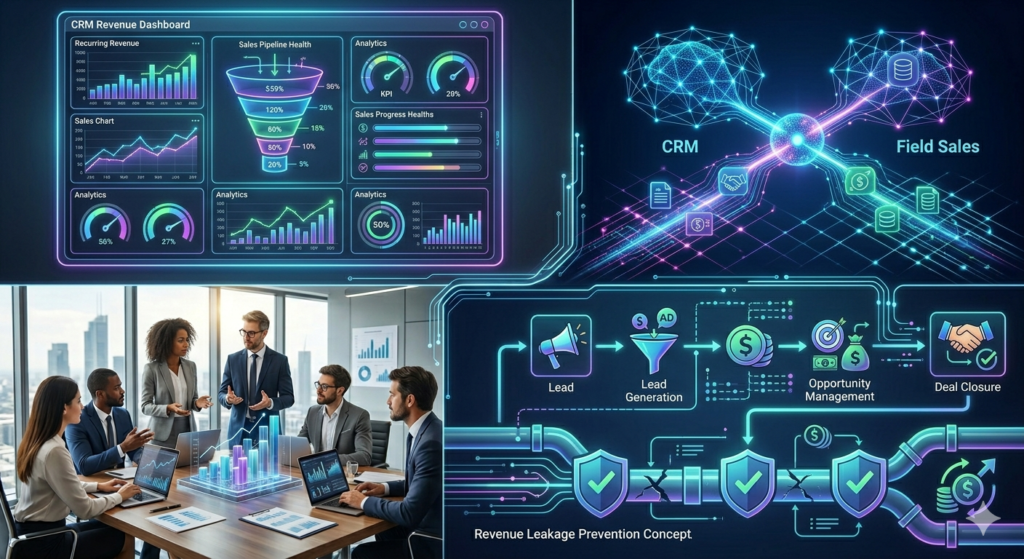
Revenue leakage is the silent profit killer in many businesses. It happens when potential income slips through cracks in processes, data silos, or inconsistent execution. Left unchecked, it erodes margins, undermines sales forecasts, and disguises real performance gaps. Fortunately, the right systems and discipline can close these gaps. Specifically, CRM systems offer a structured view of pipeline, processes, and customer interactions, making them ideal tools for preventing revenue loss.
To exploit this potential, consider how integrated technologies boost visibility and accountability. For example, Salesforce Spotio Integration brings field activity and pipeline data into a unified CRM universe. This alignment ensures field teams and inside sales share synchronized insights, dramatically reducing data discrepancies and misalignment. When all customer actions feed into a single source of truth, revenue opportunities become easier to protect.
In essence, stopping revenue leakage is about knowing where losses happen and then designing systems that prevent them. Customer relationship management (CRM) tools sit at the center of this effort. They track prospects from initial contact to close, highlight bottlenecks in the funnel, and enforce process discipline. However, to leverage CRM effectively, leaders must understand common leakage points and how to plug them using data, automation, and governance.
What Is Revenue Leakage?
Revenue leakage refers to any situation where your business earns less than it should. It’s not limited to outright errors like unbilled work or incorrect pricing. Instead, it often hides in subtle areas such as:
- Improper discounting
- Missed renewals or upsells
- Unrecorded customer interactions
- Pipeline misclassification
- Data entry mistakes
While individual instances might seem minor, their cumulative impact is significant. Over time, leakage can shrink quarterly revenue by double digits or distort performance indicators used for planning and compensation.
CRM systems help quantify leakage by capturing every relevant touch point and transaction. They make it easier to see where processes break, which deals stall, and when revenue expectations drift from reality.
Why CRM Systems Matter for Revenue Protection
CRM platforms like Salesforce, HubSpot, or Microsoft Dynamics serve as the operational backbone for sales, service, and marketing teams. They centralize accounts, contacts, activities, opportunities, and customer history. With structured data flows, organizations can:
- Track pipeline health in real time
- Identify deal slippage early
- Enforce pricing and discount policies
- Automate notifications for renewal and follow‑up
- Monitor rep compliance with playbooks and stages
Without a CRM, data lives in spreadsheets, emails, and disconnected tools. This fragmentation makes it almost impossible to audit process compliance or measure performance accurately. Once data enters the CRM, you gain the ability to analyze patterns and act before leakage starts.
Common Revenue Leakage Points and CRM Solutions
1. Pipeline Mismanagement
A chaotic pipeline is a major leakage source. When deals aren’t updated, duplicates exist, or stages are ambiguous, forecasts become useless. The CRM solves this by requiring standardized stage definitions and mandatory data fields.
Make it a rule: every opportunity must include close probability, expected revenue, and next activity. Automated validation and workflow rules in your CRM ensure reps fill in details on time.
2. Missed Renewals and Upsells
Recurring revenue streams are particularly vulnerable. Renewal reminders buried in email or tribal memory often fall through. A CRM can automate renewal date triggers, task assignments, and alert sequences so nothing gets overlooked.
Analytics dashboards can also highlight accounts with upsell potential based on usage patterns, product ownership, or purchase history.
3. Unapproved Discounting
Discounts can make or break profitability. Yet, reps often give concessions without proper oversight. Define pricing approval hierarchies in your CRM. Use automation to flag discounts beyond threshold levels and route them for manager approval. This protects margins and reduces leakage from unnecessary concessions.
4. Inaccurate Forecasting
Forecasts built on shaky or outdated pipeline data produce poor decisions. CRM platforms provide real‑time dashboards, probability‑weighted forecasts, and stage velocity metrics. These reduce uncertainty and reveal when deals are at risk of slipping.
Forecast errors often indicate deeper process issues something a CRM can help illuminate through trend analysis and rep activity tracking.
Data Hygiene: Foundation of Leakage Prevention
A CRM is only as strong as the data inside it. Poor data hygiene duplicates, outdated records, incomplete fields undermines visibility. To maintain clean and trustworthy data:
- Standardize naming conventions
- Set mandatory fields for key stages
- Regularly dedupe and archive old contacts
- Audit pipeline updates weekly
Transition words matter here: first, clean data supports accurate reporting; next, it enables predictive insights; finally, it builds confidence in automation and enforcement.
Set data quality dashboards and KPIs for example, required fields completion percentages or time since last touch so teams can self‑correct before problems escalate.
Process Enforcement Through CRM Automation
A CRM should not just store data; it should drive execution. That’s where automation becomes a force multiplier.
Workflow Rules
Define workflows that guide reps through standard procedures. For example:
- When a lead is created, assign follow‑up activity within 24 hours.
- If an opportunity stalls in a stage for more than 7 days, notify the manager.
- When a contract reaches renewal threshold, generate tasks automatically.
These rules ensure consistency and catch leakage triggers before they impact revenue.
Alerts and Escalations
Use real‑time alerts to flag risky deals. For instance:
- A drop in engagement signals churn risk.
- A large discount flagged without approval triggers escalation.
Escalations enforce accountability and prevent small issues from becoming revenue losses.
Analytics and Forecasting: Seeing Problems Early
CRM analytics reveal trends invisible to the naked eye. Use dashboards to monitor:
- Deal velocity by stage
- Win rates by source and segment
- Activity levels vs outcomes
- Customer churn signals
By comparing activity with outcomes, you see where processes break. You might find, for example, that deals with low activity engagement have lower close rates. That’s a leakage indicator that corrective coaching can fix.
Forecasting tools within CRM help you understand where expected revenue diverges from historical performance. When forecast gaps appear, drill into pipeline details and correct at the source before quarter end.
Collaboration Across Teams to Reduce Leakage
Revenue leakage is not a sales problem alone. It spans marketing, sales, finance, and operations. A CRM unites these functions on a shared platform.
Marketing can see which campaigns produce quality leads. Sales can track quality engagement. Finance can validate billing accuracy. Ops can audit fulfillment timelines.
This alignment closes information silos that typically cause leakage. When teams work from shared, accurate CRM data, every stage of the customer lifecycle is optimized for revenue capture.
Training and Change Management
Tech alone does not prevent leakage. People must use it right. Regular training ensures:
- Consistent input standards
- Understanding of why data matters
- Ability to interpret dashboards and KPIs
- Adoption of automation and alerts
Reps should know how their actions affect revenue outcomes. For example, logging activities consistently avoids blind spots in pipeline health.
Leadership must reinforce CRM discipline through coaching, rewards, and accountability.
Continuous Improvement and Audit Cycles
Finally, treat revenue leakage prevention as ongoing work. Establish quarterly or monthly audits that check:
- Data integrity
- Workflow effectiveness
- Forecast accuracy
- Pipeline velocity trends
Use CRM audit logs and dashboards to identify gaps and corrective actions. As markets evolve, your CRM processes should evolve too.
Final Thoughts: Turn CRM into a Revenue Guardian
Revenue leakage doesn’t have to be an enigma. With a structured CRM strategy, disciplined processes, and cross‑team alignment, you can stop losses before they hurt performance. Remember:
- Stand up clear data standards
- Leverage automation to enforce process
- Use analytics to detect early warning signs
- Train teams for consistent execution
Ultimately, revenue protection is a system, not a one‑time fix. With CRM at its center, you gain the visibility and control needed to turn potential losses into predictable growth