Seiko Watches Common Myths Debunked
Few watch brands generate as much online debate as Seiko. Because it spans everything from $80 quartz watches to $20,000 Grand Seiko pieces, misinformation and oversimplified generalizations spread easily. Some of these myths come from outdated information, others from confusion https://seikowatchus.com/ about the brand’s many sub-lines and movement types. Separating fact from assumption is worth doing, because it changes how people actually shop for — and appreciate — a Seiko watch.
Myth 1: “Grand Seiko and Seiko Are the Same Brand”
This is one of the most common points of confusion. While Grand Seiko originated as an internal project within Seiko in the late 1950s, aimed at producing the finest watch the company could build, it has since become an independently operating luxury brand with its own boutiques, its own manufacturing facilities, and its own distinct identity. Grand Seiko watches don’t even carry the Seiko name on the dial anymore in most current releases.
The confusion is understandable given the shared history, but treating them as interchangeable undersells just how differentiated Grand Seiko has become — both in price and in the specialized techniques used to produce it, including advanced case-finishing methods like Zaratsu polishing that create flawless, mirror-like surfaces.
Myth 2: “Seiko Watches Are Just Budget Watches”
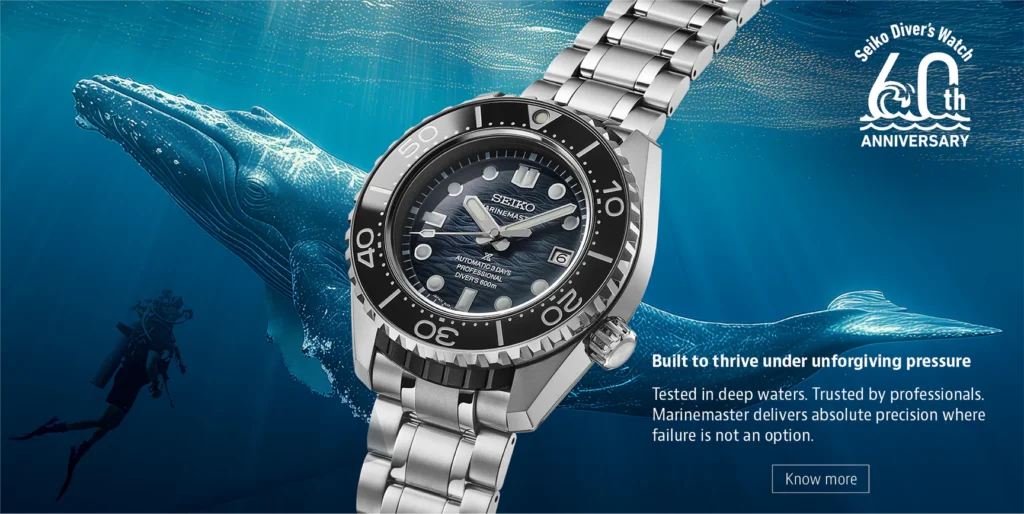
This myth usually comes from people whose only exposure to the brand is an affordable quartz model from a department store. While it’s true that Seiko produces excellent budget watches, that’s only one segment of a much larger catalog. The Prospex dive collection, home to enthusiast favorites like the “Turtle” and “Samurai,” has earned serious respect among tool-watch collectors for genuine underwater durability. Meanwhile, Grand Seiko competes directly with high-end Swiss manufacturers on craftsmanship and finishing quality.
Judging the entire brand by its entry-level offerings would be like dismissing an entire car manufacturer because you only test-drove its base trim.
Myth 3: “Quartz Watches Are Inferior to Mechanical Ones”
This belief predates Seiko but is closely tied to the brand’s history. In 1969, Seiko released the Quartz Astron, the first quartz wristwatch sold to consumers, offering accuracy that mechanical movements of the era simply couldn’t match. The shift was so disruptive that it triggered what’s now known as the “quartz crisis,” forcing traditional manufacturers to rethink their entire approach.
Decades later, quartz still carries an unfair reputation in some collector circles as the “less serious” choice. In reality, quartz movements offer excellent accuracy, low maintenance, and long-term reliability — qualities that make them genuinely practical for everyday use, not inferior substitutes for mechanical engineering.
Myth 4: “All Seiko Dive Watches Are Actually Rated for Diving”
Not every Seiko watch with a dive-style aesthetic is built for actual underwater use. Seiko produces watches with dive-inspired looks — rotating bezels, bold indices, sporty cases — that don’t necessarily meet ISO dive watch standards for water resistance and pressure tolerance. Genuine dive-rated models, particularly within the Prospex line, are clearly specified as such, often tracing back to the brand’s first true diver’s watch released in 1965.
Buyers who actually plan to dive, rather than just want the look, should always check the specific model’s certification rather than assuming any watch with a bezel and a rugged case is built for real underwater performance.
Myth 5: “Seiko Movements Are Outsourced or Generic”
Some assume that because Seiko produces watches at such a wide range of price points, its lower-tier models must use outsourced, generic movements similar to what’s found in many budget fashion watches. This isn’t accurate. Seiko has long prioritized vertical integration, manufacturing its own movements, cases, and dials in-house rather than relying heavily on third-party suppliers.
This internal manufacturing control is part of why even affordable Seiko models tend to hold up well over time — they’re built using the same foundational engineering knowledge that informs the brand’s higher-end products, not a separate, lower-quality supply chain.
Myth 6: “Seiko 5 Watches Are Just a Marketing Gimmick”
The Seiko 5 name sometimes gets dismissed as a branding exercise rather than a meaningful product distinction. In reality, the “5” refers to five specific features the original 1963 models promised: automatic winding, a day-and-date display, water resistance, a recessed crown for protection, and a durable case-and-bracelet build. That combination, at an accessible price, is exactly why the line became such a widely recommended entry point into mechanical watches — and why it remains relevant more than sixty years later.
Myth 7: “Spring Drive Is Just Marketing Language for Quartz”
Because Spring Drive movements produce https://seikowatchus.com/prospex/ a smooth, continuous seconds-hand sweep similar to quartz watches, some assume it’s simply a rebranded quartz movement. It isn’t. Spring Drive uses a traditional mechanical mainspring for power, but regulates the release of that energy electronically through a glide wheel and electromagnetic brake instead of a conventional escapement. It took Seiko roughly two decades to fully develop, and it remains one of the more technically distinctive movement systems in the watch industry, blending mechanical tradition with electronic precision rather than replacing one with the other.
Myth 8: “You Can’t Take Seiko Seriously as a Collector’s Brand”
This myth tends to come from people unfamiliar with just how deep serious Seiko collecting communities run. Vintage Seiko chronographs, discontinued Prospex references, and limited-edition Grand Seiko pieces are actively pursued by collectors worldwide, sometimes commanding significant premiums on the secondary market. The brand’s combination of historical significance, technical innovation, and genuine scarcity in certain references gives it real collector credibility — it simply exists alongside, rather than instead of, its mass-market accessibility.
Final Thoughts
Much of the confusion around Seiko comes from trying to judge an unusually broad brand by a single data point — one watch, one price tier, or one outdated assumption. In reality, Seiko operates across nearly every corner of the watch market, from ultra-affordable quartz models to hand-finished luxury pieces through Grand Seiko. Understanding what separates myth from fact makes it much easier to appreciate just how wide-ranging — and genuinely well-earned — the brand’s reputation actually is.