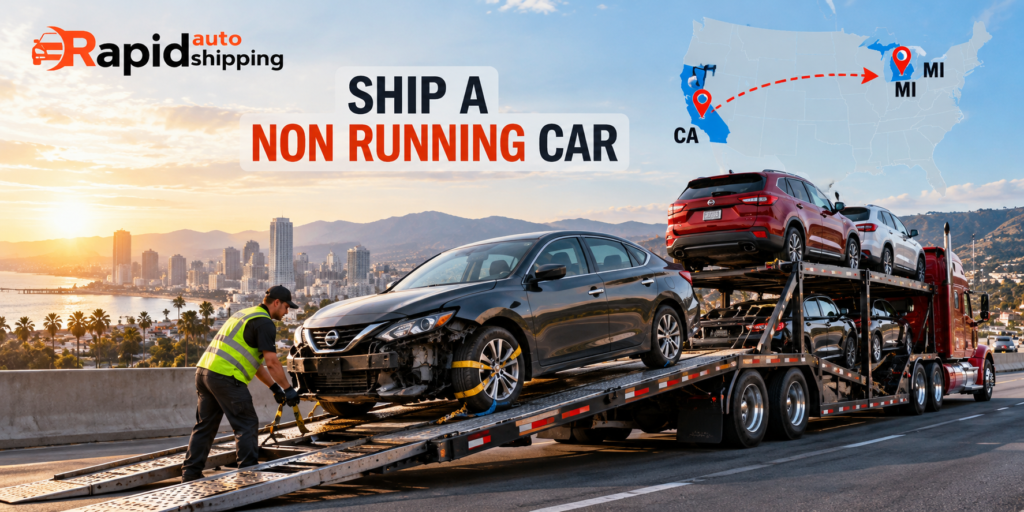
Shipping a vehicle that no longer runs can seem complicated, especially if it cannot start, steer, or move under its own power. Whether you have a damaged car, a classic vehicle waiting for restoration, a project car, or a vehicle that has been sitting unused for years, professional auto transport can help you move it without driving it yourself.
The good news is that you can ship a non running car across the United States with the right transport provider and loading equipment. The key is to understand the available shipping methods, what affects the cost, how to prepare the vehicle, and which details to share before requesting a quote.
Rapid Auto Shipping helps customers explore vehicle transportation options for different vehicle conditions and shipping needs. This guide explains how non-running car shipping works, how to manage costs, and what to consider when arranging transport.
What Does It Mean to Ship a Non-Running Car?
A non-running car is a vehicle that cannot be driven normally under its own power. It may have a dead battery, engine failure, transmission problems, accident damage, or another mechanical issue that prevents it from operating.
Not every inoperable vehicle has the same transport requirements. A car that starts but cannot be driven may be easier to load than a vehicle with locked wheels, damaged steering, or severe collision damage.
Before arranging transportation, identify the vehicle’s condition as accurately as possible. Transport companies generally need to know whether the car:
- Starts and runs but cannot be driven safely.
- Does not start because of a dead battery or mechanical failure.
- Can roll freely and steer.
- Has locked wheels or a damaged suspension.
- Has accident damage that affects loading.
- Can be placed into neutral or has a functioning parking brake.
- Has been lowered, modified, or fitted with oversized tires.
These details help a transporter determine which equipment is appropriate and whether the vehicle can be safely loaded and secured.
Can You Ship a Car That Does Not Run?
Yes. You can ship a non-running vehicle through a professional auto transport service, provided the carrier can accommodate its condition and loading requirements.
Unlike a standard vehicle shipment, an inoperable car usually cannot simply be driven onto a transport trailer. The carrier may need a winch, specialized loading equipment, a forklift, or another suitable method.
A winch can pull a vehicle onto a trailer when the car can roll and its wheels and steering allow safe movement. If the wheels are locked or the vehicle has significant structural damage, additional equipment or a specialized carrier may be necessary.
The most important consideration is choosing a transporter that knows the vehicle is inoperable before dispatch. Disclosing its condition upfront helps reduce the risk of unexpected charges, loading complications, and scheduling delays.
When requesting a quote from Rapid Auto Shipping, provide the vehicle’s year, make, model, pickup location, delivery destination, and a clear description of its mechanical condition.
How Does Non-Running Car Shipping Work?
The process is similar to regular auto transport, but the vehicle’s condition must be considered at every stage.
1. Request a Quote
Start by providing your pickup and delivery ZIP codes, vehicle details, preferred shipping dates, and contact information. Explain why the car does not run and whether it can roll, steer, and brake.
Accurate information allows the transport provider to evaluate the job and identify potential equipment requirements.
2. Choose the Right Transport Method
The appropriate method depends on the vehicle’s condition, shipping distance, budget, and pickup accessibility.
Open transport is often a cost-conscious choice when the vehicle can be safely loaded and secured. Enclosed transport may be appropriate for valuable classic cars, collector vehicles, or restoration projects that need additional protection from weather and road debris.
However, neither option automatically guarantees that a carrier can handle every inoperable vehicle. Confirm the loading arrangements before booking.
3. Confirm Pickup and Delivery Arrangements
Discuss access to both locations. A large transport truck may not be able to reach a narrow residential street, steep driveway, underground garage, or restricted-access property.
If necessary, arrange a nearby meeting point with enough room for loading and unloading. Confirm who will provide access to the vehicle and whether it must be moved from a garage or storage area before pickup.
4. Prepare the Vehicle
Remove personal belongings and loose items, secure detachable components where possible, and provide the transporter with any relevant information about the car’s condition.
If the vehicle has damaged wheels, leaking fluids, or exposed components, tell the carrier before loading. Do not attempt to start or move an unsafe vehicle just to make the process easier.
5. Inspect and Document the Car
Before loading, document the vehicle’s visible condition with clear photographs. Include existing dents, scratches, broken glass, damaged panels, and any other noticeable issues.
Review the inspection report or bill of lading, and keep a copy of the transport documents. At delivery, inspect the car again and record any new visible damage before completing the delivery paperwork, following the carrier’s claims procedure if necessary.
How Much Does It Cost to Ship a Non-Running Car?
The cost to ship a non-running car varies by distance, vehicle condition, loading requirements, transport availability, and the route’s accessibility. There is no single price that applies to every inoperable vehicle.
A car that rolls freely and can be winched onto a trailer may cost less to transport than a vehicle with locked wheels, major accident damage, or a need for specialized loading equipment.
Here are the main factors that influence your quote.
Distance and Route
Long-distance shipments generally cost more in total than short-distance shipments, but the price per mile may be lower on longer routes. Popular interstate corridors can sometimes offer more carrier options than remote pickup or delivery locations.
For example, shipping between major cities may be easier to arrange than moving a non-running vehicle from an isolated rural property with limited truck access.
Vehicle Size and Weight
Compact cars typically require less trailer space than full-size SUVs, pickup trucks, and heavy vehicles. Oversized or unusually heavy vehicles can require additional capacity and affect pricing.
Provide the correct vehicle details when requesting an estimate.
Loading Equipment
Equipment is one of the biggest differences between running and non-running car transport. A vehicle that rolls and steers may be handled with a winch-equipped carrier. Locked wheels, damaged axles, or serious collision damage may require specialized equipment or additional labor.
Explain these conditions in advance rather than waiting until pickup.
Open vs. Enclosed Transport
Open transport is generally the more economical option and is commonly used for everyday vehicles. Enclosed transport provides greater protection from weather and road debris but usually costs more.
The right choice depends on the car’s value, condition, exposure concerns, and the carrier’s ability to load it safely.
Pickup Accessibility
A transporter may need extra time or equipment if a vehicle is located in a confined garage, behind other vehicles, on a steep driveway, or in a place where a large truck cannot maneuver.
A nearby accessible pickup location may simplify the process, provided the vehicle can be moved there safely.
Seasonal Demand and Scheduling
Transport demand can change throughout the year, especially on routes associated with seasonal relocation, college moves, and winter travel. Flexible dates may give a provider more opportunities to find a suitable carrier.
When comparing quotes, ask whether the price includes non-running vehicle handling, equipment requirements, and any disclosed access-related charges. Compare the services and terms, not just the headline price.
Affordable Ways to Ship a Non-Running Car
Finding affordable non-running car transport does not mean choosing the lowest quote without checking what it covers. A realistic estimate should account for the vehicle’s condition and the equipment needed to load it.
Use these strategies to manage your shipping budget.
Be Accurate About the Vehicle’s Condition
Describe whether the engine starts, whether the vehicle rolls, whether its wheels turn, and whether the steering works. If you are unsure, explain what you know instead of guessing.
Accurate details help reduce the risk of revised pricing or a failed pickup.
Compare Multiple Quotes
Request estimates from providers that handle inoperable vehicles. Check whether each quote includes the same transport method, loading arrangements, pickup window, and service terms.
A low estimate may not be comparable if it excludes necessary equipment or assumes the vehicle is operable.
Consider Flexible Pickup Dates
If your schedule permits, ask whether a broader pickup window could improve availability or pricing. Flexibility may help match your vehicle with a suitable carrier operating along your route.
Do not assume that a flexible schedule will always lower the price; confirm the actual quote.
Choose an Accessible Pickup Point
If the vehicle is at a difficult-to-reach location, ask whether an alternative pickup point is practical. A safe, accessible area can make loading easier, but the vehicle should only be moved if doing so is safe and legally permitted.
Select the Appropriate Transport Type
For many standard vehicles, open transport is a practical starting point. Enclosed transport may be worth considering for high-value classics, rare vehicles, or cars with special protection requirements.
Discuss the vehicle’s condition with the carrier before choosing a method.
Avoid Unnecessary Delays
Make sure the vehicle is accessible, keys are available if needed, and any known mechanical issues have been disclosed. If a vehicle is at an auction, repair shop, storage facility, or salvage yard, confirm its release requirements and operating hours before scheduling pickup.
Preparation can help prevent avoidable delays and additional handling arrangements.
Open vs. Enclosed Transport for a Non-Running Car
Choosing between open and enclosed transport depends on your vehicle’s value, condition, and loading needs.
Open auto transport is often suitable for ordinary cars, vehicles being moved for repairs, and many project cars. It is generally more affordable, although the vehicle is exposed to normal outdoor conditions during transit.
Enclosed auto transport places the vehicle inside a covered trailer, offering additional protection from weather and road debris. It may be suitable for collector cars, restored vehicles, and high-value automobiles.
The key point is that an enclosed trailer is not automatically equipped to load every non-running car. Some enclosed carriers have specialized loading capabilities, while others may not accept inoperable vehicles at all.
Ask the provider to confirm that the selected carrier can accommodate the vehicle’s exact condition and explain how loading and unloading will work.
How to Prepare a Non-Running Car for Shipping
Good preparation helps the carrier plan the job and reduces avoidable complications.
Remove Personal Belongings
Remove valuables, loose objects, important documents, and personal belongings from the vehicle. Ask the transport provider about its policy for items left inside the car.
Secure Loose Parts
If the vehicle has loose trim, damaged body panels, or detached components, tell the transporter in advance. Secure parts only when it is safe to do so, and do not attempt repairs that could create additional risks.
Check for Fluid Leaks
Tell the provider about fuel, oil, coolant, brake fluid, or other leaks. Significant leaks can affect carrier acceptance and loading arrangements.
Never conceal a leak or attempt to load a vehicle that presents a safety hazard.
Provide Keys and Access Information
The carrier may need keys to unlock the steering, access the transmission selector, or prepare the vehicle for loading. Confirm the specific requirements before pickup.
If the keys are missing, disclose that fact early because it may affect the equipment needed.
Take Photos Before Pickup
Photograph the vehicle from multiple angles and document existing damage. Save the images with the pickup date and retain copies of the relevant shipping paperwork.
This record can be useful if you need to discuss the vehicle’s condition after delivery.
Tell the Carrier About Special Conditions
Mention locked wheels, missing tires, damaged suspension, a stuck parking brake, missing keys, low ground clearance, or major accident damage. These factors can affect whether a standard carrier is appropriate.
Common Mistakes to Avoid When Shipping a Non-Running Vehicle
A few common mistakes can make an already complicated shipment more difficult.
Booking a standard shipment without disclosing the problem: A quote based on a running vehicle may not cover the required loading equipment.
Assuming every carrier accepts inoperable cars: Some carriers handle only vehicles that can be driven onto a trailer. Verify acceptance before confirming the booking.
Providing incomplete pickup details: Limited access, narrow streets, locked gates, and restricted facility hours can interfere with pickup.
Ignoring the vehicle’s condition report: Existing damage should be documented before loading. Review the paperwork carefully and retain a copy.
Choosing only by price: Consider the provider’s communication, insurance arrangements, carrier suitability, and stated terms alongside cost.
Leaving the booking until the last minute: Specialized equipment and carrier availability can limit scheduling options. Start planning early when possible, particularly for unusual vehicles or remote locations.
Why Consider Rapid Auto Shipping?
When arranging non-running car transport, clear communication and accurate vehicle information are essential. You need a provider that understands the difference between a car that simply will not start and one that cannot roll, steer, or be safely loaded using standard equipment.
Rapid Auto Shipping is an option to consider when exploring vehicle transportation for an inoperable car. Before confirming a shipment, discuss your vehicle’s condition, route, preferred dates, transport method, and any special loading needs.
When requesting a quote, ask for clarity on:
- Whether the shipment is priced as non-running vehicle transport.
- Which loading equipment will be required.
- Whether the selected carrier can handle locked wheels or steering problems.
- What the quote includes and which additional charges may apply.
- The estimated pickup window and delivery expectations.
- The carrier’s insurance coverage and claims process.
- The inspection, payment, cancellation, and delivery terms.
These questions help you make an informed decision and reduce surprises during the shipping process.
Final Thoughts
You do not need a roadworthy vehicle to arrange professional auto transport. With the right carrier, equipment, and preparation, shipping a car that does not run can be a practical way to move a damaged vehicle, restoration project, classic car, or unused automobile across the United States.
The best approach is to disclose the vehicle’s condition accurately, compare suitable transport quotes, prepare the pickup location, and confirm loading requirements before booking. Focus on the complete service and its terms rather than choosing a provider based on price alone.
If you need to ship a non-running car, contact Rapid Auto Shipping to discuss your route, vehicle condition, and transport requirements and request a quote tailored to your shipment.
FAQs About Shipping a Non-Running Car
1. Can I ship a car that does not start?
Yes. Many inoperable vehicles can be transported by a carrier equipped to load them safely. The right method depends on whether the vehicle rolls, steers, and has functional wheels, as well as the reason it does not start.
2. How much does it cost to ship a non-running car?
The price depends on the shipping distance, vehicle size, route, carrier availability, loading equipment, and vehicle condition. Request a quote that specifically accounts for an inoperable vehicle rather than relying on a standard running-car estimate.
3. Is shipping a non-running car more expensive?
It can be. A non-running vehicle may require a winch, specialized equipment, extra labor, or a carrier with specific capabilities. The additional cost depends on the vehicle’s condition and the loading method required.
4. Can a non-running car be shipped on an open carrier?
Yes, if the carrier accepts inoperable vehicles and has suitable loading equipment. Open transport is often a cost-conscious option, but confirm that the carrier can safely accommodate your vehicle.
5. Should I choose enclosed transport for a non-running car?
Enclosed transport may be useful for valuable classic cars, collector vehicles, or cars that need additional protection from weather and road debris. However, you must confirm that the enclosed carrier can load and secure an inoperable vehicle.
6. Can I ship a car with locked wheels?
Possibly, but locked wheels can complicate loading and may require specialized equipment. Tell the transport provider which wheels are locked and whether the steering and brakes work before requesting a quote.
7. Do I need to provide keys for a non-running car?
Keys are often helpful or necessary for accessing the vehicle and preparing it for loading. Requirements vary by carrier and vehicle condition. If the keys are missing, inform the provider before booking.
8. Can I ship a damaged car after an accident?
Yes, some damaged vehicles can be transported, but acceptance depends on the severity of the damage and whether the vehicle can be safely loaded and secured. Disclose structural damage, leaking fluids, missing wheels, and other hazards before scheduling pickup.
9. How long does it take to ship a non-running car?
The timeline depends on the route, carrier availability, loading requirements, pickup access, weather, and other logistical factors. Finding a carrier with the appropriate equipment may take longer than arranging transport for a running vehicle. Ask for a realistic pickup window and estimated transit time.
10. Can I ship a non-running car across the country?
Yes, cross-country transport is possible when a suitable carrier is available and the vehicle can be loaded and secured safely. Share the pickup and delivery ZIP codes, vehicle details, and mechanical condition to receive a route-specific estimate.
11. Should I remove personal items before shipping?
Yes. Remove valuables and personal belongings before pickup unless the provider explicitly confirms an applicable policy. Items left inside may be restricted, may not be covered by carrier insurance, and can create safety or weight concerns.
12. How can I get an accurate quote to ship a non-running car?
Provide the vehicle’s year, make, model, pickup and delivery ZIP codes, preferred dates, and exact mechanical condition. Explain whether it rolls, steers, and has keys, and disclose any locked wheels, accident damage, or fluid leaks. Request written clarification of the transport method, equipment needs, price, and applicable terms.