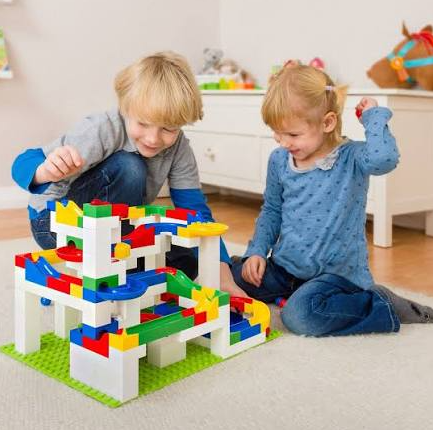
The best building toys for kids are open-ended sets, like blocks, bricks, magnetic tiles, and connectors, that let a child decide what to make instead of copying one fixed picture. When a child has to choose, test, and fix their own build, they practice creative thinking without it feeling like a lesson.
Still, picking a set can feel harder than it should. Will your child play with it for more than a day? Is it the right age level? Will it turn into a pile of loose pieces under the couch? The sections below answer those worries one by one, so you can shop with confidence.
What Makes a Building Toy Good for Creative Thinking
A good building toy has no single “right” result. If a set can become a tower, a garage, a spaceship, or a zoo on different days, it keeps asking the child new questions. If it can only become one thing, the thinking ends once the last piece clicks in.
Think of it like cooking. A boxed meal kit gets you dinner, but a stocked pantry teaches you to cook. Both have a place, and kits can be great for learning to follow steps. For creative thinking, though, the pantry wins.
Look for these traits:
- Pieces that connect in more than one way
- Enough variety in shape and size to allow surprises
- A design that works with other sets, so builds can grow
- No required instructions to have fun
Do Building Toys Really Help Kids Think Creatively?
They can help, and the reason is simple. Building puts a child in a loop of idea, attempt, wobble, and fix. Each time a tower falls, they have to figure out why and try something different. That loop is the same one adults use when they solve problems at work.
There are honest limits, though. A toy is not a guarantee, and no set will turn a child into an engineer overnight. What matters most is how the toy gets used. A child who builds alone for ten minutes and a child who builds with a curious adult asking “what if?” will get different things from the same box. The toy opens the door, and your involvement decides how far they walk through it.
Match the Set to Your Child’s Age, Not Just Their Interests
A child who loves dinosaurs can still get frustrated by a set made for older kids. Age labels exist for a reason, and they cover both skill level and safety. Always follow the age label on the box, especially for kids under three, since small pieces can be a choking hazard.
Here is a rough guide to what tends to work at different stages:
- Toddlers: Large, chunky pieces that are easy to grip, stack, and knock down. Knocking down is part of the game.
- Preschool years: Blocks and simple connectors, where kids start building houses, roads, and “secret bases.”
- Early school years: Sets with more pieces and more ways to join them, which suit longer, planned builds.
- Older kids: More complex sets with moving parts or detailed structures, if the age label allows.
These are general patterns, not rules. Every child moves at their own pace, so use the age label as your guide and your child’s mood as the tiebreaker.
Blocks, Bricks, or Magnetic Tiles: Which Should You Pick?
Start with blocks if your child is young or loves big, simple builds. Blocks are forgiving. They stack, balance, and fall over, which teaches balance and gravity in a way a picture book never could. The trade-off is that they are less precise, so detailed models are harder.
Choose interlocking bricks if your child likes detail. Bricks snap together and stay put, so kids can build walls, vehicles, and tiny rooms with doors. They take a little more finger strength, and the small size means more cleanup.
Magnetic tiles are the quick-win option. They click together with almost no effort, which makes them good for kids who get frustrated easily. The limit is that builds tend to be bigger and more geometric, so they suit shapes and structures better than tiny details.
There is no wrong answer here. Many families end up with two types, and mixing them often leads to the most inventive play.
A Rainy Afternoon Build: Three Challenges to Try
Sometimes a child has a big pile of pieces and no idea where to start. A small challenge can fix that. Try these in order, from easy to tricky:
- Build a home for a toy. Pick any stuffed animal or figure and build it a house that fits just right.
- Make the tallest tower that survives a gentle table bump. Kids quickly learn that wide bases beat fancy tops.
- Build a bridge between two books. Then test it with a small toy car. If it holds, make it longer.
The magic is in the retry. When something fails, resist the urge to fix it for them. A wobbly bridge teaches more than a perfect one.
Check These Things Before You Add to Cart
A quick check now saves a lot of frustration later. Before you buy, run through this list:
- Does the age label match your child’s age?
- Are there enough pieces to build more than one thing?
- Do the pieces feel sturdy, with no sharp edges?
- Will the set work with what your child already owns?
- Is there a simple place to store everything, like a bin or a box?
That last one sounds small, but it matters. A set with no home becomes clutter, and clutter becomes a reason to put the toy away for good. A shallow bin or a tray that stays out on a low shelf makes it easy to start building and easy to stop.
How Do You Keep Building Play Going After the First Week?
The first week is easy because the toy is new. The real test comes after, so plan for it.
Rotate sets instead of leaving everything out. A box that disappears for two weeks feels brand new when it comes back. Keep builds on display for a day or two, because kids love seeing their work respected. And join in sometimes, but let them lead. Ask questions like “What does this part do?” instead of giving instructions.
It also helps to connect building to things your child already loves. A child who likes animals can build a zoo. A child who loves trucks can build a construction site, a road, and a ramp. When the toy fits their world, they come back to it on their own.
Ready to Start Building?
Good building toys for kids do more than fill a rainy afternoon. They give children a safe place to try ideas, get things wrong, and try again. If you are ready to look at options, you can browse the building and construction collection at Rubloo Toys and see which sets fit your child’s age and style.