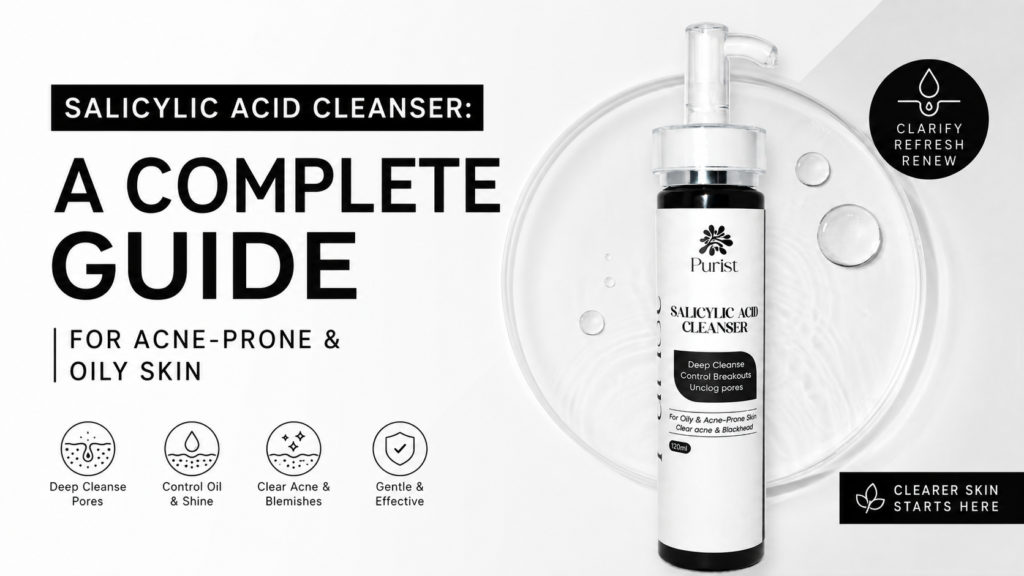
Acne, clogged pores, blackheads, and excess oil can be frustrating to manage, especially when your skin is exposed to heat, humidity, dust, and pollution. If regular face washes are not enough to keep your pores clear, a Salicylic Acid Cleanser may be worth adding to your skincare routine.
Salicylic acid is a type of beta hydroxy acid (BHA) that is particularly useful for oily and acne-prone skin. Because it is oil-soluble, it can work through the oil and buildup inside pores rather than simply cleansing the surface of the skin.
But using salicylic acid is not just about choosing the strongest product available. The concentration, supporting ingredients, frequency of use, and your individual skin type all matter.
In this guide, we’ll explain what salicylic acid does, who should use it, how to use a salicylic acid cleanser correctly, what mistakes to avoid, and how to choose one for acne-prone skin in Pakistan.
What Is Salicylic Acid?
Salicylic acid is a beta hydroxy acid commonly used in skincare products formulated for acne, oily skin, blackheads, and clogged pores.
Unlike water-soluble exfoliating acids, salicylic acid is oil-soluble. This characteristic allows it to interact with oil and buildup within pores, helping loosen dead skin cells and impurities that can contribute to congestion.
When used in a cleanser, salicylic acid is combined with cleansing agents and is applied to wet skin before being rinsed away. This makes it different from leave-on products such as salicylic acid serums, which remain on the skin for longer.
The goal is not to completely strip the skin of oil. Healthy skin still needs its natural barrier and moisture. Instead, a well-formulated cleanser should help remove excess oil and impurities while supporting a balanced skincare routine.
How Does a Salicylic Acid Cleanser Work?
Acne often develops when dead skin cells, sebum, and other debris accumulate around hair follicles. This can contribute to clogged pores, blackheads, whiteheads, and breakouts.
Salicylic acid helps exfoliate the inside of clogged pores and loosen the buildup that can contribute to congestion. Regular cleansing can therefore be useful for people whose main concerns include excess oil and blocked pores.
A salicylic acid cleanser can also provide surface cleansing by removing sweat, dirt, sunscreen, excess sebum, and everyday impurities.
However, it is important to have realistic expectations. A cleanser is one part of an acne-care routine, not a guaranteed cure for every type of acne. Persistent, painful, cystic, or severe acne may require professional assessment from a dermatologist.
Benefits of Using a Salicylic Acid Cleanser
A properly formulated salicylic acid cleanser can provide several benefits for oily and acne-prone skin.
1. Helps Clear Clogged Pores
One of the main reasons people use salicylic acid is its ability to exfoliate within oily pores. This can help reduce the buildup associated with congestion and make pores feel cleaner.
2. Helps Manage Excess Oil
Excess sebum can make the skin appear shiny and contribute to clogged pores. A cleanser containing salicylic acid can help remove excess oil during cleansing without relying on harsh scrubbing.
3. Helps Reduce Blackheads and Whiteheads
Blackheads and whiteheads are forms of comedonal acne associated with blocked hair follicles. Salicylic acid is commonly used in acne-focused skincare because of its pore-clearing exfoliating properties.
4. Supports Smoother-Looking Skin
The removal of accumulated dead skin cells can help improve the appearance of uneven texture. With consistent use, skin may feel smoother and cleaner.
5. Helps Keep Acne-Prone Skin Clean
Sweat, oil, pollution, sunscreen, and other daily buildup can accumulate on the skin. Cleansing effectively at the end of the day can help maintain cleaner skin and reduce unnecessary pore congestion.
Salicylic Acid Cleanser vs Regular Face Wash
A regular cleanser is primarily designed to remove substances such as dirt, sweat, sunscreen, makeup, and excess oil from the skin.
A salicylic acid cleanser adds an exfoliating ingredient to that cleansing step.
This makes the two products useful for different needs.
If your skin is generally balanced and you rarely experience clogged pores, a basic gentle cleanser may be enough.
If you regularly experience oily skin, blackheads, whiteheads, or pore congestion, a salicylic acid cleanser may provide additional benefits.
The key is choosing a formulation that cleans effectively without leaving your skin feeling excessively tight, dry, or irritated.
Who Should Use a Salicylic Acid Cleanser?
Salicylic acid cleansers are particularly relevant for people with:
- Oily skin
- Acne-prone skin
- Frequent blackheads
- Whiteheads
- Clogged or congested pores
- Excess shine
- Uneven skin texture
It may not be the best choice to use aggressively if your skin is already very dry, irritated, peeling, or sensitive.
If you have sensitive skin, introduce the product gradually and pay attention to how your skin responds.
Salicylic Acid Cleanser for Oily Skin
Oily skin produces more sebum, which can contribute to shine and pore congestion. This is one reason salicylic acid is frequently included in routines designed for oily skin.
However, there is a common misconception that oily skin needs to be stripped completely.
It doesn’t.
Over-cleansing or using overly harsh products can leave the skin uncomfortable and may disrupt the skin barrier. Instead of trying to remove every trace of oil, the objective should be effective cleansing while maintaining skin comfort.
A balanced routine can include a salicylic acid cleanser, lightweight moisturizer, and daily sunscreen.
Salicylic Acid Cleanser for Acne-Prone Skin
Acne is not caused by one single factor, so no cleanser can address every possible cause.
Salicylic acid is particularly useful when clogged pores and excess oil are major concerns. It can help exfoliate dead skin cells and reduce the buildup that contributes to pore congestion.
For acne-prone skin, consistency is generally more useful than constantly switching between strong products.
A simple routine can be easier to maintain:
Cleanser → Moisturizer → Sunscreen in the morning
At night:
Cleanser → Treatment if needed → Moisturizer
If acne remains persistent, painful, or leaves significant marks or scars, consider consulting a qualified dermatologist rather than continuously increasing the strength or frequency of exfoliating products.
How to Use a Salicylic Acid Cleanser Correctly
Using the product correctly is just as important as choosing the right cleanser.
Step 1: Wet Your Face
Use lukewarm water to wet your face. Very hot water can leave some skin types feeling dry and uncomfortable.
Step 2: Apply a Small Amount
Use an appropriate amount of cleanser and gently distribute it across your face.
There is no need to aggressively scrub the skin. Salicylic acid provides chemical exfoliation, so harsh physical scrubbing is unnecessary.
Step 3: Massage Gently
Use clean fingertips and gently massage the cleanser over the face, paying attention to areas where you commonly experience oiliness or congestion.
Avoid getting the product into your eyes.
Step 4: Rinse Thoroughly
Rinse your face with lukewarm water and remove all cleanser residue.
Step 5: Pat Dry
Use a clean, soft towel and gently pat the skin dry instead of rubbing aggressively.
Step 6: Moisturize
Finish with a suitable moisturizer to help maintain hydration and support the skin barrier.
During the daytime, apply broad-spectrum sunscreen as the final skincare step.
How Often Should You Use a Salicylic Acid Cleanser?
There is no single frequency that works for everyone.
Your skin type, product formulation, and overall skincare routine all matter.
If your skin is oily and accustomed to salicylic acid, you may be able to use the cleanser more frequently.
If you have sensitive or dry skin, starting several times per week can be a more cautious approach.
Pay attention to signs such as:
- Excessive dryness
- Burning
- Persistent redness
- Peeling
- Increased irritation
- Uncomfortable tightness
If these occur, reduce usage or stop the product and reassess your routine.
More frequent use does not necessarily mean faster results.
How Long Does Salicylic Acid Take to Work?
Skincare ingredients rarely produce meaningful results overnight.
You may notice that your skin feels cleaner or less oily after cleansing, but improvements in clogged pores and acne generally require consistent use over time.
Results can vary depending on your acne type, skin condition, routine, and other products you use.
Avoid changing your entire skincare routine every few days because you do not see immediate results. Give a product reasonable time while monitoring how your skin responds.
If your acne is worsening or becoming painful, professional advice is more appropriate than simply increasing product usage.
What Ingredients Work Well With Salicylic Acid?
Salicylic acid does not have to be used alone.
A practical acne-focused skincare routine may also include ingredients such as:
Niacinamide
Niacinamide is widely used in skincare products formulated for oily and blemish-prone skin. It can complement a routine focused on maintaining a balanced-looking complexion.
Hyaluronic Acid
Hyaluronic acid is a hydrating ingredient that can help support skin hydration, particularly when your routine includes exfoliating products.
Ceramides
Ceramides are naturally occurring lipids associated with the skin barrier. Moisturizers containing ceramides can be useful when your routine includes active ingredients.
The important point is not to overload your routine with multiple aggressive actives simply because each ingredient sounds beneficial.
What Should You Avoid Mixing With Salicylic Acid?
Using several strong exfoliating or acne-focused ingredients at the same time can increase the likelihood of irritation.
Be particularly cautious when combining salicylic acid with other exfoliating acids, strong retinoid products, or abrasive physical scrubs.
This does not mean these ingredients can never be part of the same overall skincare routine. It means they should be introduced thoughtfully rather than layered together without considering your skin’s tolerance.
A simple routine that your skin can tolerate is usually better than an unnecessarily complicated routine full of active ingredients.
Common Mistakes When Using Salicylic Acid Cleanser
Using Too Much Product
More cleanser does not automatically mean better cleansing. Use enough to cover the face comfortably.
Scrubbing Too Hard
Acne-prone skin does not need aggressive physical scrubbing. Excessive friction can increase irritation.
Washing Your Face Too Frequently
Repeated cleansing throughout the day can leave the skin feeling dry and irritated. Cleanse according to your skin’s needs and the product instructions.
Skipping Moisturizer
People with oily skin sometimes avoid moisturizer because they think it will make their skin oilier. A lightweight, non-comedogenic moisturizer can still be an important part of an acne-friendly routine.
Ignoring Sunscreen
Daily sun protection is an important part of maintaining healthy-looking skin, particularly when your routine includes exfoliating ingredients.
How to Choose the Best Salicylic Acid Cleanser in Pakistan
When shopping for a salicylic acid cleanser in Pakistan, don’t choose a product simply because its packaging says “acne” or “deep cleansing.”
Consider the complete formulation.
Look for:
- Clearly stated salicylic acid concentration
- A formulation appropriate for your skin type
- Gentle cleansing agents
- Hydrating or barrier-supporting ingredients where appropriate
- Clear ingredient information
- Proper manufacturing and product information
- A trustworthy brand and seller
Price is not the only indicator of quality. A more expensive cleanser is not automatically better, and an inexpensive cleanser is not necessarily poor quality.
The formulation and how your skin responds matter more.
Why Climate Matters for Skincare in Pakistan
Pakistan’s different regions experience varying combinations of heat, humidity, dryness, dust, and pollution.
During hot weather, sweat and increased oiliness can make the skin feel greasy and contribute to congestion. In other seasons or environments, dry air can make the skin more vulnerable to dehydration.
That means your skincare routine may need to change with the season.
A cleanser that feels comfortable during hot, humid weather may feel more drying during colder or drier months.
Instead of following a routine blindly throughout the year, pay attention to your skin’s condition and adjust frequency when necessary.
Can Salicylic Acid Cleanser Remove Acne Scars?
This is an important distinction.
Salicylic acid is mainly useful for managing concerns associated with acne and clogged pores. It should not be considered a guaranteed treatment for established acne scars.
Post-acne marks, pigmentation, and true acne scars are different concerns and may require different approaches.
If you have persistent acne scars, indented scars, or significant pigmentation, speak with a dermatologist about appropriate treatment options.
Preventing new breakouts is also an important part of reducing the likelihood of developing additional post-acne marks.
Is Salicylic Acid Cleanser Suitable for Sensitive Skin?
Sensitive skin can sometimes tolerate salicylic acid, but it requires a more cautious approach.
Start slowly rather than immediately using the cleanser multiple times a day.
Avoid combining it with several other exfoliating products at the beginning. Keep the rest of your routine simple and use a moisturizer that your skin tolerates well.
If you experience persistent burning, swelling, severe redness, or significant irritation, discontinue use and seek professional advice if needed.
Frequently Asked Questions
Is salicylic acid cleanser good for acne?
It can be particularly useful for acne-prone skin where clogged pores, blackheads, whiteheads, and excess oil are major concerns. However, different types of acne may require different treatments.
Can I use a salicylic acid cleanser every day?
Some people can use it daily, while others may need to use it less frequently. Start according to the product directions and your skin’s tolerance.
Is salicylic acid good for oily skin?
Yes. Salicylic acid is commonly used in products designed for oily and congested skin because of its oil-soluble exfoliating properties.
Can salicylic acid remove blackheads?
It can help loosen and clear pore buildup associated with blackheads, particularly when used consistently as part of an appropriate skincare routine.
Should I moisturize after using salicylic acid cleanser?
Yes. A suitable moisturizer can help maintain hydration and support the skin barrier after cleansing.
Can I use salicylic acid cleanser in the morning?
Yes, if your skin tolerates it and the product directions allow it. If used during the day, follow your skincare routine with sunscreen.
Is salicylic acid cleanser suitable for teenagers?
Salicylic acid is commonly used in acne-focused skincare, including products intended for younger people. However, teenagers with persistent or severe acne should consider professional dermatological advice rather than relying exclusively on cosmetic products.
Is a Salicylic Acid Cleanser Right for Your Skin?
A salicylic acid cleanser can be a useful addition to a skincare routine when oily skin, clogged pores, blackheads, and acne are ongoing concerns.
Its main advantage is that salicylic acid can exfoliate within oily pores while the cleanser removes surface oil, sweat, sunscreen, and everyday impurities.
But effective skincare is not about using the strongest active ingredient as often as possible. The better approach is to choose a suitable formulation, introduce it gradually, moisturize consistently, protect your skin from the sun, and give your routine enough time to work.
For shoppers in Pakistan, the best salicylic acid cleanser is not necessarily the one making the biggest claims. Look at the ingredients, formulation, brand transparency, and whether the product suits your skin’s actual needs.
Clearer-looking skin starts with a routine you can use consistently—not a cabinet full of products.
Read More: Wikinewsportal