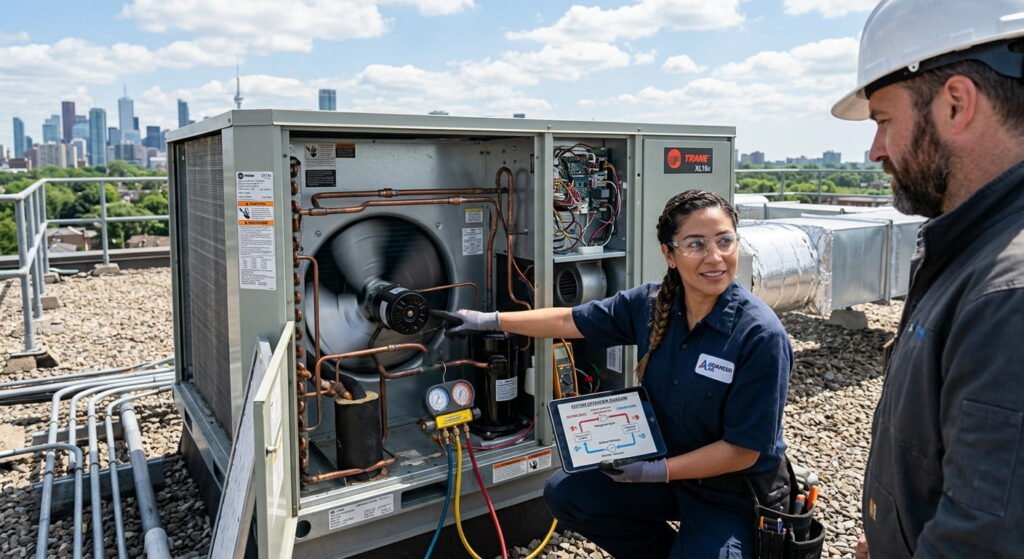
HVAC systems play an important role in keeping homes comfortable throughout the year. Hvac Equipment includes the heating, cooling, ventilation, and air quality components that work together to control indoor conditions.
For many homeowners, HVAC equipment can seem complicated because it includes several parts that perform different jobs. However, the basic idea is simple: the system moves air, changes its temperature when needed, and helps maintain a comfortable indoor environment. Understanding how these components work can help homeowners recognize problems, make better maintenance decisions, and know when professional service may be needed.
What Does HVAC Equipment Mean?
HVAC stands for heating, ventilation, and air conditioning. HVAC equipment refers to the machines and components used to perform these three main functions.
Heating equipment raises the indoor temperature when the weather becomes cold. Cooling equipment removes heat from indoor air when temperatures rise. Ventilation equipment helps move air through the building and can bring in outdoor air while removing stale air.
Depending on the system, HVAC equipment may also help control humidity and improve indoor air quality through filters and other air-cleaning components.
A complete HVAC system can include several pieces, such as:
- Furnaces
- Air conditioners
- Heat pumps
- Air handlers
- Thermostats
- Blower fans
- Evaporator coils
- Condenser coils
- Ductwork
- Air filters
- Ventilation equipment
These components are designed to work together rather than operate as completely separate machines.
How Does HVAC Equipment Work?
HVAC equipment works by controlling the movement and condition of indoor air. The process starts with the thermostat, which monitors the temperature inside the home.
When the indoor temperature moves away from the selected setting, the thermostat signals the HVAC system to begin heating or cooling.
During cooling, the system removes heat from indoor air and transfers that heat outside. During heating, the system adds heat to the indoor air before distributing it throughout the home.
The blower fan then moves conditioned air through the ductwork and into different rooms. Once the air reaches the desired spaces, return vents pull air back toward the system so the process can continue.
This creates a continuous cycle that helps maintain a stable indoor temperature.
How Does HVAC Equipment Cool a Home?
An air conditioner mainly works by removing heat rather than simply creating cold air.
When the thermostat calls for cooling, warm indoor air is pulled into the HVAC system. The air passes over a cold evaporator coil, where heat is absorbed by the refrigerant inside the coil.
The refrigerant carries that heat toward the outdoor unit. There, the compressor and condenser coil help release the heat into the outdoor air.
The cooled indoor air is then pushed through the home’s ductwork and delivered through supply vents.
This process continues until the thermostat detects that the desired indoor temperature has been reached.
What Role Does Refrigerant Play?
Refrigerant is an important part of the cooling process. It moves through the system and absorbs heat from indoor air before carrying that heat outside.
The refrigerant changes between liquid and gas as it moves through different parts of the system. These changes allow the HVAC system to transfer heat efficiently.
Because refrigerant is part of a sealed system, leaks or other refrigerant problems usually require professional inspection and service.
How Does HVAC Equipment Heat a Home?
Heating equipment works differently depending on the type of system installed.
A furnace, for example, creates heat and uses a blower to distribute warm air through the ductwork. Gas furnaces burn fuel to create heat, while electric furnaces use electrical heating elements.
Heat pumps operate differently. Instead of creating heat in the same way as a furnace, a heat pump transfers heat from one location to another. In heating mode, it can move available heat from outdoor air into the home.
The thermostat controls when heating is needed. Once the indoor temperature reaches the selected setting, the system stops heating until another heating cycle is required.
What Are the Main Types of HVAC Equipment?
Different homes and buildings require different HVAC solutions. System selection can depend on building size, climate, energy needs, available space, and the desired level of comfort.
Furnaces
Furnaces are commonly used for heating homes. They heat air and use a blower fan to distribute that warm air through the home’s ductwork.
Gas and electric furnaces are two common options. The right choice depends on the home’s setup and energy requirements.
Air Conditioners
Air conditioners are designed to cool indoor spaces by removing heat from indoor air.
A central air conditioner usually has an indoor component and an outdoor component connected by refrigerant lines. The system works with the blower and ductwork to distribute cooled air throughout the home.
Heat Pumps
Heat pumps can provide both heating and cooling. They transfer heat instead of relying only on fuel or electrical resistance to create heating.
During cooling mode, a heat pump removes heat from the home. During heating mode, it reverses the process and moves heat indoors.
This makes heat pumps a versatile option for many homes.
Air Handlers
An air handler is responsible for moving and conditioning air inside a building. It commonly contains a blower, filter area, and other components used to distribute conditioned air.
Air handlers are often paired with air conditioners or heat pumps.
Thermostats
The thermostat acts as the control center for an HVAC system. It measures indoor temperature and tells the system when heating or cooling is needed.
Modern thermostats may provide programmable schedules, remote control, and other features designed to improve convenience and energy management.
Ductwork
Ductwork provides pathways for conditioned air to travel between the HVAC system and different areas of the home.
Supply ducts deliver conditioned air, while return ducts carry air back to the HVAC system.
Poorly designed, damaged, or leaking ductwork can reduce system performance and make it harder to maintain consistent temperatures.
How Does Ventilation Work in HVAC Systems?
Ventilation is the part of HVAC that focuses on air movement and air exchange.
Indoor air can collect odors, moisture, dust, and other unwanted particles. Ventilation helps manage indoor air by moving air through the building and, depending on the system, introducing outdoor air.
Not every HVAC system provides the same level of mechanical ventilation. Some residential systems mainly recirculate indoor air, while more advanced setups include dedicated ventilation equipment.
Good ventilation can support a healthier and more comfortable indoor environment when the system is properly designed and maintained.
Why Are HVAC Filters Important?
Air filters are simple components, but they play an important role in HVAC operation.
As air moves through the system, the filter can capture airborne particles such as dust and other debris. This helps keep some contaminants from continuing through the system.
A dirty filter can also restrict airflow. When airflow becomes restricted, the HVAC system may need to work harder to move air throughout the home.
For that reason, filters should be checked regularly and replaced or cleaned according to the filter manufacturer’s recommendations.
The correct filter type also matters. A filter should be suitable for the HVAC system so that it provides filtration without unnecessarily restricting airflow.
What Components Work Together in an HVAC System?
An HVAC system is more than a single machine. Several components must work together for reliable performance.
The thermostat starts the process by detecting indoor temperature. The heating or cooling equipment then operates to change the air temperature.
The blower moves air through the system. Coils transfer heat during the cooling process, while refrigerant lines connect important components in systems that use refrigerant.
Ductwork distributes the conditioned air throughout the building, while filters help capture airborne particles.
If one component develops a problem, the performance of the entire system can be affected.
How Does HVAC Equipment Affect Energy Use?
HVAC equipment can have a major effect on household energy use because heating and cooling systems may operate for long periods throughout the year.
Several factors can influence how efficiently an HVAC system operates. Equipment condition, system size, ductwork, airflow, insulation, thermostat settings, and maintenance can all make a difference.
An oversized system is not automatically better. A system needs to be properly matched to the building’s heating and cooling requirements.
Regular maintenance can also help identify issues that may cause the equipment to operate inefficiently.
Homeowners can support efficient operation by keeping filters clean, maintaining clear airflow around outdoor equipment, using appropriate thermostat settings, and scheduling professional inspections when necessary.
What Are the Signs of HVAC Equipment Problems?
HVAC problems do not always start with a complete system failure. Small changes in performance can sometimes indicate that the equipment needs attention.
Common warning signs include:
- Uneven temperatures between rooms
- Weak airflow from supply vents
- Unusual noises
- Unusual odors
- Frequent system cycling
- Unexpected increases in energy use
- Poor cooling or heating performance
- Water around indoor equipment
- A thermostat that does not maintain the selected temperature
Some of these problems may have simple causes, while others can indicate mechanical or electrical issues.
If an HVAC system stops working properly, professional diagnosis is generally safer than attempting complex repairs without the right training.
How Can Homeowners Maintain HVAC Equipment?
Regular maintenance can help an HVAC system operate more reliably and may help identify problems before they become more expensive.
Homeowners can begin with simple maintenance tasks. Filters should be checked regularly, outdoor units should be kept clear of leaves and debris, and supply and return vents should remain unobstructed.
Professional maintenance can go further by checking system components, electrical connections, airflow, coils, refrigerant-related components, and overall system operation.
The ideal maintenance schedule depends on the equipment and how frequently it operates. Older systems or systems that operate heavily may require closer attention.
When Should HVAC Equipment Be Replaced?
Repair is not always the best long-term option, especially when equipment becomes older or develops repeated problems.
Replacement may be worth considering when the system requires frequent repairs, struggles to maintain comfortable temperatures, produces unusual noises, or has steadily increasing operating costs.
A professional HVAC evaluation can help determine whether repair or replacement makes more sense.
When replacing equipment, homeowners should consider more than the purchase price. System size, efficiency, installation quality, expected operating conditions, maintenance needs, and long-term comfort should also be considered.
The AC Outlet can help homeowners understand their HVAC options and determine what type of equipment may fit their property’s needs.
Why Is Professional HVAC Service Important?
HVAC equipment contains electrical, mechanical, and, in some systems, refrigerant components. Incorrect repairs or installation can create safety risks and may cause additional equipment damage.
Professional HVAC technicians have the tools and training needed to diagnose system problems and perform specialized work.
Professional service can also help identify issues that may not be obvious to a homeowner, such as airflow problems, failing components, incorrect system operation, or developing equipment faults.
Proper installation is equally important. Even high-quality equipment may not perform as expected if it is incorrectly sized or installed.
What Should Homeowners Know Before Choosing HVAC Equipment?
Choosing HVAC equipment should begin with the home’s actual heating and cooling requirements.
Homeowners should consider the size and layout of the property, existing ductwork, insulation, climate, equipment condition, energy goals, and available budget.
It is also important to avoid choosing equipment based only on its advertised capacity or price. A system that is too large or too small may not provide the expected comfort or efficiency.
A professional evaluation can help determine which system configuration is appropriate for the property.
The AC Outlet can provide guidance on HVAC equipment options while helping homeowners understand the differences between available heating and cooling systems.
Conclusion: What Does HVAC Equipment Really Do?
HVAC equipment brings together heating, cooling, ventilation, air movement, and temperature control to create a more comfortable indoor environment. While the equipment can include many different components, the basic process is straightforward: the system conditions air and moves it where it is needed.
Furnaces provide heat, air conditioners remove heat, heat pumps can provide both heating and cooling, ventilation equipment manages air exchange, and ductwork distributes conditioned air throughout the building.
For homeowners, understanding these basics can make it easier to recognize performance changes, maintain equipment, and make informed decisions about repairs or replacement. The AC Outlet can serve as a professional resource for homeowners who need help understanding their HVAC equipment and keeping their indoor environment comfortable throughout the year.
Here, you can find more articles.