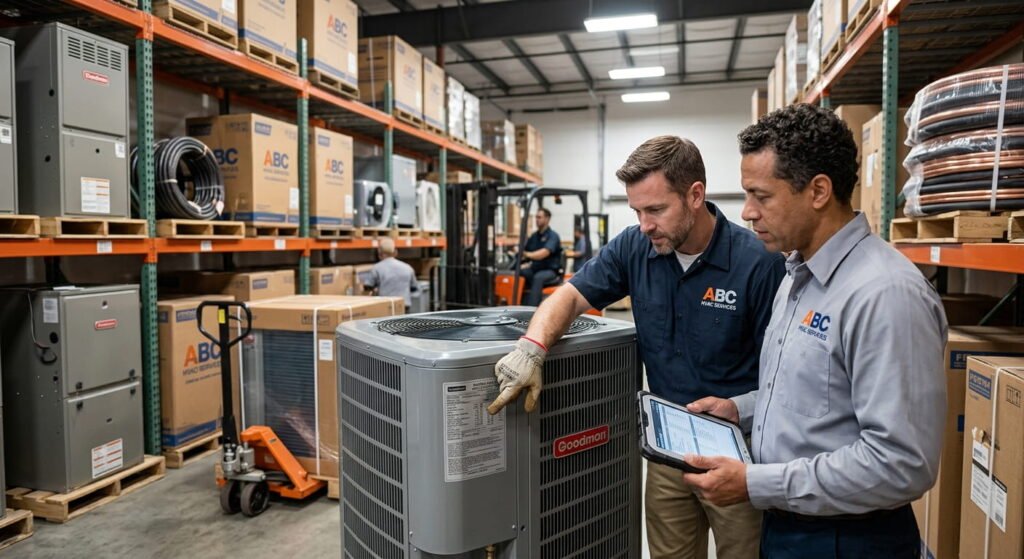
Choosing the right HVAC products can affect installation quality, project costs, and customer satisfaction.
Wholesale HVAC Equipment can help contractors, builders, property managers, and other buyers access reliable systems at competitive prices while meeting specific project needs.
However, buying HVAC equipment in bulk is not only about finding the lowest price. The equipment needs to match the project, perform efficiently, come with suitable warranty coverage, and remain easy to service over time. A dependable supplier can also make a major difference by providing product information, technical support, inventory, and timely delivery.
For buyers comparing different HVAC options, knowing what to check before placing an order can prevent expensive mistakes. The following guide explains the most important factors to consider when choosing wholesale HVAC equipment.
Why Does the Quality of Wholesale HVAC Equipment Matter?
HVAC equipment is a major part of any heating and cooling project. Poor-quality equipment may lead to frequent repairs, higher energy use, installation problems, and unhappy customers. Reliable equipment, on the other hand, can provide consistent performance and make long-term maintenance easier.
Quality becomes even more important when contractors purchase multiple systems at once. A problem with one unit may become a much larger issue when the same equipment is used across several projects.
Before making a purchase, buyers should look beyond the product price and review the equipment’s specifications, manufacturer reputation, efficiency, warranty, compatibility, and availability of replacement parts.
What Should Buyers Check Before Purchasing HVAC Equipment?
There are several important areas buyers should review before ordering HVAC equipment. Each factor can affect the total value of the purchase.
Equipment Size and Capacity
The equipment needs to match the heating and cooling requirements of the building. Buying a system that is too small can make it work harder to maintain the desired temperature. An oversized system may also cycle too often and provide less consistent comfort.
Contractors should consider the building size, insulation, windows, layout, climate, occupancy, and other factors before selecting equipment capacity.
The correct size is not always the largest or most powerful option. The goal is to find equipment that can properly meet the building’s actual heating and cooling load.
Energy Efficiency Ratings
Energy efficiency should be another major consideration. Efficient HVAC systems can help reduce operating costs and provide better long-term value for customers.
Depending on the type of equipment, buyers may see ratings such as SEER2, EER2, HSPF2, or AFUE. These ratings help explain how efficiently a system operates.
Contractors should compare efficiency ratings between similar models rather than simply choosing the product with the lowest purchase price. A slightly higher upfront cost may make sense when the equipment provides better efficiency and lower operating costs over its useful life.
System Compatibility
Every HVAC component needs to work correctly with the rest of the system. This includes outdoor units, indoor coils, furnaces, air handlers, thermostats, controls, and other components.
A low-cost component is not necessarily a good deal if it does not properly match the rest of the system.
Before ordering, buyers should confirm model numbers, specifications, electrical requirements, refrigerant requirements, and approved equipment combinations. This step can help reduce installation problems and unnecessary returns.
How Important Is Equipment Reliability?
Reliability is one of the most important factors when purchasing wholesale HVAC equipment. Contractors depend on equipment to work properly after installation because equipment problems can result in service calls, delays, warranty claims, and customer complaints.
Reliable HVAC equipment should have a strong track record and clear technical information. Buyers should also consider the availability of replacement parts and service support.
Look at the Manufacturer’s Reputation
A well-established manufacturer may provide better documentation, product support, warranty services, and replacement parts. This does not mean that every product from a major manufacturer is automatically the best choice, but the manufacturer’s track record should be considered.
Buyers can review product information, warranty policies, technical documents, and feedback from HVAC professionals before making a large purchase.
Check Replacement Part Availability
Even reliable HVAC equipment may eventually require maintenance or replacement parts. A system becomes harder to maintain when common parts are difficult to find.
Before purchasing in bulk, contractors should check whether important parts such as motors, control boards, filters, capacitors, thermostats, and other components are readily available.
Easy access to replacement parts can help reduce downtime and make future service work more efficient.
What Warranty Should Wholesale HVAC Equipment Have?
Warranty coverage is another important part of the buying decision. A warranty can provide protection when a covered component fails because of a manufacturing issue.
However, buyers should not assume that every warranty works in the same way. Coverage, registration requirements, installation requirements, exclusions, and claim procedures can vary between manufacturers and products.
Read the Warranty Terms Carefully
Before placing an order, buyers should understand:
- What parts are covered
- How long the coverage lasts
- Whether professional installation is required
- Whether product registration is necessary
- What labor costs are covered, if any
- How warranty claims are submitted
- Where replacement parts are obtained
Clear warranty information can help contractors avoid problems later.
Consider Warranty Support
A warranty is only useful when the claim process is practical and supported. Buyers should consider whether the supplier can help with warranty questions and whether replacement components can be obtained without unnecessary delays.
A supplier that provides clear answers and reliable support can be more valuable than one offering a slightly lower equipment price.
How Important Is Supplier Inventory?
Inventory can have a direct effect on project schedules. Contractors often work with strict installation deadlines, and equipment delays can cause problems for both the contractor and the customer.
A supplier may offer competitive pricing, but that advantage becomes less useful if the required equipment is consistently out of stock.
Check Product Availability
Before placing a bulk order, buyers should ask about current inventory and expected restocking dates. It is also useful to understand which equipment models and sizes are normally kept in stock.
For contractors handling several projects, consistent inventory can make project planning much easier.
Consider Seasonal Demand
HVAC demand can increase during periods of extreme heat or cold. During busy seasons, popular equipment may become harder to obtain.
Contractors can reduce the risk of delays by planning purchases early and maintaining relationships with suppliers that have dependable inventory.
Does Delivery Matter When Buying HVAC Equipment?
Delivery is an important part of wholesale purchasing. Large HVAC systems can be difficult and expensive to transport, and damaged equipment can create additional delays.
A reliable supplier should provide clear information about delivery options, expected timelines, shipping costs, and equipment handling.
Inspect Equipment on Delivery
When equipment arrives, buyers should inspect the packaging and products for visible damage. Model numbers and quantities should also be checked against the original order.
If equipment appears damaged or the wrong products were delivered, the issue should be reported as soon as possible.
Good delivery procedures can prevent small problems from becoming major project delays.
Should Buyers Focus Only on Wholesale HVAC Equipment Price?
Price matters, but it should not be the only deciding factor. The cheapest equipment may become more expensive if it creates installation problems, consumes more energy, requires frequent repairs, or has poor parts availability.
A better approach is to compare the total value of each option.
Compare Total Cost
The total cost may include:
- Equipment purchase price
- Shipping and delivery
- Installation requirements
- Accessories and controls
- Energy consumption
- Maintenance
- Replacement parts
- Warranty limitations
- Expected service life
A product with a slightly higher purchase price may provide better value when it offers stronger efficiency, reliability, and support.
Compare Multiple Suppliers
Contractors should avoid choosing a supplier based on one quote alone. Comparing several suppliers can help reveal differences in pricing, availability, warranty support, delivery, and product selection.
The best supplier is not always the one with the lowest price. It is often the supplier that provides the right combination of equipment quality, availability, support, and value.
What Types of HVAC Equipment Should Buyers Consider?
The right equipment depends on the project and building requirements. Wholesale HVAC suppliers may provide many different types of systems and components.
Air Conditioners
Air conditioners are commonly used for cooling residential and commercial spaces. Buyers should consider capacity, efficiency, compatibility, refrigerant requirements, and installation needs.
Heat Pumps
Heat pumps can provide heating and cooling from one system. When selecting a heat pump, buyers should review heating and cooling performance, efficiency ratings, operating conditions, and compatibility with other system components.
Furnaces
Furnaces are commonly used for heating applications. Buyers should compare heating capacity, efficiency, fuel type, controls, and installation requirements.
Air Handlers and Coils
Air handlers and indoor coils need to work correctly with the selected outdoor equipment. Matching components correctly can help the system achieve its expected performance.
Thermostats and Controls
Controls can affect comfort, convenience, and system operation. Buyers should confirm that thermostats and control systems are compatible with the HVAC equipment being installed.
What Should Buyers Ask a Wholesale HVAC Supplier?
Asking the right questions before purchasing can help buyers make better decisions. A supplier should be able to provide clear information about the products it sells.
Useful questions include:
Is the Equipment in Stock?
Knowing whether products are available can help contractors plan installations and avoid unnecessary delays.
What Are the Warranty Terms?
Buyers should understand what is covered, how long coverage lasts, and what requirements apply to warranty claims.
Are Replacement Parts Available?
A supplier should be able to explain how customers can obtain common replacement parts and how quickly they are normally available.
Can the Supplier Provide Technical Information?
Product specifications, installation documentation, compatibility information, and technical support can be valuable when selecting equipment for a specific project.
What Are the Delivery Options?
Buyers should know how equipment will be delivered, how long delivery normally takes, and what happens if equipment arrives damaged.
How Can The AC Outlet Help With HVAC Equipment?
Finding a reliable source for HVAC equipment can make purchasing easier for contractors and other professional buyers. The AC Outlet provides access to HVAC products while helping buyers compare equipment based on project requirements, product specifications, and overall value.
Instead of focusing only on the initial price, buyers can consider the complete purchasing process, including equipment selection, availability, product information, warranty considerations, and long-term support.
For contractors managing multiple projects, having a dependable HVAC equipment source can also make ordering and project planning more efficient.
What Are the Most Common Mistakes When Buying HVAC Equipment?
Buyers can avoid many problems by recognizing common purchasing mistakes before placing an order.
Choosing the Cheapest Option
The lowest price does not always provide the best value. Equipment quality, efficiency, warranty, and support should also be considered.
Ignoring Compatibility
Buying separate components without confirming compatibility can create installation and performance issues.
Forgetting About Parts
Equipment that is difficult to service can become a problem later. Replacement part availability should be considered before purchasing.
Ordering Without Checking Inventory
A contractor may plan an installation around a product that is not actually available. Confirming inventory before ordering can prevent scheduling problems.
Not Reviewing Warranty Requirements
A buyer who does not understand warranty conditions may face unexpected costs when a problem occurs. Warranty terms should always be reviewed before purchase.
What Makes a Wholesale HVAC Equipment Purchase a Smart Choice?
A smart HVAC equipment purchase balances immediate cost with long-term performance. Contractors and other buyers should consider whether the equipment fits the project, performs efficiently, can be serviced easily, and has dependable warranty support.
The supplier also matters. A reliable supplier should offer clear product information, consistent inventory, reasonable delivery options, and useful customer support.
When these factors are considered together, buyers can make decisions based on value rather than price alone.
Conclusion: What Should Buyers Look for in Wholesale HVAC Equipment?
Choosing Wholesale HVAC Equipment requires more than comparing prices. Contractors, builders, and property managers should look at equipment quality, capacity, energy efficiency, compatibility, warranty coverage, replacement parts, inventory, delivery, and supplier support.
The AC Outlet can serve as a valuable resource for buyers who want to evaluate HVAC equipment based on both immediate project needs and long-term value. A careful purchasing process can help reduce installation issues, control project costs, and support better customer outcomes.
Ultimately, the best wholesale HVAC equipment is equipment that matches the project, performs reliably, remains serviceable, and provides strong value over time. Buyers who evaluate the complete package rather than focusing only on the initial price are better positioned to make confident and practical HVAC purchasing decisions.
Here, you can find more articles.