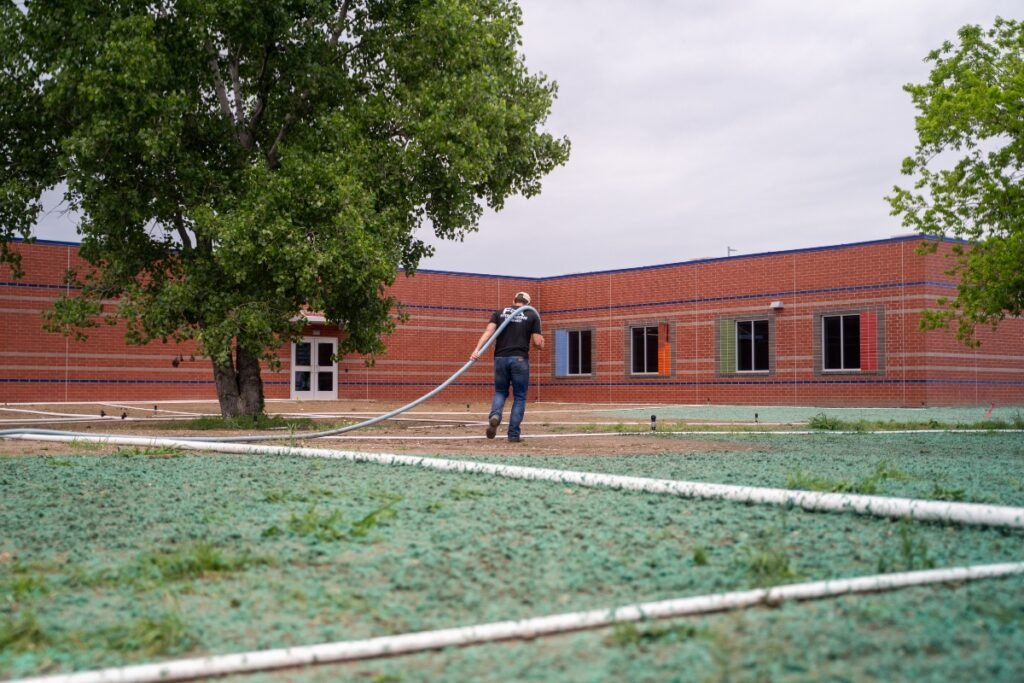
Commercial hydroseeding services
Choosing the right contractor for a large landscaping or erosion-control project can have a major impact on the final results. Hydroseeding may appear straightforward, but successful turf establishment depends on soil preparation, seed selection, slurry formulation, application technique, weather, irrigation, and follow-up care. A contractor with the right experience can help identify potential problems before work begins and develop a plan suited to the property. On the other hand, selecting a provider based only on the lowest estimate can lead to uneven growth, additional work, and unexpected expenses. Asking detailed questions before signing a contract gives property owners and developers a better understanding of what they are purchasing.
These projects can involve significantly more planning than a typical residential lawn because of their size, deadlines, terrain, and performance requirements. Commercial hydroseeding services are often used for construction sites, commercial developments, road projects, parks, industrial properties, large lawns, slopes, and other expansive areas. A qualified contractor should be able to explain every stage of the process in practical terms. They should also provide realistic expectations rather than promising results that depend entirely on uncontrollable weather conditions. The following five questions can help you evaluate potential contractors and choose a provider with appropriate expertise.
1. What Commercial Hydroseeding Experience Do You Have?
The first question should focus on the contractor’s experience with projects similar to yours. A company that primarily handles small residential lawns may not have the equipment, workforce, scheduling capabilities, or project-management experience needed for a large commercial site. Ask how many commercial projects the contractor has completed and whether they have worked on properties with comparable acreage and terrain. Experience with slopes, retention ponds, construction sites, roadside areas, or industrial properties can be particularly valuable when those conditions apply to your project. Relevant experience gives you a better indication of whether the contractor understands the challenges your site may present.
Ask for examples of previous work and, where appropriate, references from commercial clients. Photographs can demonstrate the contractor’s ability to handle large areas, but references may provide additional information about communication, scheduling, workmanship, and post-installation support. A professional contractor should be comfortable explaining how previous projects were prepared and what challenges were encountered. They should also be able to distinguish between projects that were successful because of favorable conditions and those that required specialized solutions. This level of transparency is a useful indicator of professional credibility and practical experience.
2. How Will You Prepare My Site Before Hydroseeding?
One of the most important factors in successful hydroseeding is what happens before the slurry is sprayed. Construction equipment can leave soil compacted, uneven, contaminated with debris, or lacking the conditions required for healthy root development. Ask the contractor to inspect the soil and explain exactly what preparation your site requires. Depending on conditions, preparation may involve grading, removing debris, loosening compacted areas, adding topsoil or amendments, improving drainage, or creating a suitable seedbed. A contractor who immediately recommends spraying without evaluating the ground may be overlooking important factors.
The preparation plan should also identify which tasks are included in the quoted price and which are the responsibility of the property owner or general contractor. This distinction can prevent unexpected costs once work begins. If grading, soil amendments, erosion-control measures, or irrigation installation are excluded, you need to know before approving the project. Ask how the contractor will address areas with poor drainage or significant slope conditions. Proper preparation creates the foundation for uniform germination and healthier long-term turf, making it one of the most important components of the overall investment.
3. Which Seed Mixture and Slurry Formula Will You Use?
Not every grass seed is appropriate for every commercial property. The right mixture depends on regional climate, soil type, sunlight, moisture, expected traffic, maintenance practices, and the purpose of the landscaped area. Ask the contractor which grass species they recommend and why those varieties are suitable for your specific property. An experienced provider should be able to explain the advantages and limitations of the proposed mixture instead of simply naming a generic commercial blend. This conversation can reveal how carefully the contractor approaches site-specific planning.
You should also ask what the hydroseeding slurry will contain besides seed. Depending on project requirements, the mixture may include water, mulch, fertilizer, tackifiers, and soil amendments. The specific formulation should reflect the property’s conditions and the contractor’s application strategy. Ask how application rates are determined and whether the contractor adjusts the mixture for slopes or erosion-sensitive areas. Understanding the materials being used helps you compare estimates more accurately because two contractors may quote different prices while providing significantly different levels of preparation and material quality.
4. What Is the Expected Timeline and Maintenance Requirement?
A reliable contractor should provide a realistic timeline covering preparation, slurry application, germination, early growth, and establishment. Hydroseeding does not produce an instant lawn, so developers and property owners need to understand how long the area may take to become visibly established. Germination depends on seed species, temperature, moisture, sunlight, soil conditions, and other environmental factors. Ask when you should expect initial growth and when the turf may be ready for mowing or normal use. Be cautious of contractors who guarantee an exact result without accounting for environmental conditions.
Maintenance during the early stages is equally important. Newly hydroseeded areas generally require appropriate moisture, and irrigation needs can vary according to weather and soil conditions. Ask whether the contractor provides watering instructions, follow-up inspections, reseeding recommendations, or maintenance services after application. You should also clarify who is responsible for protecting the area from construction traffic and other disturbances. A well-designed maintenance plan can significantly improve establishment and reduce the risk of having to pay for corrective work later.
5. What Exactly Is Included in Your Estimate?
Price is important, but the lowest estimate is not necessarily the best value. Ask the contractor for a detailed written proposal showing what is included in the project. The estimate should clearly identify site preparation, seed, mulch, fertilizer, equipment, labor, application, and any recommended follow-up services. If certain services are excluded, ask what they are and whether they may be necessary for successful establishment. Comparing itemized proposals makes it easier to identify differences between contractors and prevents assumptions about what the quoted price covers.
You should also ask about insurance, licensing requirements where applicable, project scheduling, payment terms, warranties, and procedures for addressing areas that fail to establish. A professional contractor should communicate these details clearly before work begins. Avoid relying entirely on verbal promises because a written scope provides a useful record of the agreed expectations. The goal is not simply to find the cheapest provider but to understand the total value of the service. A slightly higher initial investment may be worthwhile if it includes better preparation, materials, communication, and follow-up support.
Evaluating a Hydroseeding Company Near You
When searching for a hydroseeding company near me, local availability can be useful because regional contractors may understand local soil, weather, grass varieties, and seasonal conditions. However, proximity alone should not determine your decision. A nearby contractor with limited commercial experience may be less suitable than a company with a proven record of managing projects similar to yours. Look for evidence of relevant experience, professional communication, appropriate equipment, and a clear understanding of your site’s requirements. Local knowledge becomes most valuable when it is combined with demonstrated technical expertise.
It can also be helpful to compare several contractors before making a final decision. Request site evaluations and written estimates from providers that appear qualified, then compare their recommendations rather than focusing exclusively on their prices. If one contractor proposes significantly different preparation or seed requirements, ask why. Their explanation can help you determine whether the difference reflects legitimate site-specific planning or an attempt to reduce the scope of work. Taking time to compare qualified providers can reduce the likelihood of choosing a contractor who is not prepared for the project’s scale.
Red Flags to Watch for Before Hiring
Certain warning signs should encourage property owners to investigate further before signing a contract. One red flag is a contractor who refuses to inspect the property before providing a firm estimate. Another is a proposal that contains very little information about soil preparation, seed selection, slurry materials, or post-installation care. Extremely low bids can also deserve closer examination if they leave out services necessary for successful establishment. Professional contractors should be willing to explain their process and identify potential challenges rather than simply promising fast results.
Another concern is a provider who makes unrealistic guarantees about germination or final appearance without discussing irrigation and weather. Grass is a living system, and environmental conditions can influence establishment even when application is performed correctly. A trustworthy contractor will explain what they can control and what responsibilities remain with the property owner. They should also provide reasonable maintenance recommendations and communicate what happens if certain areas fail to establish. Clear expectations are a sign of professionalism and can help protect both parties throughout the project.
Making the Final Hiring Decision
After asking these questions, compare contractors based on experience, preparation standards, materials, communication, pricing, and overall project value. Look for a provider who understands the property’s objectives and can explain how the proposed hydroseeding strategy addresses those needs. Commercial projects often require coordination with developers, general contractors, property managers, irrigation teams, and other professionals. Strong communication can therefore be just as important as technical application skills. The contractor you select should be able to work within the project’s schedule while maintaining appropriate quality standards.
A detailed contract should summarize the agreed scope, materials, preparation responsibilities, price, schedule, and post-installation expectations. Review these details carefully before work begins and ask questions about anything that remains unclear. Choosing a qualified contractor is an investment in the long-term performance of the landscape, not simply a one-time purchase of seed and mulch. When the right questions are asked at the beginning, property owners can make more informed decisions and reduce avoidable risks. Thorough planning ultimately gives newly hydroseeded areas a stronger opportunity to become healthy, durable, and attractive commercial landscapes.
Final Thoughts
Hiring the right contractor can make the difference between a hydroseeding project that establishes successfully and one that requires expensive corrective work. Asking about commercial experience, site preparation, seed selection, project timelines, maintenance, and total pricing provides valuable insight before you commit. Commercial hydroseeding services can be highly effective for large properties, but their success depends on professional planning and appropriate follow-through. Property owners should evaluate contractors based on demonstrated expertise rather than promises or price alone. A carefully selected provider can help turn exposed or unfinished ground into a stable and functional landscape.
Whether you are managing a new development, commercial property, construction site, or large landscape renovation, take time to evaluate potential contractors carefully. Search locally if convenient, but make experience and project suitability the primary considerations. Request clear proposals, verify relevant credentials and references, and ensure that responsibilities are documented before installation begins. With the right contractor and a well-prepared site, hydroseeding can provide an efficient approach to establishing vegetation across extensive areas. The five questions above provide a practical starting point for making a confident and informed hiring decision.