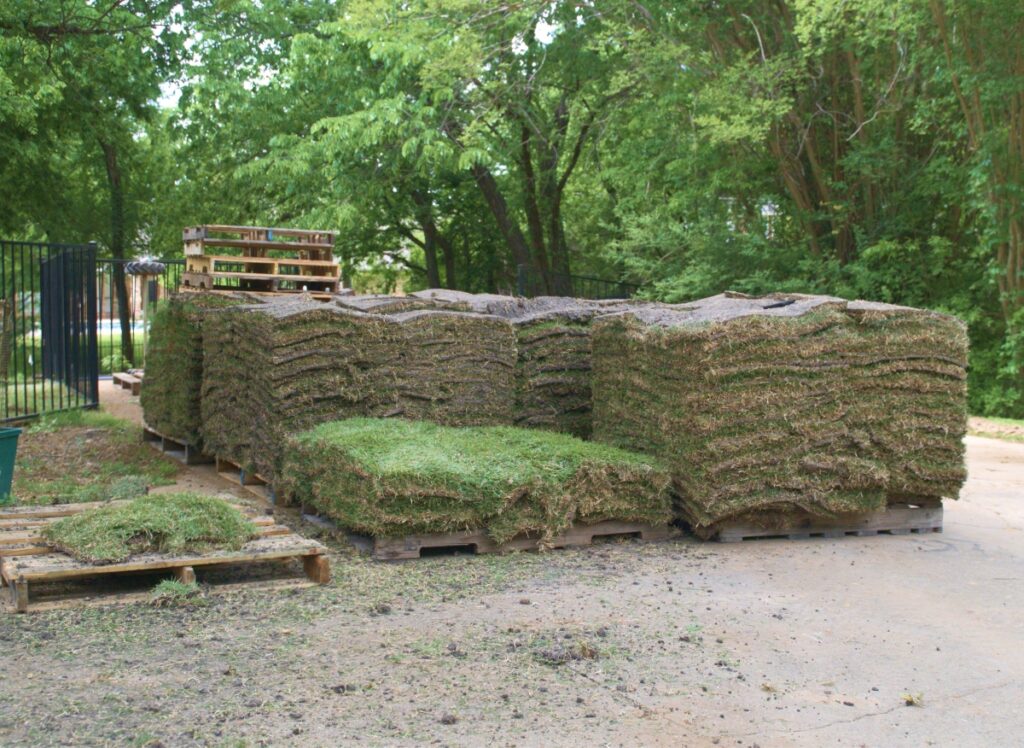
When a custom estate or luxury residential development nears completion, the focus naturally shifts to the final aesthetic layers. Homeowners eagerly select interior paint palettes, layout fine hardwood furnishings, and review designs for outdoor patios. On the remaining open dirt plots, high-volume crews quickly unroll vibrant sheets of green sod to deliver instant curb appeal.
However, beneath many of these newly laid lawns lies an invisible, structural ecological crisis. The heavy machinery required to build a modern home—including multi-ton tracked excavators, concrete mixing trucks, and skid steers—exerts immense, repeated downward pressure on the surrounding terrain.
By the time the framing and roofing crews pack up, the soil on the lot has been compressed into a dense, concrete-like hardpan. Treating this damaged earth with basic topsoil and sod is a major mistake that leads to yellowing grass, pooling water, and dying plants. To protect your property investment, sophisticated owners treat new home landscaping as a deep geotechnical and ecological restoration project.
1. The Physics of Soil Compaction: How Heavy Machinery Suffocates the Earth
To understand why machine-compacted soil ruins a new landscape, you have to look at the physical makeup of healthy earth. Productive, living soil is not just solid dirt; it is a delicate matrix composed of roughly 50% solid mineral particles and organic matter, and 50% open pore space. These microscopic voids are split evenly between water channels and air pockets, which allow plant roots to breathe, absorb nutrients, and grow deep into the ground.
When multi-ton construction vehicles drive repeatedly over a residential lot, this balanced soil structure is completely crushed. The immense weight forces the individual mineral grains tightly together, flattening the air pockets and destroying the open water channels.
This mechanical compaction transforms the soil into an impenetrable, low-oxygen barrier. Because the soil lacks macro-pores, rainwater cannot filter down into the water table, and essential oxygen cannot reach the subsurface. When new plants or sod are placed over this compacted hardpan, their roots quickly suffocate from a lack of oxygen, leading to root rot, stunted growth, and widespread plant failure.
2. The Compounding Liabilities of Untreated Construction Plots
Bypassing deep soil restoration during the initial stages of a new build creates a series of costly landscape problems that surface within the first year:
2.1 Chronic Surface Water Pooling and Mud Zones
Compacted soil loses its ability to absorb water. When heavy rains hit an untreated yard, the water cannot penetrate the dense clay hardpan. Instead, it pools on the surface, turning your pristine new lawn into a muddy, waterlogged swamp. This standing water creates breeding grounds for insects and quickly ruins expensive stone pathways and turf aesthetics.
2.2 Accelerated Foundation Hydrostatic Pressure
When surface water cannot drain straight down through the lawn, it follows the path of least resistance, migrating horizontally across the hardpan. This runoff frequently pools directly against the home’s porous concrete foundation walls. As the surrounding soil becomes saturated, it exerts immense hydrostatic pressure inward, increasing the risk of structural basement leaks and foundation fractures.
2.3 The “Teacup Effect” Plant Failure Cycle
When a standard landscaping crew digs a planting hole out of compacted clay, drops in a premium tree, and packs it with loose potting soil, they inadvertently create a subgrade drainage trap known as the “teacup effect.” Because the surrounding clay walls are as dense as a ceramic mug, rainwater filters into the loose planting hole but cannot escape out into the yard. The hole fills with water, drowning the root ball and killing your expensive specimen trees within months.
3. The Civil Protocol: Restoring Structural Aeration to the Land
Elite design-build landscape installation teams address soil compaction long before planting a single shrub. They utilize a comprehensive, heavy-duty engineering protocol to restore life and structural balance to the terrain:
| Subgrade Vector | Standard Landscaping Approaches | Advanced Geotechnical Landscape Engineering |
| Subgrade Prep | Light surface raking that leaves the deep, machine-compacted clay completely untouched. | Deep mechanical subgrade ripping down 12 to 18 inches using heavy agricultural tines. |
| Soil Architecture | Spreading a thin 1-to-2 inch layer of cheap topsoil directly over the hardpan before sod. | Deep blending of premium organic composts, coarse sand, and bio-nutrients into the subgrade. |
| Drainage Design | Relying entirely on natural surface absorption across flat grading. | Precision calibrated 2% slopes paired with integrated subsurface catch basins and French drains. |
| Long-Term Health | Chemical nitrogen fertilizers that cause quick, temporary green growth but damage soil health. | Introducing liquid humates and mycorrhizal fungi to rebuild a self-sustaining underground ecosystem. |
4. Subgrade Ripping and Organic Amendments: Rebuilding the Matrix
True restoration requires breaking through the compacted hardpan using heavy-duty equipment. Professional crews utilize heavy compact machinery fitted with deep-shattering rear tines. These steel tines are pulled through the construction site down to a depth of 12 to 18 inches, fracturing the dense clay brick by brick and instantly introducing fresh oxygen channels deep into the earth.
Once the deep clay layer is fractured, installers blend high volumes of structural soil amendments directly into the open earth. This includes a precise mixture of coarse washed sand and fully matured organic compost.
By tilling these materials deep into the ripped clay, engineers permanently alter the soil’s physical texture. The sand particles prevent the clay sheets from sticking back together, while the rich organic matter holds moisture without waterlogging, establishing a high-flow, perfectly aerated root zone where luxury softscapes can thrive.
5. Conclusion: Protecting Your Real Estate Capital
Your estate’s exterior spaces should be engineered to the same exacting standards as your home’s primary structure. Relying on cut-corner landscaping tactics that mask sub-surface compaction behind cheap sod exposes your property to chronic pooling water, high maintenance outlays, and constant plant loss.
By prioritizing professional new home landscaping services built around deep mechanical shattering, structural organic blending, and advanced subgrade drainage, you protect your real estate asset with commercial-grade durability. The final result is a beautiful, self-sustaining private resort footprint that stays vibrant, handles heavy downpours effortlessly, and maximizes your property value for a lifetime.